New method surfaces deep ancestry hidden in living genomes
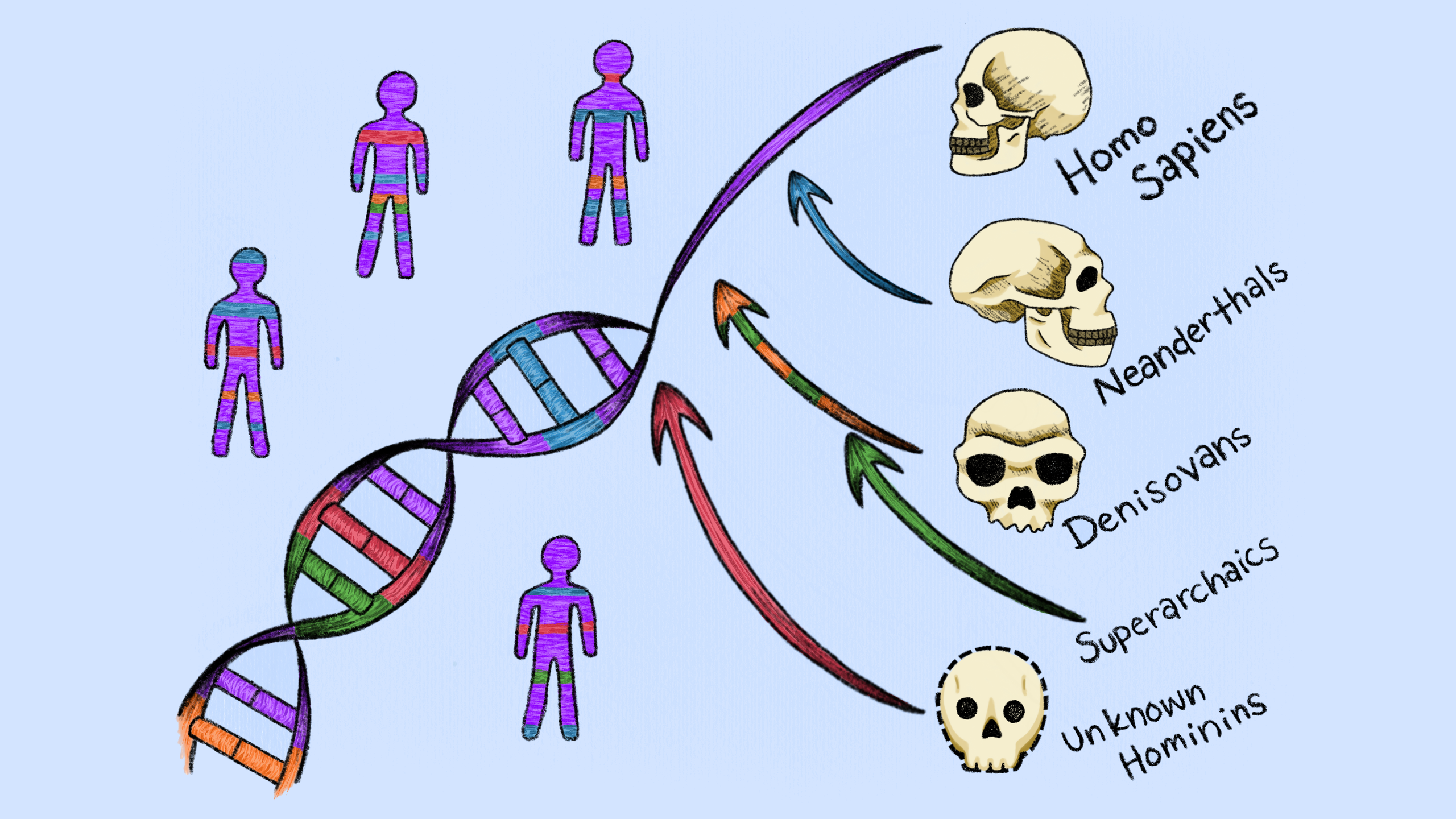
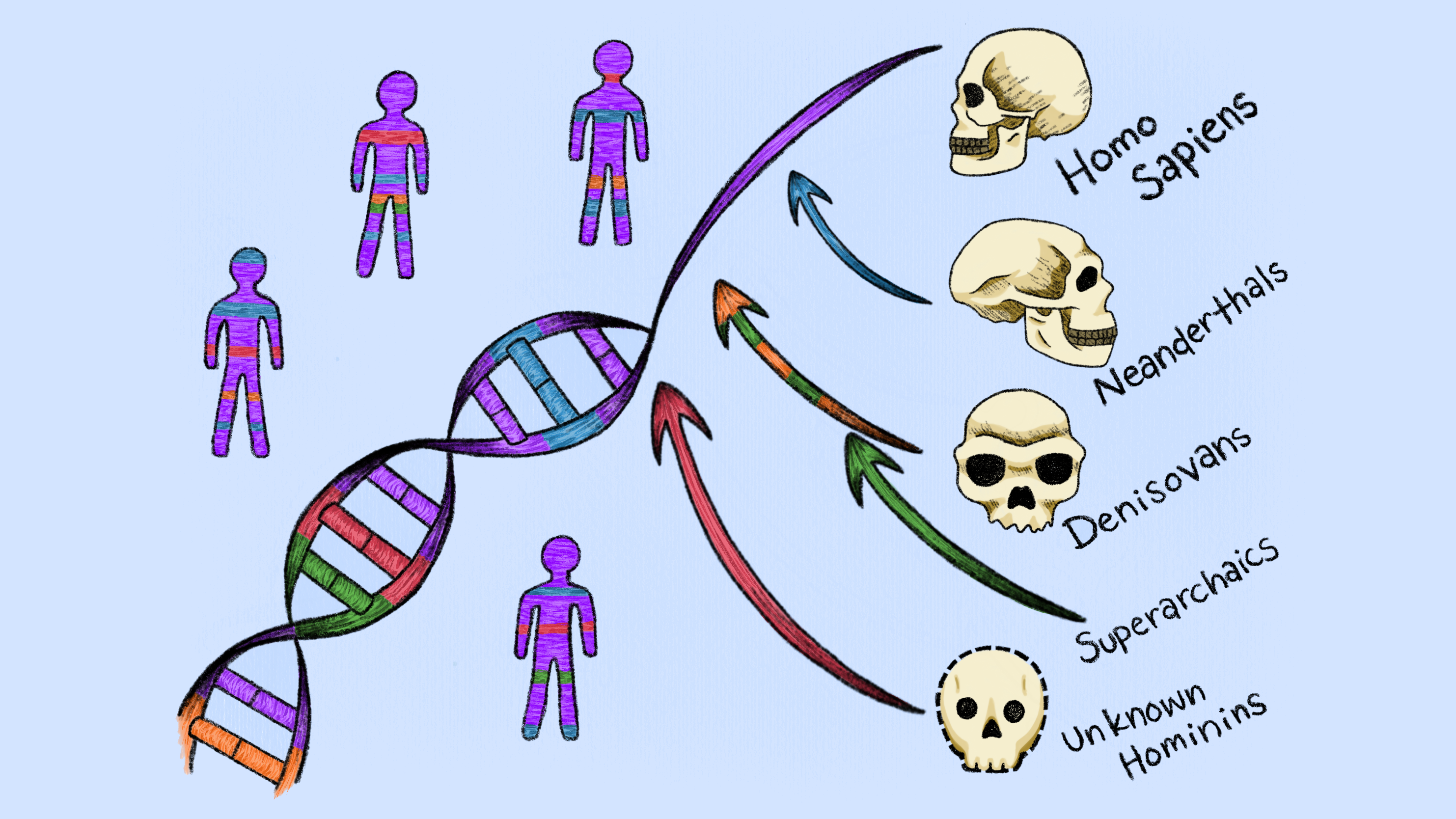
A new study described by researchers in Science adds fresh complexity to the story of human origins. By analyzing the DNA of present-day people with a new method, the team found evidence for two previously unknown, or “ghost,” lineages of extinct humans that appear to have contributed genetic material to modern populations. One of those lineages seems to have left traces in all living people, while the other is described as a much older “super-archaic” branch dating back nearly 2 million years.
The result matters because large parts of human evolutionary history remain poorly sampled in the fossil and ancient DNA records. Scientists already know that Homo sapiens interbred with Neanderthals and Denisovans. But the new work argues that these better-known encounters were not the whole story. Instead, the ancestry carried by living people may preserve signals from extinct populations that have not yet been directly identified from ancient remains.
The study, reported July 30, 2026, addresses a longstanding problem in paleo-genetics: ancient DNA is rare, fragile, and geographically biased. Genetic material survives best in cold, dry conditions, leaving tropical regions and much of Africa with thinner direct evidence even though those places are central to human evolution. That limitation has made it difficult to test whether unknown human groups mixed with our ancestors and whether those groups can still be detected indirectly.
Why “ghost lineages” matter
The phrase “ghost lineage” refers to an extinct population inferred from genetic patterns rather than from a named fossil species with sequenced DNA. Researchers have suspected for years that modern humans may carry signals from such groups, but proving it has been difficult. The new analysis tries to solve that by reading genomic patterns in living populations for signatures that do not fit known lineages alone.
According to the report, one inferred lineage appears to have contributed DNA broadly across present-day humans. The other lineage reaches much deeper into the past. Researchers describe it as “super-archaic,” with roots extending to nearly 2 million years ago. That would place it far earlier than the better-known interbreeding events involving Neanderthals and Denisovans and suggests that parts of the human family tree were more interconnected, and more layered over time, than the standard picture implies.
The study does not claim that these populations are suddenly visible as complete biological profiles. Instead, it identifies statistical traces of their existence. That distinction is important. What the research offers is not a fossil in hand or a recovered genome from an excavated skeleton, but a stronger framework for detecting ancestry that survived in living genomes after the source populations disappeared.
Even so, the implications are substantial. If the method holds up, it expands the role of present-day DNA from a record of recent population movement into a tool for reconstructing much older chapters of human evolution. It also suggests that extinction did not erase every trace of these groups. Their lineages may persist in fragments, embedded in the genomes of billions of people.

Building on the Neanderthal and Denisovan precedent
The study enters a field already transformed by discoveries about admixture. Scientists have shown that most people outside sub-Saharan Africa today carry roughly 1% to 2.4% Neanderthal ancestry. Denisovan ancestry also survives in some living populations, especially among Asians and Oceanians, where estimates cited in the report range from about 0.1% to 6%.
Those findings overturned an older, simpler model in which modern humans replaced archaic populations with little or no interbreeding. The new work pushes that revision further. Rather than a family tree with a few side branches, human evolution increasingly looks like a network marked by repeated encounters, partial isolation, and genetic exchange across long spans of time.
That does not mean every mystery is now solved. The study raises obvious follow-up questions. Were the newly inferred lineages geographically concentrated? Did they contribute useful adaptations, as some Neanderthal and Denisovan DNA appears to have done? And can future fossil or ancient DNA discoveries tie these ghost signals to specific populations already suspected from the archaeological record?
For now, the most immediate contribution is methodological. The researchers used a new analytical approach to detect hidden ancestry without relying on direct ancient DNA from the source population. That could prove especially valuable in regions where preservation is poor and where the physical record alone is unlikely to close the gaps.
A bigger, messier picture of human origins
The broader significance of the finding is conceptual as much as technical. Human evolution is often presented as a sequence of clean transitions from one species to the next. But the genetic record has repeatedly shown that the process was not clean. Populations split, migrated, met again, and sometimes mixed. Some lineages vanished as distinct groups while still leaving lasting marks on their descendants.
The newly reported ghost lineages fit that emerging picture. One seems to have contributed ancestry so widely that its signal can be found in all present-day people, suggesting that its legacy entered the ancestral population before later human groups spread and diversified. The older super-archaic lineage hints at even deeper structure, potentially preserving a link to human branches that lived far earlier than most lineages commonly discussed in public accounts of human prehistory.
That depth is one reason the result is likely to draw attention beyond genetics. It intersects with archaeology, paleoanthropology, and models of early migration. If some of these traces really descend from a lineage nearly 2 million years old, then researchers may need to revisit how isolated or connected ancient human populations were over very long timescales.
Caution will still be necessary. Statistical inference in population genetics can be powerful, but it also depends on model assumptions. The study’s conclusions will need to be tested, replicated, and compared with future evidence from fossils and ancient DNA. Yet even with that caveat, the work underscores how much of humanity’s story remains recoverable from living people themselves.
The central lesson is straightforward: the human past was probably more crowded than the surviving fossil record suggests. Some of those lost populations may never be directly sampled. But if this approach proves robust, their genetic fingerprints can still help rewrite the map of where modern humans came from and who we once encountered along the way.
This article is based on reporting by Live Science. Read the original article.

Originally published on livescience.com