White House Taps Lt. Gen. David N. Miller Jr. for SPACECOM
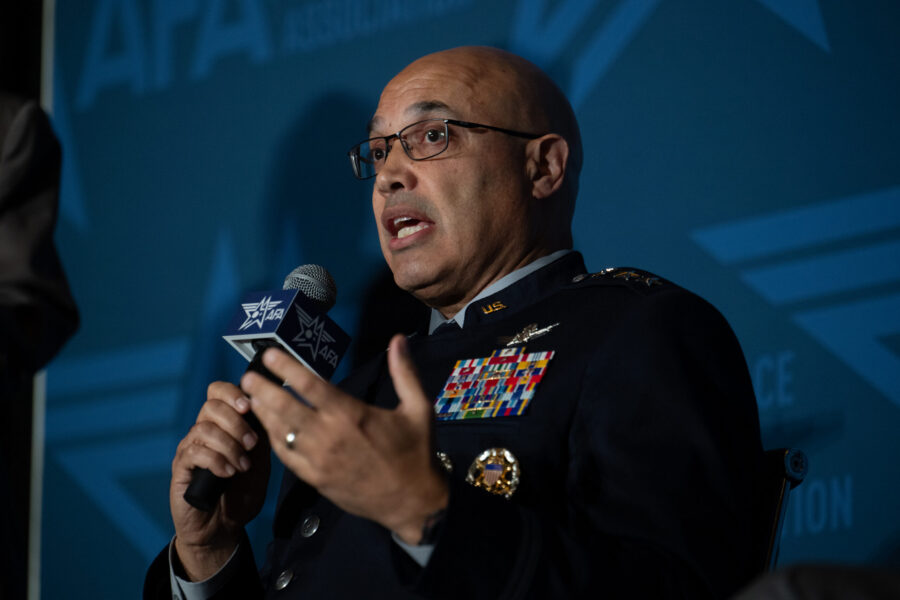
The White House nominated Lt. Gen. David N. Miller Jr. on Tuesday to serve as the next commander of U.S. Space Command, according to a congressional notice announcing the pick. If the Senate confirms him, Miller would take the helm of the joint combatant command at a moment when American leaders are placing unusual emphasis on the orbital domain as both a battlefield and a foundation for other operations.
Miller would succeed Gen. Stephen Whiting, who is expected to relinquish command toward the end of this year or at the beginning of the next. The transition would make Miller only the fourth officer to lead SPACECOM since the command was reestablished in 2019, underscoring how young the organization still is relative to the legacy combatant commands it now works alongside.
A Career Spent Building the Space Force
Miller currently serves as deputy chief of Space Operations for Strategy, Plans, Programs and Requirements, a portfolio that places him at the center of how the service designs its future force. In that role he has been responsible for shaping the strategic logic behind space investments, the programs meant to deliver them, and the requirements that flow from those decisions.
His background is deeply rooted in the operational side of the service as well. Before his current assignment, Miller commanded Space Operations Command at Peterson Space Force Base in Colorado, the component that generates and presents space forces to the joint force. He also served as special assistant to the vice chief of space operations at Peterson, an experience that gave him early exposure to the service's senior leadership decisions during its formative years.
Across his career, Miller has led guardians and airmen at the squadron, group and wing levels at a range of installations. That breadth — moving between unit-level command, installation leadership and headquarters strategy work — is the kind of résumé the Pentagon has tended to favor for a role that must translate policy into combat effects.
Endorsement From the Service's Top Officer
Gen. Douglas Schiess, the Chief of Space Operations, publicly congratulated Miller on the nomination, describing him in a social media post as an exceptional guardian who has represented the service with distinction. Schiess called him a strong candidate for what he characterized as a critical joint leadership role, signaling that the nomination carries the backing of the Space Force's senior uniformed leadership.

Whiting's Tenure Comes to a Close
Whiting has led U.S. Space Command since January 2024, having been nominated by former President Joe Biden and confirmed in December 2024. Before taking command, he served as commander of Space Operations Command and held a series of positions across U.S. Strategic Command, Air Force headquarters and the Office of the Deputy Secretary.
His departure opens one of the most senior space roles in the U.S. military at a time when the command's responsibilities have expanded well beyond tracking satellites and monitoring launches. SPACECOM today is expected to protect the joint force's access to space while simultaneously delivering effects that ground, air and maritime commanders have come to treat as essential rather than optional.
Space as a "Need to Have," Not a "Nice to Have"
The nomination arrives against a backdrop of increasingly assertive rhetoric about the role of space in American warfighting. In a keynote address at the Air & Space Forces Association's 2026 Air, Space & Cyber Conference in mid-September, Schiess argued that guardians are no longer supporting operations from the sidelines. He pointed to the components at U.S. Central Command and U.S. Space Command, supported by elements at European Command and Pacific Command, as proof that spacepower is being delivered directly into the fight.
Officials have repeatedly cited the operation known as Epic Fury as an illustration of that shift, describing space capabilities as integral to how the joint force operated. The framing matters politically as well as operationally: it strengthens the case for resourcing space programs and for treating space command as a warfighting headquarters rather than a support function.
On-Orbit Space Control Weapons
Adding to the strategic backdrop, Secretary of the Air Force Troy Meink recently disclosed that the department possesses on-orbit space control weapons capable of defending the joint force from hostile adversary action. Meink kept the details deliberately sparse, declining to describe the type of weapon involved while reiterating that such capabilities are necessary for deterrence.
The disclosure fits a pattern in which senior officials confirm the existence of certain capabilities — and the intent behind them — without revealing the technical specifics that would help an adversary plan around them. For a commander of SPACECOM, that posture shapes both planning and messaging: deterrence depends on adversaries believing the capability is real and usable.

What the Commander Actually Controls
The scope of the job is broader than many outside the Pentagon assume. As commander, Miller would be responsible for the space domain itself while also providing space-enabled combat effects across the world. He would hold combat command authority over joint warfighters operating both ground-based and space-based systems.
In practical terms, that means balancing day-to-day management of constellations, ground stations and personnel against the demands of regional combatant commanders who need assured communications, navigation, missile warning and intelligence support. It also means preparing for a domain in which adversaries are developing their own counterspace capabilities, making contested operations an assumption rather than an edge case.
Miller's experience commanding at the squadron, group and wing levels — the units that actually operate the hardware — may prove as relevant as his headquarters background. A commander who understands both the strategic narrative and the maintenance realities of a satellite constellation is better positioned to argue for resources and to set realistic expectations for the joint force.
Confirmation Path and Timing
The nomination now moves into the Senate's confirmation process, where members are likely to probe the state of space control programs, the readiness of the Space Force's force-generation model and the command's relationship with other combatant commands. Because the notice was transmitted through Congress, the paperwork is officially in motion, but the schedule for a hearing has not been established publicly.
Timing matters. Whiting's stated exit window — late this year or early next — means the Pentagon would prefer a smooth handover rather than a lengthy period with an acting commander at the top of a command that is actively supporting operations worldwide.

What to Watch Next
- Senate scheduling: Whether a confirmation hearing is set quickly enough to seat Miller before Whiting departs.
- Force posture signals: Any indication during confirmation of new priorities for space control, satellite protection or contested-domain operations.
- Budget follow-through: How Miller's strategy, plans and programs background translates into programmatic decisions once he holds combatant command authority.
- Allied integration: Whether the command deepens coordination with partners whose systems feed into U.S. space operations.
- Deterrence messaging: How openly officials discuss on-orbit capabilities following Meink's disclosure.
For now, the nomination represents continuity as much as change. Miller would step into a command that has spent seven years defining itself, inheriting both an expanded mission set and the expectation — repeatedly voiced by its senior leaders — that spacepower is now delivered into the fight rather than merely enabling it from a distance.
This article is based on reporting by Defense News. Read the original article.
Originally published on defensenews.com