Navy extends Saildrone operations after drone-assisted interdiction
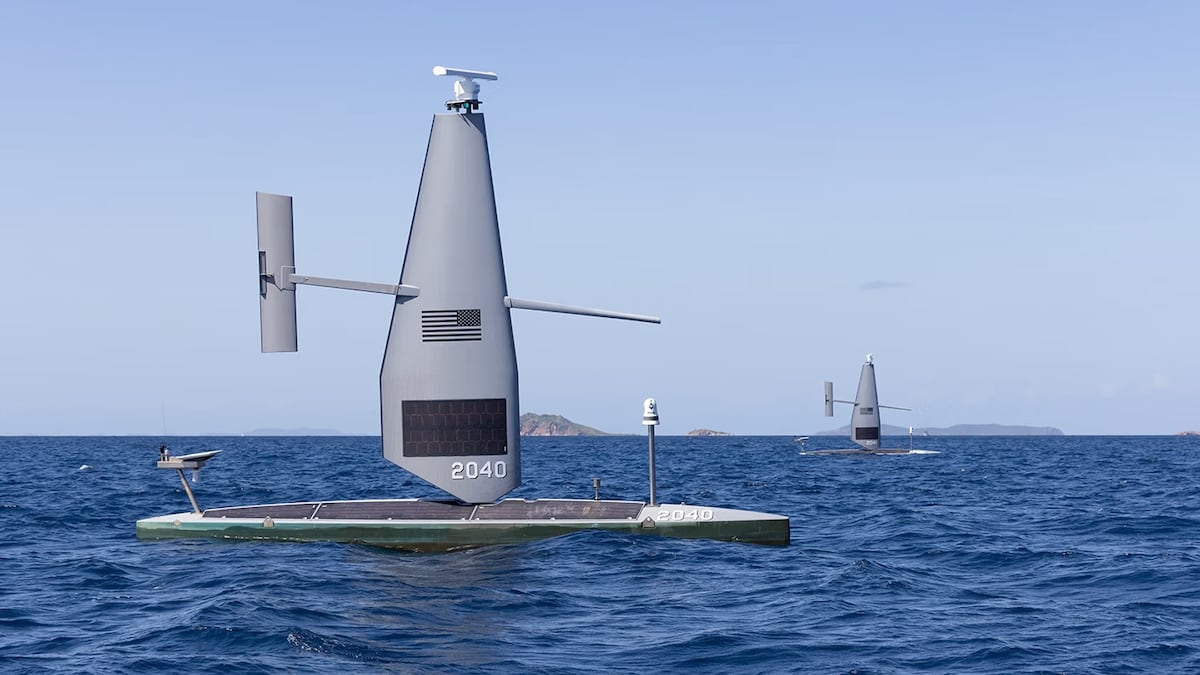
The U.S. Navy has awarded Saildrone a $16.3 million task order to extend operations of its Voyager unmanned surface vehicle fleet in the Caribbean and Eastern Pacific, broadening the company’s role in counternarcotics missions. The move follows a recent case in which a Saildrone Voyager directly aided a Navy drug interdiction in the Caribbean that led to the seizure of more than $81 million worth of cocaine, according to the source material.
The contract extension gives the Navy a larger runway for using uncrewed maritime systems in a mission set that depends heavily on persistence, coverage, and early detection. Rather than relying only on crewed ships and aircraft to find suspected smuggling activity across enormous maritime areas, the service is continuing to integrate surface drones that can remain on station for months.
That endurance is central to the Navy’s pitch for expanded use. In waters spanning the Caribbean Sea and eastern Pacific approaches, the surveillance problem is less about a single engagement than about watching enough ocean, for long enough, to detect and track suspicious movement before it disappears.
From experimentation to a more established mission
According to the source text, Saildrone unmanned surface vehicles have been working with the U.S. Navy since 2023, supporting Joint Interagency Task Force South and U.S. Naval Forces Southern Command/U.S. Navy Fourth Fleet. The new task order suggests the relationship has moved beyond a short trial phase and into a more operationally sustained arrangement.
The recent interdiction assistance appears to have strengthened that case. The cited seizure offered the Navy and Saildrone a concrete example of an uncrewed vessel contributing to a real-world law enforcement and security outcome rather than simply collecting test data. In acquisition terms, that kind of operational proof often matters more than general claims about autonomy.
The source text frames the extension as aligned with the Trump administration’s effort to curb narcotics flowing toward the United States via maritime routes in the Caribbean and eastern Pacific. Within that policy context, the Navy is not just funding another technology demonstration. It is backing a specific surveillance tool for an active mission area tied to border and trafficking enforcement.
What the Voyager platform is designed to do
The Voyager is described in the source material as a 33-foot-long unmanned surface vehicle built for persistent surface and subsurface surveillance. It can also conduct nearshore mapping missions and seafloor characterization. Those features make it more than a simple camera boat. The platform is intended to gather maritime awareness data over long periods without requiring a crew aboard.
For counternarcotics work, persistence is the standout feature. A crewed ship can patrol, but it is expensive to keep at sea and limited by the demands of human operations. Aircraft can search broad areas quickly, but only for finite windows. A surface drone designed to remain on mission for months offers a different operational model: continuous presence in places where traffickers may assume the ocean itself provides cover.
Saildrone President John Mustin, identified in the source as a retired vice admiral, said the company’s ability to stay on station in critical regions for months is central to its value. That endurance, he argued, is why the fleet can serve as both a deterrent and an alarm along the southern maritime border.
Even allowing for company framing, the underlying logic is straightforward. Smuggling networks often exploit gaps in surveillance, timing movements to avoid interception. A system that reduces those gaps does not guarantee interdiction, but it can increase the chance that suspicious vessels are found, tracked, and handed off to crewed forces for action.
Why this mission favors uncrewed systems
Counternarcotics patrols create a demanding operational geometry. The area is large, traffic patterns are dynamic, and the targets are often small, mobile, and deliberately evasive. That makes it an environment where autonomous or remotely managed platforms can add value without fully replacing conventional naval assets.
In that sense, the new task order is also a signal about how the Navy sees unmanned systems maturing. Rather than reserving them only for high-end warfighting concepts, the service is applying them to daily missions where constant surveillance and lower operating costs can matter immediately.
The Navy has spent years testing unmanned surface vessels for intelligence gathering, maritime domain awareness, and distributed sensing. What stands out here is the tie to a specific enforcement outcome and a contract that extends presence in a live operational theater. That is different from experimentation for its own sake. It points to a role where the technology is useful precisely because it is persistent, comparatively flexible, and able to support manned forces without demanding the same logistical footprint.
The broader context around maritime security
The source text also notes that since September 2025, the U.S. military has carried out strikes against alleged drug-carrying vessels in the Caribbean Sea and eastern Pacific in support of continued counternarcotics efforts, and that the administration and military had disclosed 66 strikes as of June 22. That backdrop underscores how aggressively maritime narcotics enforcement has been pursued in the region.
Within that broader posture, unmanned surface vehicles fit into a layered approach. They are not the interceptors. They are the long-endurance eyes and sensors that can help cue other assets. For commanders, that can mean better use of ships, aircraft, and partner-agency resources by narrowing the search space and providing earlier warning.
It also suggests that data quality and command integration matter as much as the platform itself. A drone that sees but cannot feed actionable information into the wider network has limited operational value. The fact that Saildrone’s systems are being retained and expanded implies that the Navy sees enough utility in how the Voyagers contribute to that chain.
What to watch next
The new task order does not by itself redefine maritime security, but it does mark a meaningful step in the operational normalization of uncrewed vessels. If Saildrone’s extended deployment produces more interdiction support and more routine surveillance coverage, the case for wider use of unmanned maritime systems in other mission areas will become stronger.
For now, the most important development is narrower and more concrete: the Navy is paying to keep these vessels on station in two major trafficking corridors after at least one demonstrated mission success. That reflects confidence in the platform’s endurance and a belief that uncrewed presence can sharpen maritime awareness where conventional assets remain stretched.
Whether that model expands further will likely depend on the same factors that shaped this extension: measurable operational outcomes, reliable time on station, and an ability to work inside a broader military and interagency network. On those terms, this task order is less a speculative bet than a decision to scale a capability the Navy already considers useful.
- The Navy awarded Saildrone a $16.3 million task order to extend Voyager operations in the Caribbean and Eastern Pacific.
- The extension follows a recent drug interdiction in which a Saildrone Voyager directly aided the Navy.
- The Voyager’s main advantage is persistent surveillance, with missions that can last for months at sea.
This article is based on reporting by Defense News. Read the original article.
Originally published on defensenews.com