Boeing Chosen for the Navy's Next Fighter
The U.S. Navy has selected Boeing to design and build F/A-XX, its next-generation carrier-based strike fighter, closing out a competition that had narrowed to Boeing and Northrop Grumman. The decision leaves Northrop Grumman on the outside after what was widely treated as the final stage of negotiations between the two contenders.
The aircraft will be the Navy's first sixth-generation platform. It is slated to anchor the service's future fighter fleet and to take over the missions flown today by the F/A-18E/F Super Hornet and the EA-18G Growler, which are due to begin leaving the inventory in the 2030s. Boeing has said the jet will offer extended range for power projection from carriers and will be interoperable with both crewed and uncrewed platforms, including Collaborative Combat Aircraft.
Inside the $20 Billion Development Deal
The contract is valued at $20 billion for the full-scale development phase. In its announcement, the Pentagon said the award procures multiple test aircraft that will support ground evaluations, airworthiness work, systems testing, and weapons integration. That scope marks a shift from concept and design studies toward building and flying actual hardware.
Officials framed the selection as more than a routine procurement decision. Michael P. Duffey, the under secretary of defense for Acquisition and Sustainment, described the program as a critical pillar in the department's commitment to maintaining peace through strength, adding that F/A-XX is expected to dominate contested airspace, extend operational reach, and give warfighters a decisive combat advantage.
Acting Secretary of the Navy Hung Cao struck a similar tone, calling the milestone the beginning of a new era for the service. He characterized the sixth-generation fighter as a generational leap in air superiority that will equip naval aviators with capabilities to fight, win, and come home safely, and said the Navy is eager to partner with Boeing as its warfighters continue to compete for control of the skies.

Boeing's Grip on Sixth-Generation Aviation
The Navy award strengthens Boeing's position across the military's next-generation fighter efforts. In 2025, the company beat Lockheed Martin for the contract to build the Air Force's sixth-generation fighter under the Next Generation Air Dominance program, or NGAD. That aircraft has since been designated the F-47.
A service official said in July that the F-47 has entered its engineering and manufacturing development phase, with first flights possible as early as 2028. The Air Force has announced plans to buy at least 185 of the aircraft, a figure sized to replace the F-22 Raptor fleet.
With F/A-XX now awarded as well, Boeing has effectively locked in a leading role on sixth-generation fighters for both the Air Force and the Navy. The company's selection on the Navy program came with its own endorsement from the service's leadership, and Boeing executive Steve Parker said it was an honor to be chosen to produce the Navy's first sixth-generation platform.
Years of Funding Friction
F/A-XX has not traveled a smooth road to contract award. The program has been the subject of funding disputes for years, and engineering and supply chain concerns had prompted some Pentagon officials to push for delaying it. The decision to proceed with full-scale development suggests those arguments did not ultimately prevail, though scrutiny over cost, schedule, and industrial capacity is likely to continue as the program moves forward.
One detail that remains unresolved is the aircraft's official designation. F/A-XX is a program label rather than a formal service designation, and the Navy has not yet announced what the fighter will be called in service.

What Full-Scale Development Means
The contract language points to a test campaign covering several distinct categories of work. According to the Pentagon's description, the test aircraft will be used for:
- Ground testing of the airframe and its subsystems
- Airworthiness evaluations to validate flight safety and handling
- Systems integration testing across onboard mission equipment
- Weapons integration testing ahead of operational employment
Building multiple test aircraft indicates the Navy intends to validate the design across a broad set of conditions rather than relying on a single demonstrator. That approach is typical of major combat aircraft programs, where flight test fleets are used to work through envelope expansion, software maturation, and integration of sensors and weapons simultaneously.
Flying Alongside the F-35 and Drones
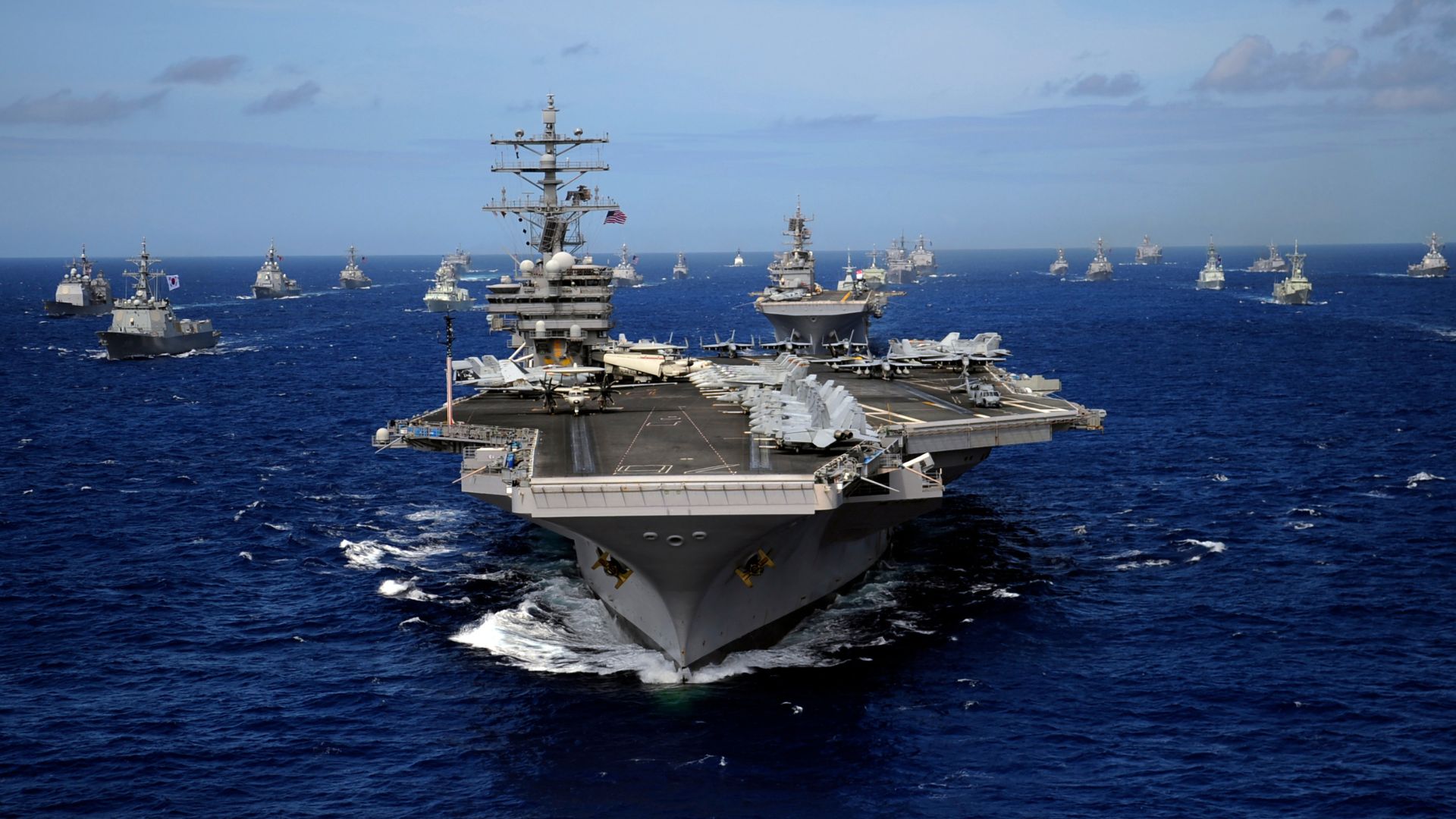
Planners expect the new fighter to serve as the centerpiece of the Navy's next-generation air wing, operating alongside the F-35 and eventually assuming the roles currently filled by the Super Hornet and Growler fleets. The extended range Boeing has promised is intended to allow carriers to project power over greater distances, a consideration that shapes how the service thinks about reach and endurance in future operations.
Interoperability with uncrewed systems is another central theme. Boeing has committed to making F/A-XX work with both manned and unmanned platforms, a reference to Collaborative Combat Aircraft — the class of lower-cost, optionally crewed or autonomous aircraft that services envision teaming with human pilots. Integrating crewed fighters with such platforms is a defining ambition of sixth-generation aircraft design across the U.S. military.

Replacing the Super Hornet Lineage
The Super Hornet and Growler have carried the bulk of the Navy's carrier strike and electronic attack duties for years. F/A-XX is meant to succeed them as those airframes age out, with the transition expected to begin in the 2030s. That timeline puts the new fighter at the center of the service's long-range planning for carrier aviation, from deck handling and maintenance to training pipelines for aviators and maintainers.
How quickly the program can deliver will depend on factors the contract award does not resolve on its own, including supply chain readiness and the engineering capacity Boeing can devote to two major sixth-generation efforts at once.
The Bottom Line
Boeing's selection for F/A-XX hands the company the Navy's first sixth-generation fighter and a second major next-generation combat aircraft program alongside the Air Force's F-47. For the Navy, the $20 billion development award sets up a multi-year effort to build and test aircraft designed to fly from carriers, work with unmanned teammates, and eventually replace the Super Hornet and Growler fleet beginning in the 2030s.
This article is based on reporting by Defense News. Read the original article.
Originally published on defensenews.com