A Startling Revelation
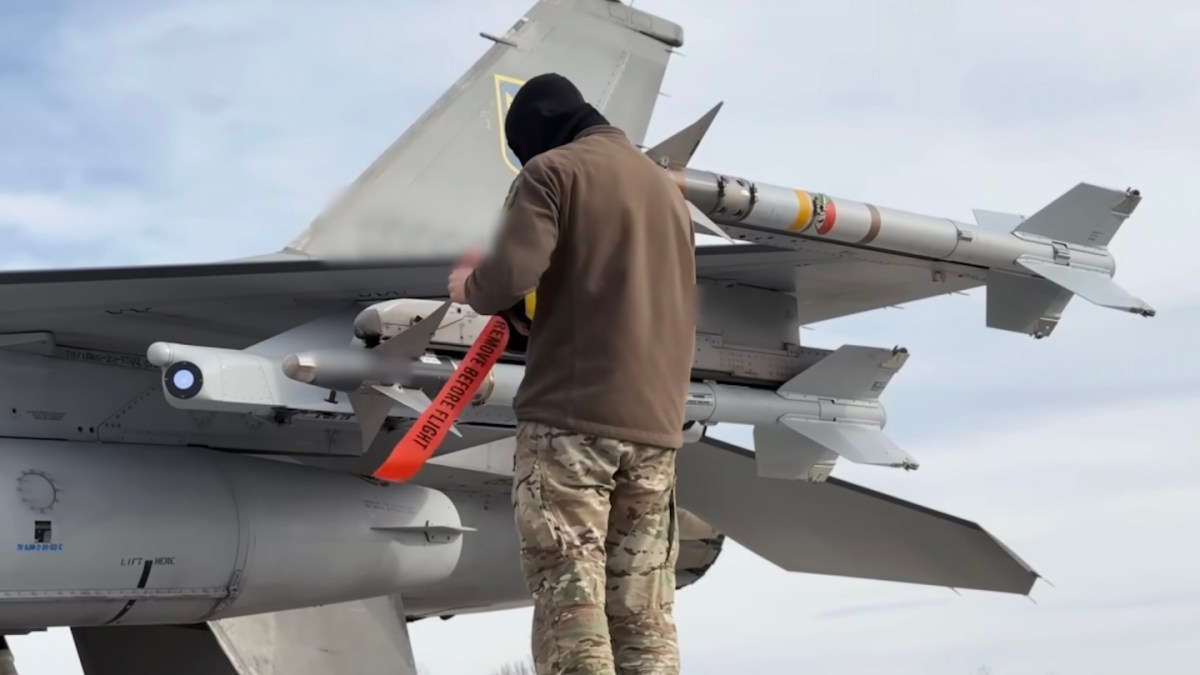
A new report has revealed that Ukraine's recently acquired F-16 Fighting Falcons have been operating with critically limited stocks of AIM-9 Sidewinder air-to-air missiles, one of the aircraft's primary self-defense weapons. According to the report, Ukrainian pilots had access to only a small number of short-range Sidewinders during operational sorties, a constraint that significantly limited the tactical flexibility of the aircraft that Western allies spent years preparing to deliver.
The disclosure raises pointed questions about the completeness of Western military support for Ukraine's F-16 program. While the aircraft themselves received enormous political and logistical attention during the lengthy transfer process, the ammunition supply chain appears to have lagged behind, leaving pilots with capable platforms but insufficient weapons to employ them at their full potential.
The Sidewinder's Role
The AIM-9 Sidewinder is a heat-seeking short-range air-to-air missile that has been a standard armament for Western fighter aircraft for decades. In the F-16's weapons configuration, Sidewinders provide the pilot's primary defense against close-range aerial threats, including enemy fighters that penetrate beyond the range of medium-range AIM-120 AMRAAM missiles. Without adequate Sidewinder stocks, F-16 pilots face a critical gap in their defensive envelope.
For Ukraine's specific operational context, Sidewinders serve an additional function. Russian forces have increasingly deployed Iranian-designed Shahed drones and cruise missiles against Ukrainian targets, and the Sidewinder's heat-seeking capability makes it effective against these slower, heat-emitting threats at close range. Limited missile availability means F-16 pilots must be more selective about which threats they engage, potentially allowing some to pass through to their targets.
Supply Chain Bottlenecks
The missile shortage reflects broader challenges in Western defense supply chains that have been strained by the need to support Ukraine while maintaining readiness for other contingencies. Sidewinder production lines are active but cannot instantly scale to meet simultaneous demand from the U.S. military, NATO allies, and Ukraine. Allocating missiles to Ukraine requires drawing from existing stocks, which defense ministries have been reluctant to deplete below their own readiness thresholds.
The complexity of international arms transfer agreements adds another layer of delay. Each missile transfer requires approval from the U.S. State Department under arms export control regulations, even when the missiles are being provided from third-country stocks. These approvals involve review processes that can take weeks or months, creating bottlenecks that are poorly matched to the urgency of an active combat zone.
Tactical Adaptations
Ukrainian pilots and planners have adapted to the missile shortage through tactical and operational adjustments. Aircraft are being employed in roles that minimize the need for short-range air-to-air engagement, focusing on standoff strikes with longer-range weapons and using the F-16's radar and electronic warfare capabilities in a support role rather than as a primary air superiority fighter. These adaptations allow the F-16 to contribute to Ukraine's defense but at a fraction of the aircraft's full combat potential.
The situation also affects pilot confidence and survivability. Pilots flying combat missions with limited self-defense weapons face elevated risk, which can influence tactical decision-making in ways that further reduce the aircraft's effectiveness. The psychological dimension of operating an advanced fighter with a depleted weapons loadout is a factor that rarely appears in official assessments but is well understood within the military aviation community.
Broader Implications for Western Support
The Sidewinder shortage is emblematic of a pattern that has characterized Western military support to Ukraine throughout the conflict: high-profile platform deliveries that capture public attention, followed by quieter struggles with the ammunition, spare parts, and logistical support needed to make those platforms fully operational. Similar dynamics have affected the deployment of Western artillery systems, armored vehicles, and air defense equipment, where the weapons themselves arrived before adequate ammunition stocks were established.
Defense analysts argue that the lesson is clear: delivering a weapons platform without simultaneously delivering its full ammunition complement and establishing a sustainable resupply chain is an incomplete commitment that risks both operational effectiveness and the lives of the personnel operating the equipment. As discussions continue about additional military support for Ukraine, the Sidewinder shortage serves as a concrete example of why logistics and sustainment matter as much as the headline weapons deliveries.
This article is based on reporting by twz.com. Read the original article.
Originally published on twz.com