Ukraine’s success is a lesson, not a blueprint
The U.S. Navy is studying Ukraine’s use of maritime drones with intense interest, but senior officials are also making a clear point: what worked in the Black Sea will not translate directly to the Pacific. Speaking at the Navy League’s Sea-Air-Space conference, Rear Adm. Doug Sasse described Ukraine’s sinking of much of Russia’s Black Sea Fleet as a leading example of new robotic warfare across land, sea and air. At the same time, he argued that the United States cannot simply copy that model into different theaters.
The reason is geography as much as technology. Ukraine has used sea drones in a constrained body of water, with relatively short strike distances and terrain conditions that can help hide launch activity. That is very different from the Pacific, where unmanned vessels would need to travel across immense distances while potentially remaining exposed to observation for most of the crossing.
That distinction matters because it pushes back against a simplistic reading of recent military innovation. Success in one theater does not automatically produce a doctrine for another. Systems, tactics and command structures must match the operating environment.
The Pacific is not the Black Sea
Sasse’s comparison is unusually direct. In the Black Sea, he said, a military can launch a drone quickly and does not have to send it a great distance to reach its target. In the Pacific, there are no trees to hide behind. An unmanned vessel may spend much of its approach visible on the surface of the ocean, perhaps under observation for the entire transit.
That changes the operational problem fundamentally. Long-range unmanned surface vessels in the Pacific must contend with surveillance, endurance, communications and survivability in ways that are less central in a more constrained maritime battlespace. A tactic designed for relatively close, asymmetric attacks does not necessarily scale into a vast ocean where sensing and exposure become strategic variables.
This is one reason command and control remains central. The article’s core argument is that even as the Pacific fills with what one officer described as thousands of small unmanned ships and any number of aerial drones by 2030, command decisions will remain a human endeavor. The Navy may want more robots, but it does not view autonomy as a substitute for operational judgment.
The Navy is still moving fast on unmanned systems
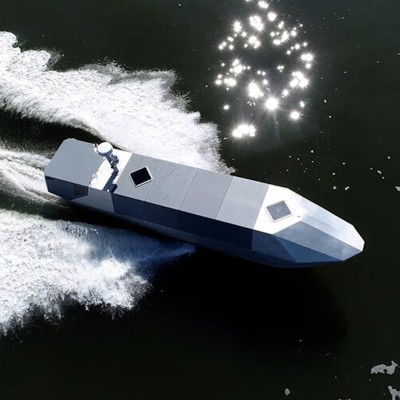
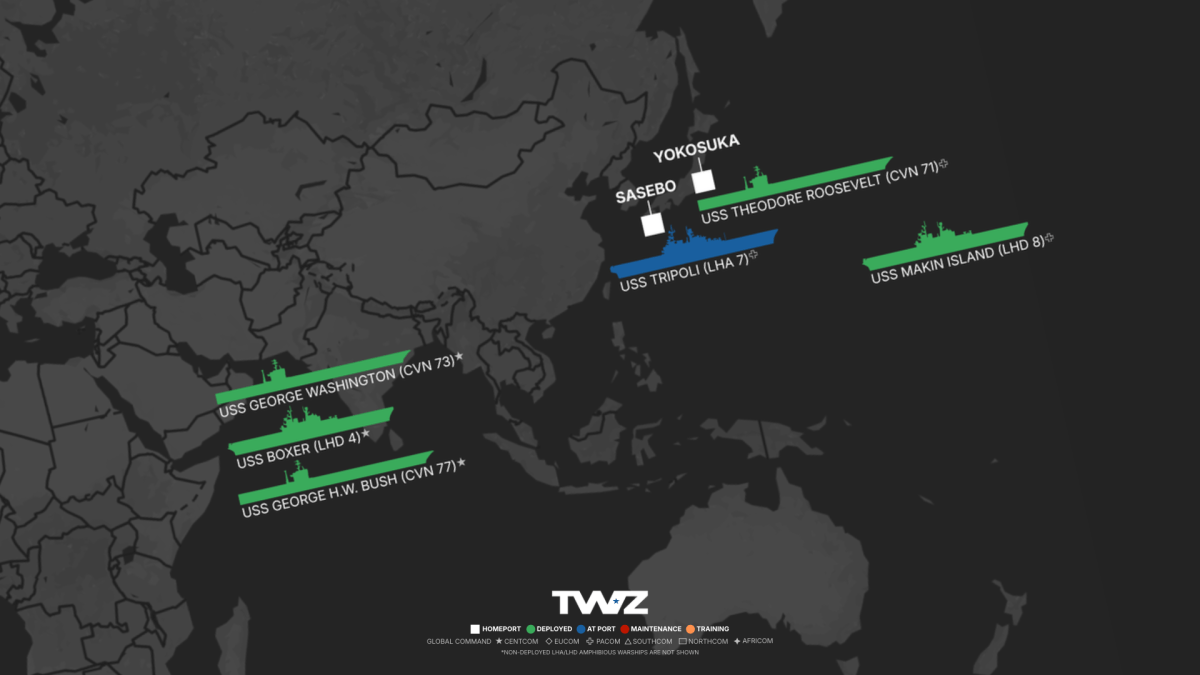
Rejecting a direct copy of Ukraine’s model does not mean the Navy is moving slowly. The service has already taken possession of its first Sea Hawk, a 145-ton unmanned trimaran, and officials said it would deploy with the Theodore Roosevelt strike group in the Pacific later this year. That is a significant step, showing that unmanned surface vessels are moving from experimentation into real fleet integration.
Officials also described a much larger buildup ahead. Capt. Garrett Miller said that by 2030 the Sea Hawk would be joined by thousands of small unmanned ships in the Pacific alone, along with numerous aerial drones. Those numbers suggest the Navy sees robotics as a central part of maritime force design, even if it rejects easy analogies to Ukraine’s war.
The challenge is therefore not whether the Navy believes in unmanned systems. It clearly does. The challenge is how to deploy them in a way that fits the physical and strategic realities of different waters.
The Red Sea offers another warning
The Navy’s current experience in the Red Sea reinforces that lesson. Operation Epic Fury has exposed U.S. forces to persistent attacks involving unmanned systems, including one-way Shahed drones. That environment, like the Pacific, highlights the continuing importance of human crews and human command even as cheap drones erode some of the traditional advantages of larger militaries.
In other words, the future maritime battlespace is not becoming a robot-only domain. It is becoming a mixed domain in which human crews, conventional ships and growing numbers of autonomous or semi-autonomous systems must operate together under pressure. Integration, not imitation, is the Navy’s problem set.
What the Navy is really learning
The deeper lesson from Ukraine may be less about copying sea drones than about recognizing how rapidly low-cost unmanned systems can reshape naval warfare. Ukraine showed that a smaller force can impose outsized costs on a larger fleet with creative use of robotics. The United States appears to be absorbing that lesson while also acknowledging that the details of execution will differ dramatically in the Pacific.
That is a more mature way to think about military innovation. Instead of asking how to duplicate a tactic, the Navy is asking what principles can survive a change in theater, scale and visibility. The answer appears to be that robots will matter enormously, but only inside a command architecture still shaped by human decisions.
The Pacific may eventually fill with robo-boats. The Navy’s own leaders are saying that much. What they are not saying is that war at sea can simply be automated by borrowing somebody else’s playbook.
This article is based on reporting by Defense One. Read the original article.
Originally published on defenseone.com