Navy leaders outline a cautious path for BBG(X)
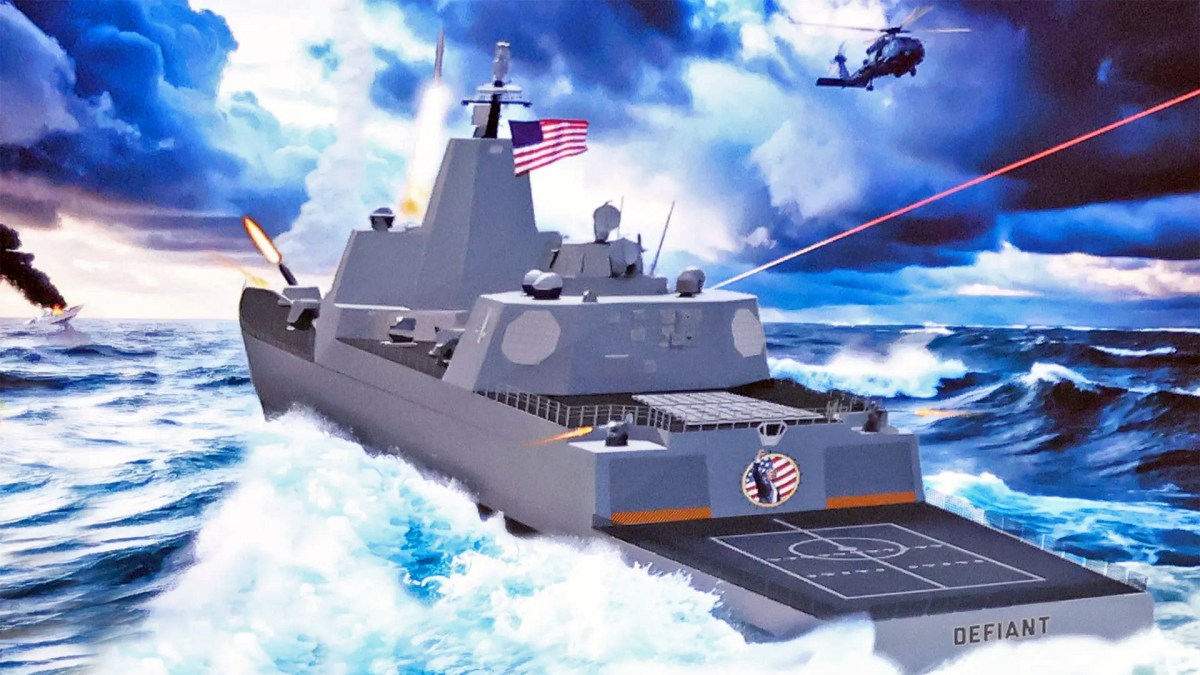
The U.S. Navy is offering a clearer picture of how it wants to approach the Trump-class battleship program, also known as BBG(X), and the message from senior leaders is as much about acquisition discipline as it is about combat power. At the Navy League’s Sea Air Space 2026 exposition, Chief of Naval Operations Adm. Daryl Caudle and Navy Secretary John Phelan discussed the emerging program, which was formally rolled out by President Donald Trump in December. The first ship is currently planned to be named USS Defiant.
The program is being described as a major new large surface combatant effort. According to the details shared so far, the Trump-class ships would displace about 35,000 tons, making them roughly three times the displacement of the newest Flight III Arleigh Burke-class destroyers. The ships are expected to be between 840 and 880 feet long, with a beam between 105 and 115 feet, and a top speed greater than 30 knots.
The headline figure is cost. The first vessel could cost around $17 billion, according to the report. That scale makes the program a strategic and budgetary bet, not merely a shipbuilding initiative. Navy leadership is emphasizing that the design must be firm before construction begins, a lesson drawn from the collapse of the Constellation-class frigate effort last year.
Design stability is now the central issue
The Navy’s public comments show that officials understand the risks of starting work before the design is mature. The Constellation-class frigate became a cautionary example after design instability and repeated changes contributed heavily to the program’s demise. For BBG(X), leaders are signaling that they want to prevent the same pattern from taking hold.
That concern matters because the proposed battleship is not a modest adaptation of an existing platform. Its size, projected missile load, and mission profile place it in a different category from destroyers and cruisers. The armament is expected to include a mix of nuclear and conventional missiles, including hypersonic types, loaded into large vertical launch system arrays. That would make the ship a major strike platform as well as a visible symbol of naval power.
Adm. Caudle described the ship as a necessary element of the force and said it would provide flexibility. That framing suggests the Navy sees BBG(X) as a platform able to contribute across multiple operating concepts, rather than as a narrow replacement for an older class. The combination of long-range weapons, large displacement, and high speed points to a vessel designed for presence, strike capacity, and survivability at scale.

A leadership change adds uncertainty
The discussion of the program came as the Pentagon announced that Navy Secretary John Phelan was departing the administration effective immediately. Undersecretary Hung Cao is set to become acting secretary. No reason for the change was immediately given in the supplied reporting.
That timing introduces uncertainty around a program that is already likely to face scrutiny. A $17 billion lead ship, a new battleship label, and a design that includes nuclear and conventional missile options all invite political, budgetary, and strategic debate. The program will need to survive not only technical review but also the normal pressures of congressional oversight and changing defense priorities.
The Navy’s early emphasis on design maturity is therefore significant. It is an acknowledgment that the program’s success will depend on whether the service can translate ambition into a stable, buildable ship design before industrial work begins. If the design remains fluid, the cost and schedule risks could grow quickly.
Why it matters
The Trump-class battleship program is important because it reflects a broader question facing the U.S. Navy: whether very large surface combatants still offer enough operational value to justify their cost and complexity. The Navy appears to believe that a heavily armed, high-speed ship with large missile arrays can give commanders new options. But the same features that make BBG(X) attractive also make it difficult to execute.
For now, the program is less a finished answer than a test of whether the Navy can apply the lessons of failed shipbuilding efforts. The service is promising a firmer design process and a clearer use case. The next stage will show whether those commitments can hold under the pressure of cost, politics, and the practical realities of building a warship at this scale.
This article is based on reporting by twz.com. Read the original article.

Originally published on twz.com