A dense naval posture has formed around the Iran blockade
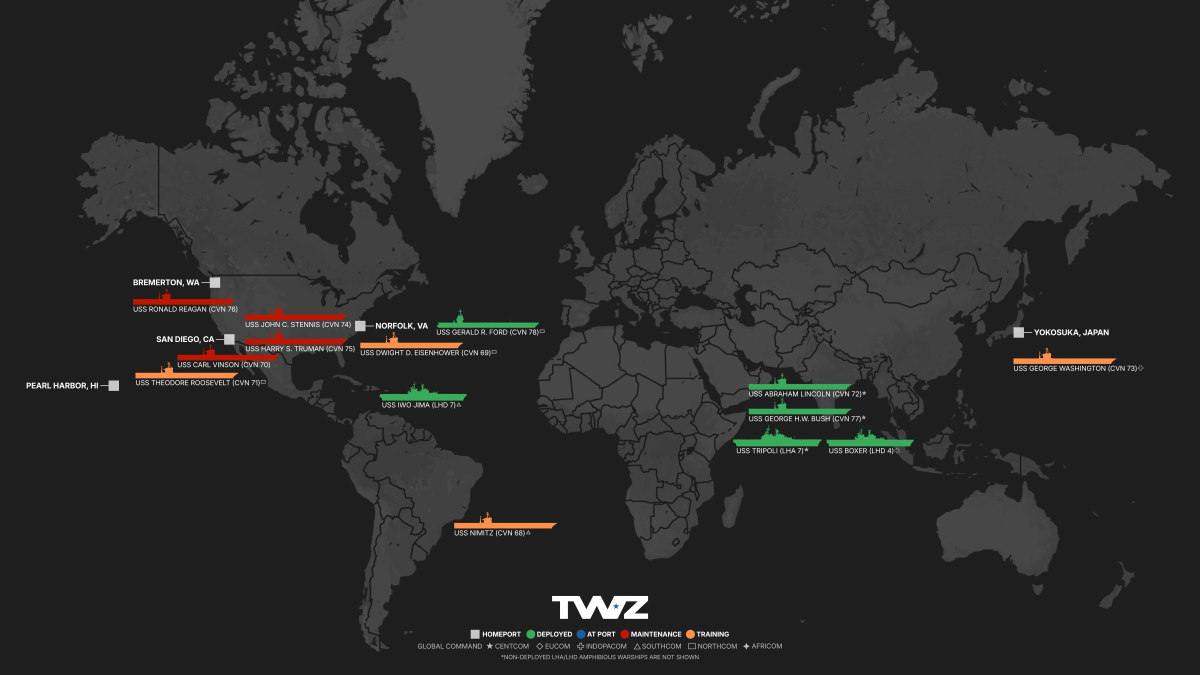
The U.S. Navy’s latest carrier positioning shows a striking concentration of combat power in the U.S. Central Command area, where more than 20 American warships are now supporting enforcement of the blockade on Iran. Two carrier strike groups are part of that force, according to publicly available tracking information cited in the Navy-focused weekly carrier roundup.
The scale matters on its own, but the operational details matter more. U.S. Central Command said forces involved in the blockade have redirected 61 commercial vessels linked to Iran and disabled at least four that were attempting to run it. Those figures indicate that the campaign is not just a symbolic pressure effort. It is an active maritime enforcement operation with repeated interdictions and visible naval presence.
The deployment picture also shows how heavily the Navy is leaning on carrier aviation and escort forces to sustain that effort. Carrier strike groups remain among the United States’ most flexible tools for combining surveillance, air power, maritime control, and deterrence in a single package. With two of them operating in or near the theater, Washington is signaling both staying power and readiness to escalate pressure if necessary.
The George H.W. Bush and Abraham Lincoln groups are central to the mission
The USS George H.W. Bush carrier strike group is one of the principal formations involved. New Navy imagery released last week showed the carrier conducting flight operations in the Arabian Sea on May 6. Visible on the flight deck were 25 F/A-18E/F Super Hornets, two E-2D Hawkeyes, and three MH-60 Seahawks assigned to Carrier Air Wing 7, offering a useful snapshot of the air wing available for operations.
The Bush group’s composition is notable because, unlike the USS Abraham Lincoln carrier strike group operating in the same area of responsibility, it is not equipped with carrier-based F-35Cs. That does not diminish its relevance to the blockade mission, but it does highlight a difference in capability mix between the two formations. In practical terms, the Navy appears to be relying on proven fourth-generation strike fighters, airborne early warning aircraft, and rotary-wing support to maintain pressure in the maritime domain.
For the blockade itself, that mix is well suited to patrol, identification, escort, and rapid-response missions. Super Hornets can provide armed overwatch and strike options. Hawkeyes extend situational awareness. Helicopters remain essential for search, logistics, and maritime interdiction support. The result is a layered force built for persistence rather than just headline visibility.
A prolonged deployment is ending for the USS Gerald R. Ford
While the focus in Central Command is on current enforcement activity, another major carrier story is unfolding farther west. The USS Gerald R. Ford carrier strike group has transited the Strait of Gibraltar westbound and is now steaming toward Norfolk, marking the final phase of a deployment that has stretched far beyond its original plan.
As of May 11, the Ford strike group had been deployed for 322 days. It departed Norfolk in June 2025 and was initially expected to return in January. Instead, the deployment was extended twice to support combat operations in the Caribbean and the Middle East. That timeline underlines one of the defining pressures on the modern U.S. Navy: carrier groups are routinely asked to absorb extra missions when crises multiply faster than force structure can comfortably support.
Ford’s return matters beyond the homecoming itself. Extended deployments affect maintenance cycles, crew fatigue, training schedules, and the timing of future force availability. When a carrier remains at sea far longer than planned, the consequences ripple across the wider fleet. That is especially relevant when another theater, in this case Central Command, is consuming substantial naval capacity at the same time.
What this carrier picture says about U.S. strategy
Taken together, the week’s carrier movements reveal a Navy balancing immediate coercive operations with the strain of long-duration global presence. The Iran blockade is being enforced by a sizable, visible force centered on two carrier strike groups. At the same time, the Ford group’s delayed return shows how sustained demand in multiple regions can compress operational flexibility.
The blockade numbers released by Central Command are also significant because they provide a measurable indicator of activity. Redirecting 61 commercial vessels and disabling four suspected blockade runners suggests a campaign that is both broad and labor-intensive. Maritime enforcement at that scale requires not only ships, but also persistent surveillance, command-and-control coordination, and rapid decision-making across a crowded operating environment.
That helps explain why carrier strike groups remain so valuable. They bring together air cover, escorts, communications, and command infrastructure in a form that can be repositioned without relying on host-nation basing in the same way land-based forces do. In politically sensitive situations, that mobility can be as important as the firepower.
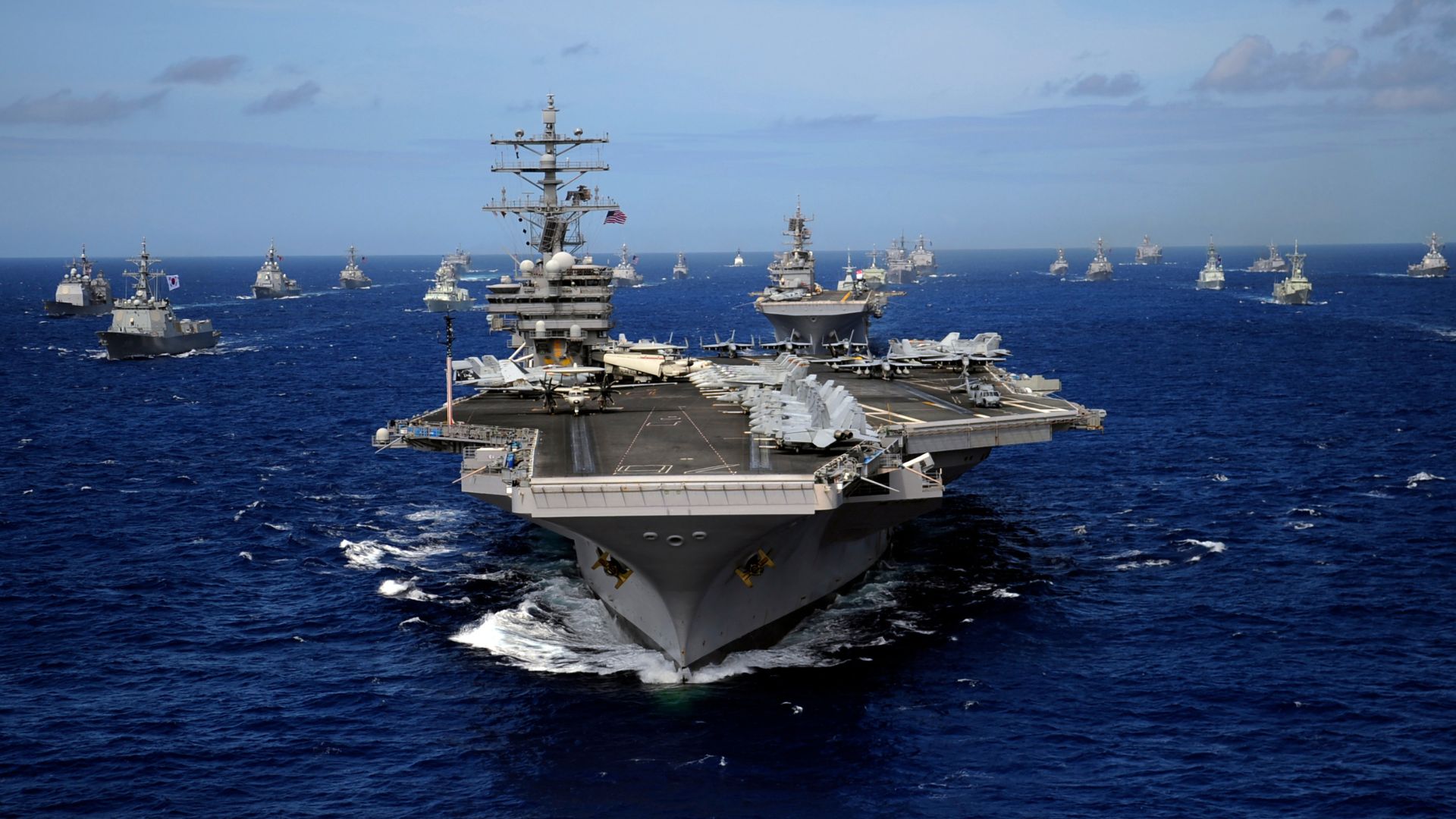
There is also a signaling dimension. A blockade backed by more than 20 U.S. warships sends a message not just to Iran, but to commercial shipping, allied governments, and any third-party actors weighing whether to test enforcement boundaries. The presence of two carrier strike groups raises the cost of miscalculation.
The near-term outlook
If current patterns hold, Central Command will continue relying on heavy naval presence to sustain the blockade while the Ford strike group completes its long transit home. The biggest variable is whether the present force level proves temporary or becomes the new baseline for the operation.
For now, the picture is clear. One carrier group is finally closing out an exceptionally long deployment. Two others are at the center of one of the most force-intensive maritime enforcement efforts now underway. The Navy’s weekly map therefore captures more than fleet geography. It shows how carrier availability, regional crisis management, and deployment strain are colliding in real time.
- More than 20 U.S. warships are enforcing the blockade on Iran in the Central Command theater.
- Central Command said 61 Iran-linked commercial vessels have been redirected and four blockade runners disabled.
- The USS George H.W. Bush and USS Abraham Lincoln carrier strike groups are supporting the operation.
- The USS Gerald R. Ford is heading toward Norfolk after a 322-day deployment extended twice beyond its original schedule.
This article is based on reporting by twz.com. Read the original article.
Originally published on twz.com