A symbolic change with a real price tag
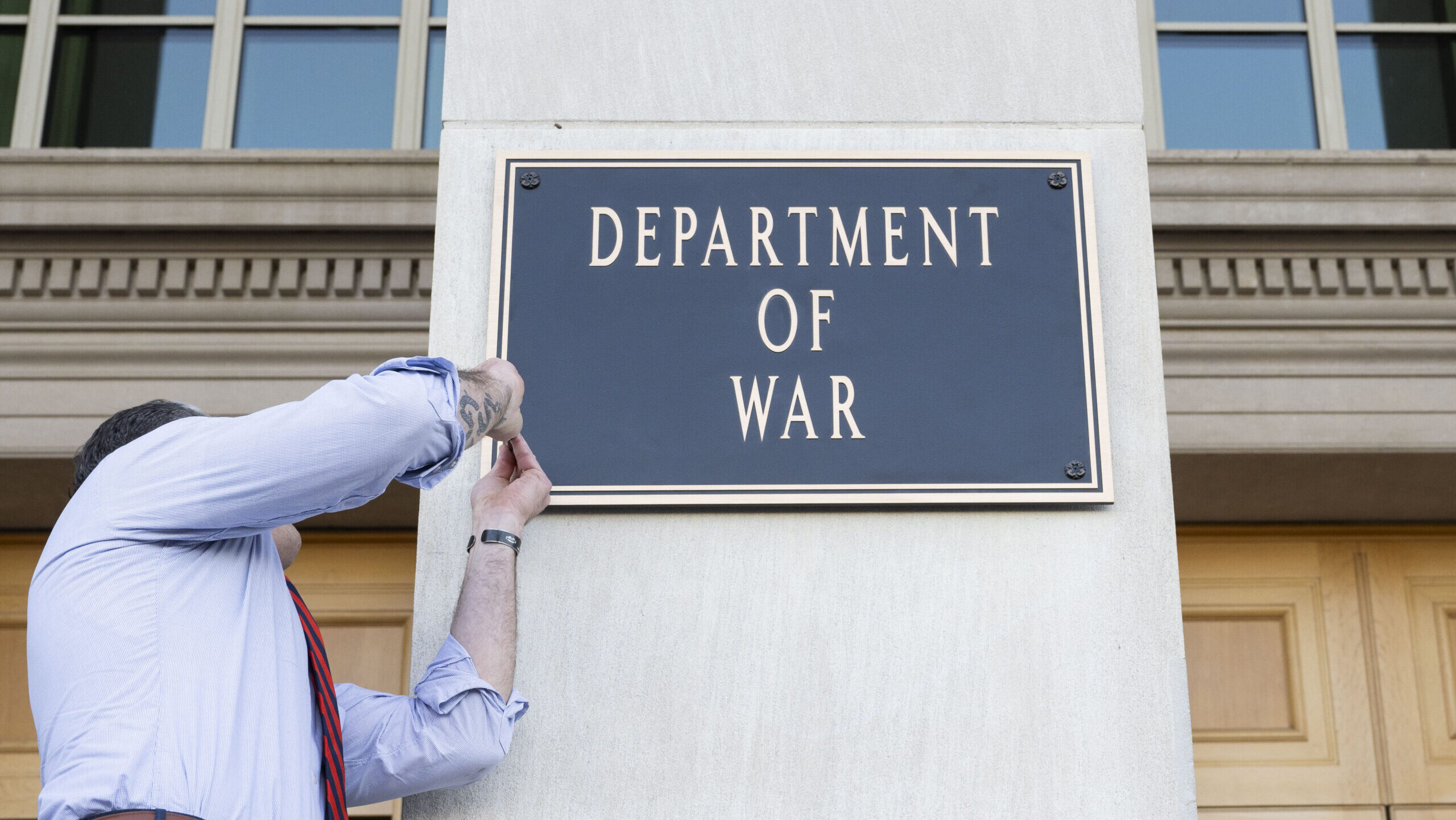
The Pentagon has formally asked Congress to rename the Defense Department as the Department of War, escalating a symbolic campaign that is now colliding with budget politics and partisan reaction. The request appears in a legislative proposal tied to the coming fiscal 2027 defense policy debate, setting up a fight as lawmakers begin work on the next National Defense Authorization Act.
The department argues in the proposal that the new name would serve as a “fundamental reminder” of its core mission to “fight and win wars.” That framing makes the move more than a branding exercise. It is being presented internally as a statement about institutional priorities, identity, and how the department wants its activities measured.
But even before Congress weighs the symbolism, the numbers are attracting attention. The proposal says the rename would have “no significant impact” on the fiscal 2027 budget. At the same time, it estimates that roughly $51.5 million will be spent across the organization during fiscal 2026 to implement the change, with $44.6 million of that total going to defense agencies and field activities.
What the Pentagon says it has already done
According to the proposal, the department has already been making changes in fiscal 2026 using existing resources and, in its words, the “most cost effective and non-invasive ways.” That includes using existing stock before updating items such as letterhead and handling signage changes through collective purchases. The document also says actual costs incurred during the transition to “Department of War” nomenclature are still being collected.
Those details matter because they suggest the effort is not purely hypothetical. Elements of implementation are already under way, at least in administrative and visual form, even though Congress has not yet formally adopted the name change in statute. That procedural posture is likely to sharpen criticism from lawmakers who see the campaign as premature, political, or fiscally wasteful.

Budget estimates vary sharply
The Pentagon’s estimate is not the only one in circulation. In January, the Congressional Budget Office estimated that a statutory renaming of the Defense Department could cost at least $10 million. It also warned costs could climb as high as $125 million if the change were implemented broadly and rapidly throughout the department.
The CBO went further, saying a statutory renaming could cost hundreds of millions of dollars depending on how Congress and the department chose to carry it out. That range illustrates the uncertainty built into any sweeping federal identity change. The answer depends not just on whether the name changes, but on how aggressively every sign, document, system, and subordinate entity is updated.
This cost ambiguity is one reason the proposal is likely to meet resistance even beyond its political symbolism. In an environment where defense spending debates already involve competing priorities across readiness, procurement, personnel, and modernization, a name change can quickly become a target for criticism if it appears to consume resources without changing operational capability.
The political fight ahead
Breaking Defense reports that the proposal is likely to rile Democrats as lawmakers begin negotiating the fiscal 2027 defense policy bill. That reaction is not difficult to understand. The phrase “Department of War” carries historic and ideological weight, and critics are likely to frame the move as performative or escalatory even if supporters insist it merely reflects the department’s real purpose.
Supporters, by contrast, can argue that the current name obscures the department’s central function and that a clearer title could sharpen internal focus. The proposal itself takes that position, presenting the new designation as a strategic objective for prioritizing activities.
That means the coming debate will probably run on two tracks. One track will be symbolic, centered on what the word “war” signals about American military power and civil-military identity. The other will be practical, focused on what taxpayers would be asked to fund and whether Congress wants to legislate an organization-wide rebrand while actual implementation costs remain unsettled.

More than semantics
Name changes inside government can seem cosmetic, but they often reveal deeper struggles over mission, authority, and public messaging. In this case, the Pentagon is explicitly tying nomenclature to purpose. The proposal says the revised designation would act as a “fundamental reminder” of the department’s mission and serve as a standard against which to measure and prioritize activity.
That is a strong institutional claim. It implies that language influences not only public perception but internal decision-making. Even so, critics may ask whether a new label would actually improve warfighting effectiveness or whether it would mainly consume managerial energy better spent elsewhere.
The tension is especially sharp because the proposal pairs mission-first rhetoric with a sizable implementation bill. Even if the lower end of projected costs proves correct, the change would still require government-wide work. If the higher-end scenarios emerge, the renaming effort could become a recurring example in broader arguments over symbolic politics inside national security institutions.
What happens next
Congress now becomes the decisive arena. Lawmakers will have to determine whether the proposal is a serious statutory change worth advancing, a negotiable political signal, or a costly distraction. The answer may depend less on branding theory than on coalition politics around the fiscal 2027 defense bill.
For the Pentagon, the request signals that at least some leadership sees institutional language as part of strategic posture. For Congress, it presents a more complicated question: whether a more martial name clarifies the department’s mission, or whether it risks inflaming political divisions while opening a new front in budget oversight.
Either way, the move has already advanced beyond slogan. It is now a formal legislative request with documented implementation costs and a likely partisan fight attached. That turns what could have been dismissed as rhetoric into a real policy story, one that blends symbolism, bureaucracy, and budget arithmetic in a single high-profile test case.
This article is based on reporting by Breaking Defense. Read the original article.

Originally published on breakingdefense.com