A small fragment with strategic significance
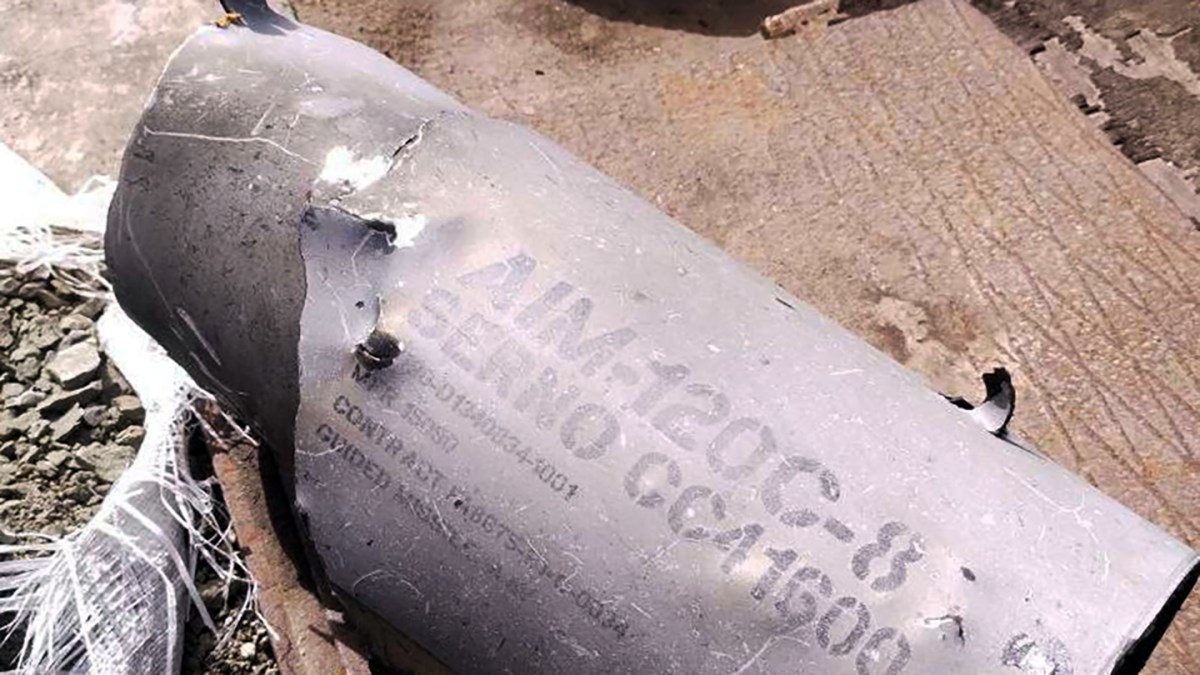
Recently circulated imagery of missile wreckage appears to show that Ukraine is using the AIM-120C-8, one of the more advanced variants of the AMRAAM family. On its own, a piece of debris is easy to dismiss. In wartime, however, fragments often reveal the real pace and character of military support better than formal announcements do.
According to the supplied report, the wreckage included markings clearly identifying the missile body as an AIM-120C-8. The remains were reportedly found after a Russian air attack on Dnipro in central Ukraine, during which Ukrainian forces were active in the city’s defense. If that identification is correct, it would represent the first confirmation that this specific sub-variant has been supplied to Kyiv, adding to earlier evidence that Ukraine had already received older AIM-120A/B versions and some form of the AIM-120C.
The distinction matters because not all AMRAAMs are equal. The AIM-120C family offers improvements over the earlier A and B models in areas the source text describes as including range, guidance, resistance to countermeasures, and other key capabilities. Even without diving into unsupported performance specifics, the basic implication is clear: a C-8 gives Ukrainian forces access to a more capable weapon than earlier generations.
There is also a flexibility advantage. Ukraine can use AMRAAMs from its F-16 fighters as well as from the National Advanced Surface-to-Air Missile System, or NASAMS. That means the same missile family can support both air-to-air combat and ground-based air defense missions, simplifying logistics and expanding tactical options. For a military fighting under persistent air and missile threat, multi-role utility matters.
The report notes that previous imagery of Ukrainian F-16s had already confirmed the use of some AIM-120C variant, identifiable by cropped fins designed for internal carriage in aircraft such as the F-22 and F-35. The C-8 confirmation, if borne out, narrows that picture and suggests that Ukraine is not merely operating exportable or legacy stock at the bottom end of the AMRAAM family.
This has two broader implications. First, it may indicate a continued willingness among partners to provide relatively modern air-combat munitions rather than limiting transfers to older inventories. Second, it points to the growing sophistication of Ukraine’s layered air defense and fighter integration. Advanced missiles are most meaningful when paired with platforms, sensor networks, and command structures capable of exploiting them.
It is worth being careful about what wreckage can and cannot prove. A recovered missile body shows presence, not quantity. It does not reveal stockpile depth, usage rules, firing platform in that specific instance, or long-term sustainability of supply. But presence still matters. In conflicts where capability gaps can hinge on the sub-variant of a missile, that kind of evidence can reshape outside assessments of defensive reach and combat potential.
The timing is also important. Russia’s ongoing use of air attacks against Ukrainian cities keeps pressure on Ukraine’s interceptor inventory and forces constant adaptation. Any sign that Kyiv is fielding more advanced AMRAAM variants will draw attention because it speaks to both resupply and survivability. If the missile was used in the defense of Dnipro, the evidence ties the hardware directly to an active urban protection mission rather than to a parade of future possibilities.
More broadly, this is a story about how modern conflicts are documented. Open-source imagery, social media circulation, and fragment analysis now play a central role in identifying what weapons are in theater. Governments still control many official disclosures, but battlefield transparency has shifted. Analysts often learn about new capabilities from a serial marking in a photograph before they hear about them from a podium.
For Ukraine, the importance of that transparency is double-edged. It can underscore continuing support and deterrent value, but it can also expose details about operational inventory. For outside observers, though, the new wreckage offers one clear takeaway: Ukraine appears to be fielding a near-top-tier AMRAAM variant, strengthening the case that its Western-supplied air defense and fighter arsenal continues to evolve in capability, not just in volume.
This article is based on reporting by twz.com. Read the original article.
Originally published on twz.com