Another sudden leadership change at the Pentagon
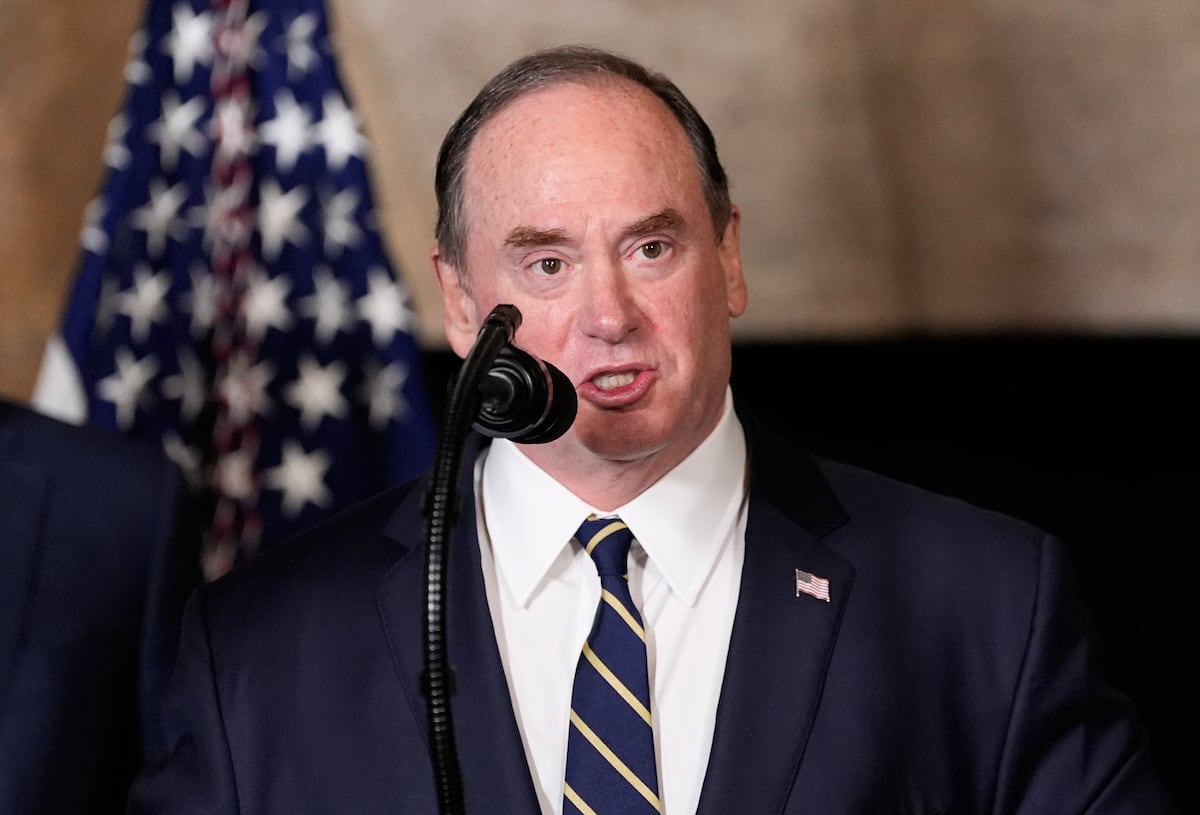
The Pentagon has removed Navy Secretary John Phelan from his post effective immediately, according to an announcement from Chief Pentagon Spokesman Sean Parnell. Navy Undersecretary Hung Cao will assume the role of acting secretary.
No public explanation accompanied the initial announcement. A senior administration official later told Military Times that President Donald Trump and Defense Secretary Pete Hegseth agreed that new leadership at the Navy was needed. The official also said Hegseth informed Phelan before the decision became public.
A short tenure ends without warning
Phelan had been confirmed in March 2025 by a 62-30 Senate vote and was notable as just the seventh non-veteran to hold the Navy secretary role in the previous 70 years. His removal comes shortly after public appearances at the Navy League’s Sea-Air-Space symposium in Washington, where he discussed shipbuilding capacity and the service’s effort to expand vessel requests in the 2027 fiscal defense budget.
The abrupt timing is striking because it arrived in the middle of ongoing public discussion about naval expansion and readiness. It also landed while the Navy remains engaged in operationally sensitive conditions tied to the conflict with Iran and activity in the Strait of Hormuz.
Part of a broader pattern under Hegseth
Phelan’s ouster does not stand alone. The report places it within a wider series of high-level removals since Hegseth took office. Earlier in April, Hegseth asked Army Chief of Staff Gen. Randy George to step down and retire immediately, shortening a tenure that had begun in September 2023. Other senior Army figures were also removed that same day.
More broadly, the report says Hegseth has fired more than a dozen generals and admirals, including Chairman of the Joint Chiefs of Staff Gen. C.Q. Brown. That pattern suggests a deliberate effort to reshape military leadership rather than isolated personnel decisions tied to one department.
Why the Navy transition matters now
The Navy secretary position carries unusual weight because it sits at the intersection of budgeting, shipbuilding, force posture and industrial capacity. Phelan himself had recently emphasized shipbuilding as a priority, with the Navy seeking to increase vessel procurement. Replacing the department’s civilian leader at such a moment introduces uncertainty about continuity, decision-making and the pace of major acquisition efforts.
Hung Cao’s move into the acting role gives the administration immediate continuity, but acting leaders rarely carry the same policy latitude or long-term mandate as confirmed officials. That can matter when the department is balancing operational demands abroad with complex budget and shipbuilding decisions at home.
The larger story is therefore not just a personnel change. It is what that change signals about instability at the top of the military chain of leadership. Abrupt turnover can be used to accelerate policy alignment, but it can also complicate long-range planning in institutions that depend on continuity. With naval operations under pressure and shipbuilding central to future strategy, the removal of the Navy secretary is likely to be watched for what comes next as much as for why it happened.
This article is based on reporting by Defense News. Read the original article.
Originally published on defensenews.com