A new interception method emerges from a war of adaptation
Ukraine says it has achieved a first in modern combat by using an unmanned surface vessel to launch an interceptor drone that destroyed a Russian Shahed attack drone. If the reported engagement proves repeatable at scale, it could mark an important shift in how low-cost autonomous systems are layered into air defense, especially over coastal approaches where geography and force structure create unusual vulnerabilities.
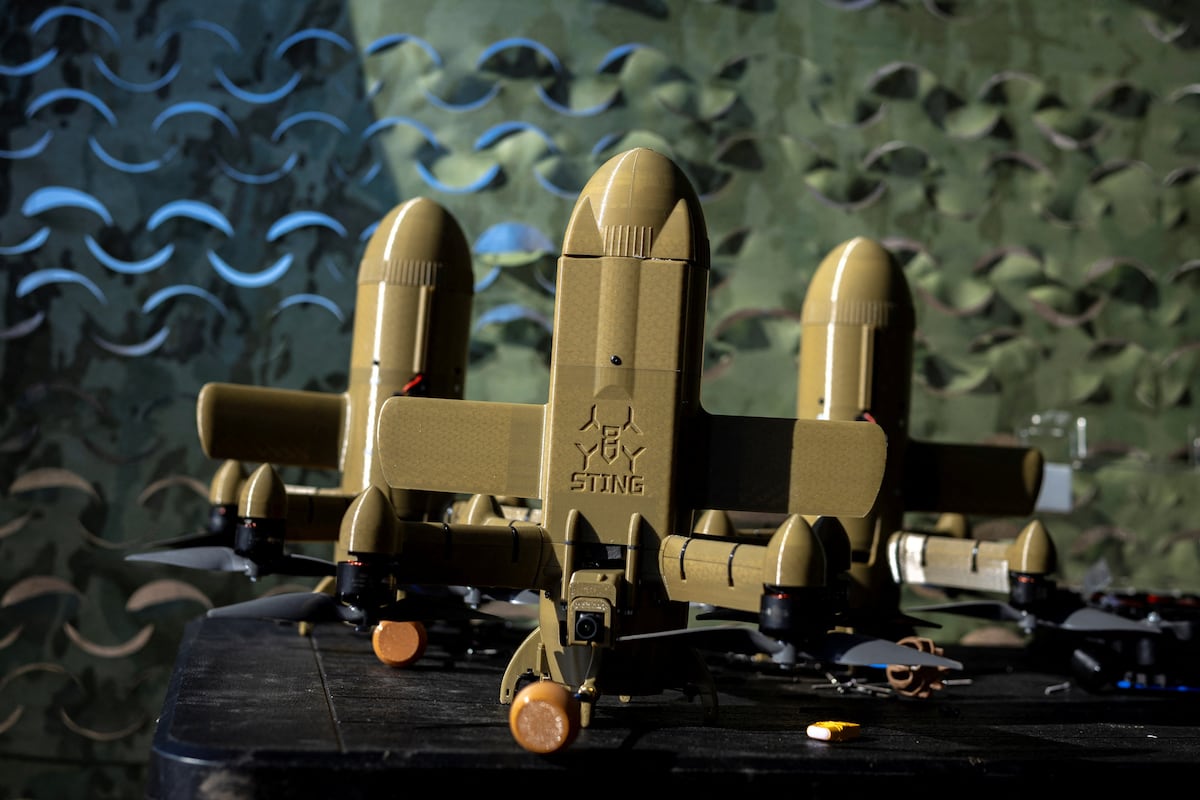
The Ukrainian Unmanned Systems Forces reported that the 412th Brigade Nemesis carried out the interception using a Sting drone launched from an unmanned seaborne vehicle. Defense News described it as the first successful use of this method against a Shahed. The immediate significance lies in the tactical problem Ukraine is trying to solve: Russian attacks frequently approach southeastern Ukrainian cities over the Black Sea, exploiting both the route and Ukraine’s limited traditional naval power.
Shahed drones have become one of the central tools in Russia’s strike campaign. They are relatively cheap, persistent and psychologically disruptive, tying up more expensive air-defense resources while threatening urban areas and infrastructure. Ukraine’s answer, like much of the war’s innovation cycle, has been to combine domestic production, operational improvisation and rapid field learning.
Why launching from the sea matters
Using a surface drone as a mobile launch platform changes the geometry of interception. Instead of waiting for incoming drones to move inland, defenders can potentially push an interception layer outward over water, closer to likely approach corridors. That may improve response time, create additional shot opportunities and reduce the burden on air assets operating from land.
The concept also matters because it turns a naval weakness into an asymmetric advantage. Ukraine does not possess the kind of conventional fleet that would normally dominate littoral defense in a maritime war. But it has repeatedly used unmanned maritime systems to create tactical options that are cheaper and harder to predict. Extending those systems into air defense is a logical next step in a conflict where boundaries between domains have steadily eroded.
From a systems perspective, the reported interception suggests a layered architecture made from comparatively low-cost parts: an unmanned vessel to position the launch point, an interceptor drone to pursue the target, and a command-and-control framework capable of coordinating both. That does not make the problem easy. It merely indicates that Ukraine is seeking alternatives to spending scarce high-end munitions on every low-cost inbound threat.
A response to the Shahed problem
The Shahed has become more than a munition. It is a strategic instrument of pressure. Defense News described Russia’s use of the drones as part of a broader attempt to wear down civilians, sustain attritional pressure and influence future negotiations. In that context, even a modestly successful new interception method can matter if it reduces strike effectiveness against cities such as Odesa or forces Russia to adjust routing, timing or volume.
Ukraine’s public framing reflected that logic. The Unmanned Systems Forces said that using surface drone carriers to deploy interceptor drones expands air-defense options and creates an additional layer of protection for Ukrainian cities. The phrase “additional layer” is the key one. No single method is likely to solve the Shahed problem on its own. The value lies in multiplying options so that attackers face more uncertainty and defenders can match response cost more efficiently to threat cost.
That cost equation increasingly defines drone warfare. When a cheap one-way attack drone compels the launch of a far more expensive interceptor, the defender can still win tactically while losing economically over time. Low-cost counter-drone approaches are therefore not just battlefield innovations. They are budgetary and industrial necessities.
The broader military significance
The experiment is also being watched beyond Ukraine. Defense News linked the development to growing interest in countering Iranian-derived drone threats more broadly, including U.S. Army purchases of low-cost interceptor drones. That does not mean militaries can simply copy Ukraine’s approach. Wartime innovation often depends on urgent feedback loops, permissive doctrine and acceptance of operational risk that peacetime organizations do not easily replicate.
Still, the principle is likely to travel. Coastal states facing one-way drone threats may see value in dispersed unmanned launch platforms that can persist in contested waters and support air defense without exposing crewed vessels. The same logic could influence harbor protection, expeditionary basing and defense of offshore infrastructure. In each case, the attraction is similar: relatively expendable systems that extend defensive reach and complicate an attacker’s assumptions.
There are also obvious constraints. A reported single success does not establish sustained effectiveness. Reliability, weather tolerance, communications resilience, target acquisition and rules for autonomous or semi-autonomous engagement all remain major practical variables. Adversaries can adapt as well, altering flight profiles or introducing countermeasures once a new defense technique becomes visible.
An innovation that fits the pattern of the war
Even with those caveats, the reported interception fits the broader pattern of Russia’s war against Ukraine: operational necessity producing rapid combinations of tools that once sat in separate categories. Sea drones are no longer only for maritime strike or reconnaissance. Air-defense drones are no longer tied only to ground launch points. The battlefield is becoming a network of modular, unmanned nodes that can be repositioned and repurposed quickly.
That is why this episode matters. It is not merely an anecdote about a novel kill. It is a sign of how militaries under pressure are beginning to treat unmanned systems as cross-domain infrastructure rather than single-purpose platforms. If Ukraine can sustain the approach, it may modestly strengthen the defense of Black Sea cities in the near term while offering a broader lesson in how affordable autonomy can reshape coastal defense.
- Ukraine reported using an unmanned surface vessel to launch an interceptor drone that destroyed a Shahed attack drone.
- The method could add a seaward interception layer for cities threatened by Black Sea approach routes.
- The tactic reflects a broader push to use lower-cost systems against lower-cost airborne threats.
- A single reported success is significant, but sustained battlefield effectiveness remains to be proven.
This article is based on reporting by Defense News. Read the original article.
Originally published on defensenews.com