A rapid push to harden the fleet
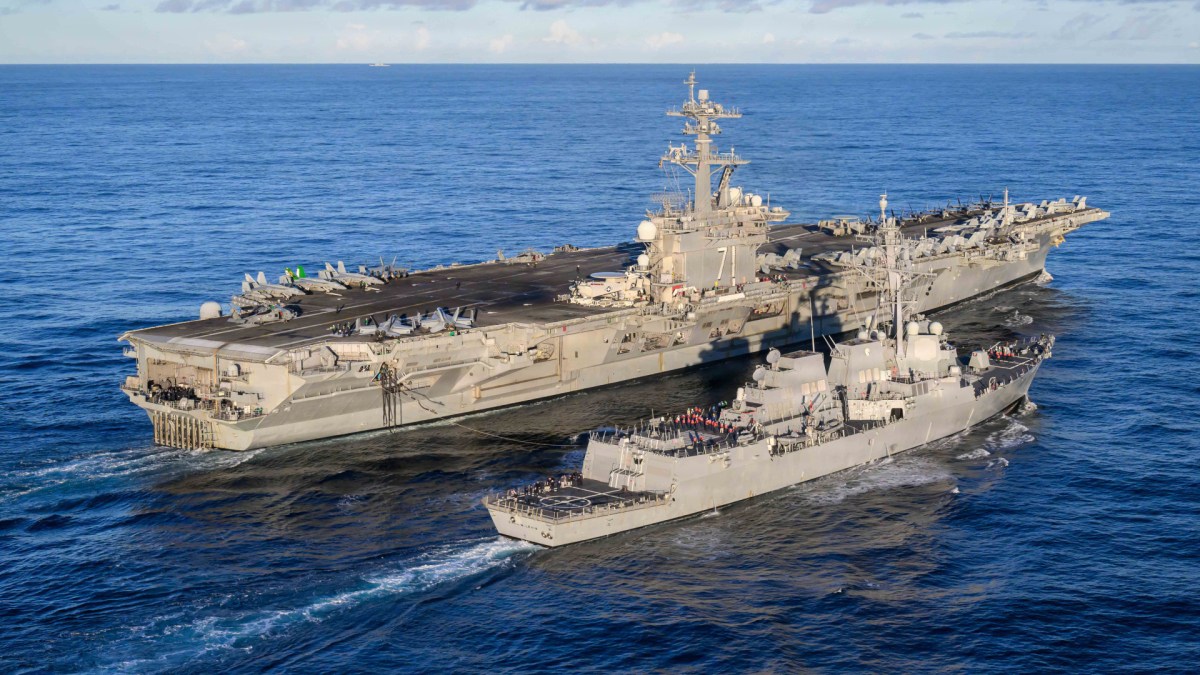
The U.S. Navy is accelerating efforts to give carrier strike groups stronger defenses against drones, and newly released budget documents show just how urgently that work has moved. According to the supplied report, the service used supplemental funding to rapidly field counter-unmanned aerial system capabilities for the Gerald R. Ford and Theodore Roosevelt carrier strike groups, including Longbow Hellfire launchers, Coyote launchers, and the associated installation and integration work.
The disclosure matters because it points to an operational shift, not a distant modernization plan. The Navy is reacting to a threat environment in which one-way attack drones and other uncrewed aerial systems are no longer peripheral concerns. They are becoming routine hazards for warships operating in contested regions.
Why Hellfire at sea matters
The Longbow Hellfire is best known as a radar-guided missile associated with aircraft and land warfare, but the Navy’s use of shipboard launchers reflects a broader search for layered, hard-kill options against aerial threats. The report says the service has also moved Coyote interceptor launchers onto four Arleigh Burke-class destroyers. Together, those systems represent an attempt to build more flexible short-range defenses for surface combatants and the wider strike groups around them.
That is important because drone threats can stress traditional naval air defense systems in ways that are economically and tactically unfavorable. Using large, expensive missiles against relatively cheap unmanned systems is a poor long-term exchange. Rapidly fielded launchers for Hellfire and Coyote suggest the Navy is trying to close that gap with tools better suited to the scale and persistence of the threat.
Operational experience is driving procurement
The report ties the new urgency directly to recent operational experience, especially in and around the Red Sea and in confrontations involving Iran. It says those experiences drove home the critical need for more shipboard defenses against uncrewed aerial threats. That framing is significant because it shows the fleet is not treating the drone problem as theoretical.
The budget language cited in the report makes clear that the work spans multiple fiscal years. Funding in fiscal 2024 and 2025 was used to field counter-drone solutions to the Ford and Theodore Roosevelt groups, and the details now appearing in the fiscal 2027 request help reveal the scale and speed of the effort.
A wider fleet-defense transition
This is also part of a larger doctrinal transition. Surface fleets increasingly need defenses that can absorb saturation pressure from lower-cost airborne threats, including drones that may be launched in numbers, mixed with missiles, or used to probe for weak points. Hard-kill counter-drone systems do not replace existing missile defenses, but they can add an intermediate layer that is more sustainable in prolonged operations.
The report suggests the Navy is still building this architecture in real time. Some of the disclosed capabilities appear to have been fielded before the effort was publicly understood in detail. That is consistent with an environment in which urgent adaptation can outpace normal acquisition timelines and public visibility.
What the budget documents reveal
Budget documents often expose military priorities more clearly than speeches do, and here the message is straightforward. Counter-drone defense is now a near-term fleet requirement, not a niche add-on. The Navy has spent money not only on launchers themselves but also on installation and integration, which means operational deployment was the goal from the outset.
That does not answer every question. The supplied material does not specify the full deployment pattern, engagement concepts, or long-term program of record for these systems. But it does show that the Navy has already decided that more short-range counter-drone firepower is needed aboard ships supporting carrier operations.
For now, the broader conclusion is clear: the service is adapting to a threat picture in which drones are reshaping naval survivability. By moving Longbow Hellfire and Coyote launchers into carrier strike group defense, the Navy is acknowledging that future sea control will depend not just on high-end missile shields, but on practical ways to defeat the uncrewed systems already changing the fight.
This article is based on reporting by twz.com. Read the original article.
Originally published on twz.com