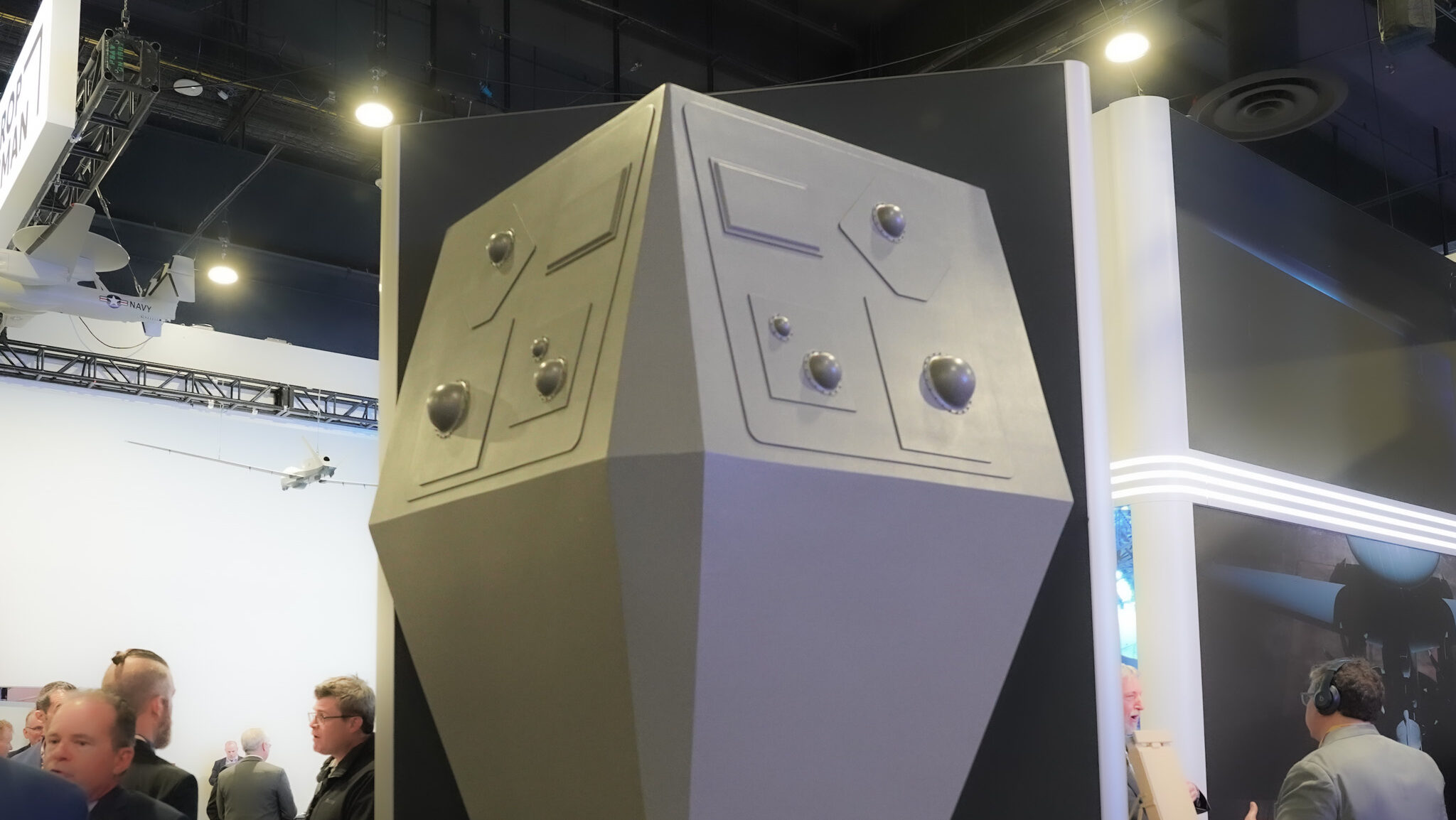
The Navy’s electronic warfare upgrade is expanding beyond destroyers
Northrop Grumman says it expects to begin delivering a carrier-specific version of the Navy’s Surface Electronic Warfare Improvement Program, or SEWIP, in 2028. The milestone, reported by Breaking Defense from the Sea Air Space exposition, marks an important expansion of a system better known for its role aboard destroyers.
According to Northrop executive Montá Harrell, the company now has two configurations in view: one for DDG destroyers and another for aircraft carriers. That distinction matters because carriers face different operational demands and present a different target profile than smaller surface combatants. Adapting a fleetwide electronic warfare architecture for the Navy’s largest warships is more than a routine production extension. It suggests the service is pushing to embed more advanced electronic attack and self-protection capabilities across a broader range of high-value platforms.
What SEWIP is designed to do
SEWIP is an upgrade to the Navy’s AN/SLQ-32 system. Its mission set includes electronic attack, early detection, signal analysis, threat warning and protection against anti-ship missiles. In practical terms, that means helping ships sense hostile emitters earlier, classify threats more effectively and respond in the electromagnetic spectrum rather than relying only on hard-kill defenses.
That role has become increasingly important as naval forces confront denser missile threats and more contested operating environments. Modern anti-ship weapons are faster, smarter and often networked into broader targeting architectures. A ship that can detect, interpret and jam or otherwise interfere with those threats gains more than survivability. It gains time, tactical flexibility and the ability to complicate an adversary’s kill chain.
Why the carrier integration matters
Aircraft carriers remain among the most strategically valuable and operationally visible assets in the US fleet. They are also among the most demanding to defend. Any system intended for carrier integration has to fit around the ship’s scale, mission complexity and existing combat systems while delivering credible protection in an environment saturated with sensors and emissions of its own.
Northrop’s March contract modification, cited by Breaking Defense, added nine ship sets beyond the company’s original 24 and included the first ship set for carriers. That makes the 2028 delivery target more concrete than a generic future aspiration. It indicates the carrier configuration has moved into a contractual production path, even if the Navy has not yet publicly identified which specific carrier will receive the first installation.
Electronic warfare as future-proofing
The company has also framed SEWIP Block 3 as a system with room to evolve. Breaking Defense notes earlier discussion of the configuration as bringing electronic attack capabilities to defend against anti-ship missiles while offering hope of future-proofing for integration with artificial intelligence and machine learning. That does not mean AI is suddenly the core of the current program. It does suggest the Navy and industry see software-driven evolution, automation and improved signal processing as central to the next phase of maritime electronic warfare.
That trajectory is consistent with the broader direction of naval modernization. The electromagnetic environment is now too complex for static responses. Systems increasingly need to classify signals rapidly, adapt to changing threat behavior and work across layered defenses. A platform like SEWIP becomes more valuable when it can improve through software and mission-data updates rather than wait for an entirely new hardware generation.
What remains unclear
One notable unknown is where the first carrier installation will land. Harrell told Breaking Defense Northrop deferred to the Navy on that question, and the service had not immediately responded. That leaves open whether the initial delivery will support new construction, modernization during maintenance or a phased integration effort across parts of the carrier fleet.
Still, the larger message is already visible. The Navy appears committed to widening the reach of its surface electronic warfare improvements, and Northrop is positioning itself as the prime contractor translating that demand into deployable systems. For a fleet increasingly focused on distributed lethality, missile defense and high-end maritime competition, the ability to shape the electromagnetic fight is becoming a baseline requirement rather than a specialist advantage.
If Northrop meets the 2028 schedule, the carrier version of SEWIP will represent a meaningful step in that shift. It will not transform naval combat on its own, but it will give some of the Navy’s most valuable ships a more advanced set of tools for seeing threats earlier, understanding them faster and disrupting them before they hit.
This article is based on reporting by Breaking Defense. Read the original article.
Originally published on breakingdefense.com