A readiness gap inside NATO’s front line
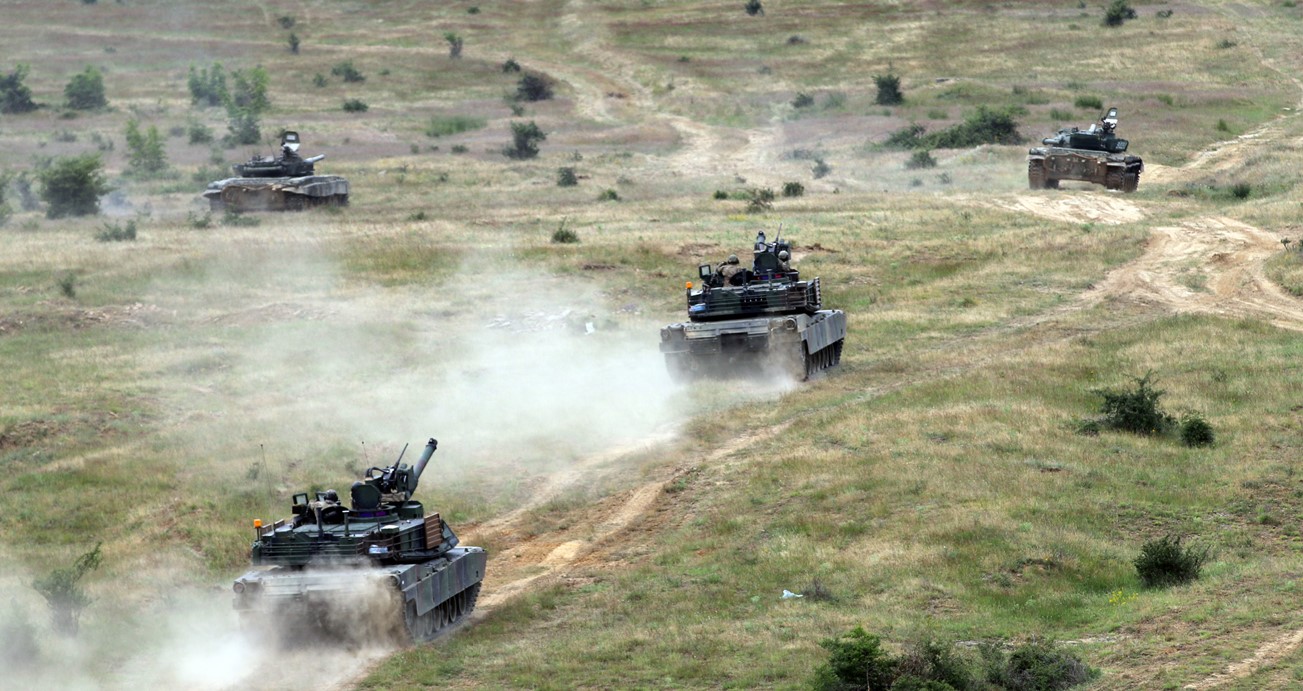
NATO’s eastern flank has received heavy political attention and major defense spending commitments since Russia’s war against Ukraine transformed the alliance’s security environment. But a new assessment from Globsec suggests that money alone has not resolved a more practical problem: some countries can make crisis decisions and move forces quickly, while others still face serious bottlenecks.
The think tank’s 2026 Annual Battle Readiness on the Eastern Flank examined countries along NATO’s eastern border using what it calls a decision-making timeline index. The measure focuses on how rapidly a state can act in an imminent crisis, looking at legal triggers, chains of authority, and the ability to move forces and host allied troops.
The basic conclusion is stark. According to the report authors, there is a clear divide between states with pre-delegated systems and states that rely on more sequential, politically layered decision models.
Who is moving fastest
Finland, Estonia, and Poland are identified in the source text as examples of systems better suited to crisis response. Their advantage is not simply that they spend more or talk more seriously about deterrence. It is that they have built mechanisms intended to compress decision time.
In Finland’s case, the report describes a legal framework in which emergency powers are effectively pre-authorized through contingency legislation. That allows authorities to adopt extraordinary measures immediately once established triggers are reached. The source text further says allied forces can move, stage, and operate with minimal additional political authorization once preparedness levels are elevated and decision-making becomes highly centralized.
That kind of legal and administrative preparation matters because deterrence at the eastern flank depends on action measured in hours, not days. If permissions, decrees, or political ratification steps slow troop movement during a fast-moving crisis, NATO may lose valuable time before a collective response is physically in place.
Estonia was assessed in similar terms. The report links its streamlined crisis governance model to high risk awareness and sustained exposure to hybrid pressure. That experience appears to have shaped a system more comfortable with fast authorities and compressed timelines.
Where the weaknesses remain
The report points to Hungary and Slovakia as cases where institutional friction is more visible. In Hungary, contingency planning is said to depend heavily on government decrees that often require ratification or re-authorization and can become politically disputed. In a crisis, that creates uncertainty about whether legal authority will move as quickly as military necessity demands.
This is not just a legal design issue. It touches the credibility of deterrence itself. A military alliance can possess substantial combat power on paper and still underperform if national authorities cannot clear the political and administrative path for forces to move at speed.
The source text also highlights sustainment as a serious weakness across many eastern flank countries. Maintenance capacity, logistics, and transportation infrastructure remain limiting factors. That is a reminder that readiness is not solely about frontline units or procurement totals. It is about whether forces can be supplied, repaired, and repositioned under wartime conditions.
Mobility is strategy
The report’s emphasis on troop movement is especially important. NATO’s eastern flank spans a complex geography in which reinforcement depends on roads, rail, host-nation support, border procedures, and local infrastructure that may not have been built for rapid wartime throughput. If armored units, air defense systems, or allied reinforcements cannot move efficiently, then deterrence suffers regardless of budget commitments.
That challenge has become more urgent as NATO refines plans for rapid reaction and forward defense. The alliance has become more focused on credible early response, but that requires member states to align law, command structure, and infrastructure with operational reality.
Globsec’s findings suggest some members have made that adjustment more successfully than others. The difference is not abstract. In a real emergency, a pre-delegated system may allow deployment before an adversary can exploit confusion. A slower, sequential system may create openings simply by taking too long to act.
What the report changes in the debate
Defense discussions about NATO readiness often focus on headline spending targets or new equipment. Those remain important, but the report redirects attention to what happens between warning and execution. Decision speed, allied access, and sustainment are less visible than procurement announcements, yet they may determine whether frontline deterrence is believable.
The findings also reinforce a larger lesson from European security over the last several years: resilience is administrative as well as military. Laws, authorities, staging permissions, transport corridors, and crisis governance structures can matter as much as additional brigades if they decide whether those brigades arrive in time.
Why it matters
The report suggests NATO’s eastern flank is stronger than before but still uneven in ways that could matter immediately in a crisis. Countries with pre-authorized decision systems appear better positioned to respond quickly, while others remain constrained by procedural and infrastructure weaknesses. For an alliance built on credible rapid reinforcement, that gap is not a technical detail. It is a strategic vulnerability.
This article is based on reporting by Breaking Defense. Read the original article.
Originally published on breakingdefense.com