The Navy’s carrier drone program has crossed an important threshold
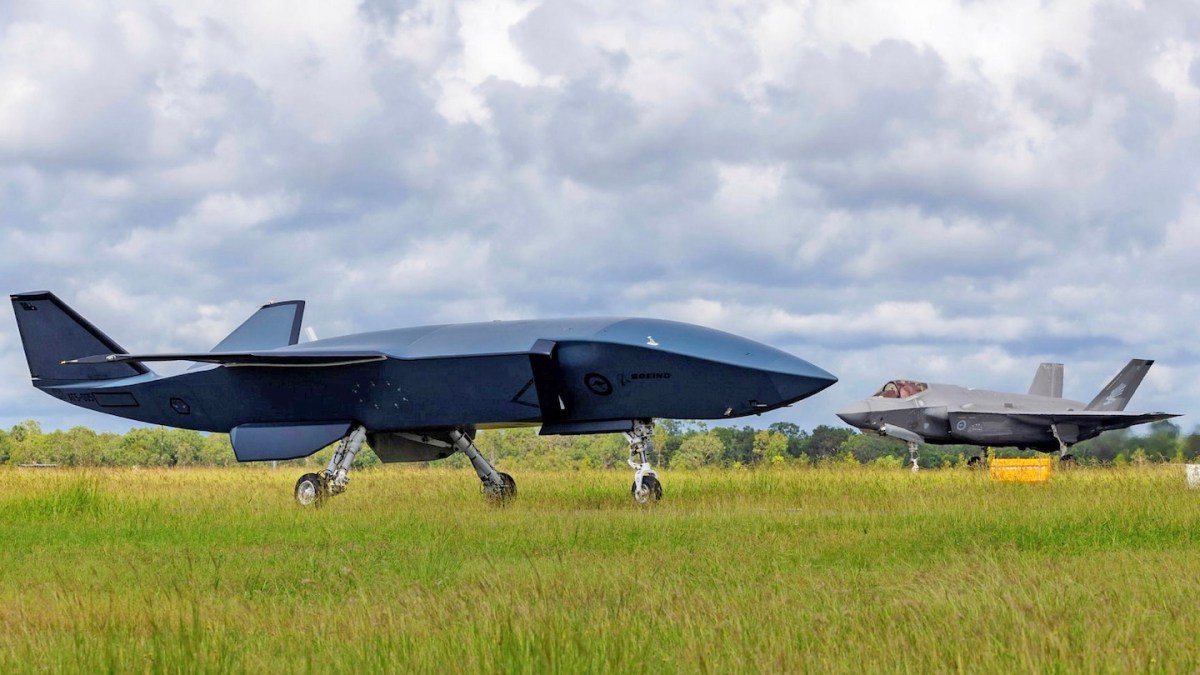
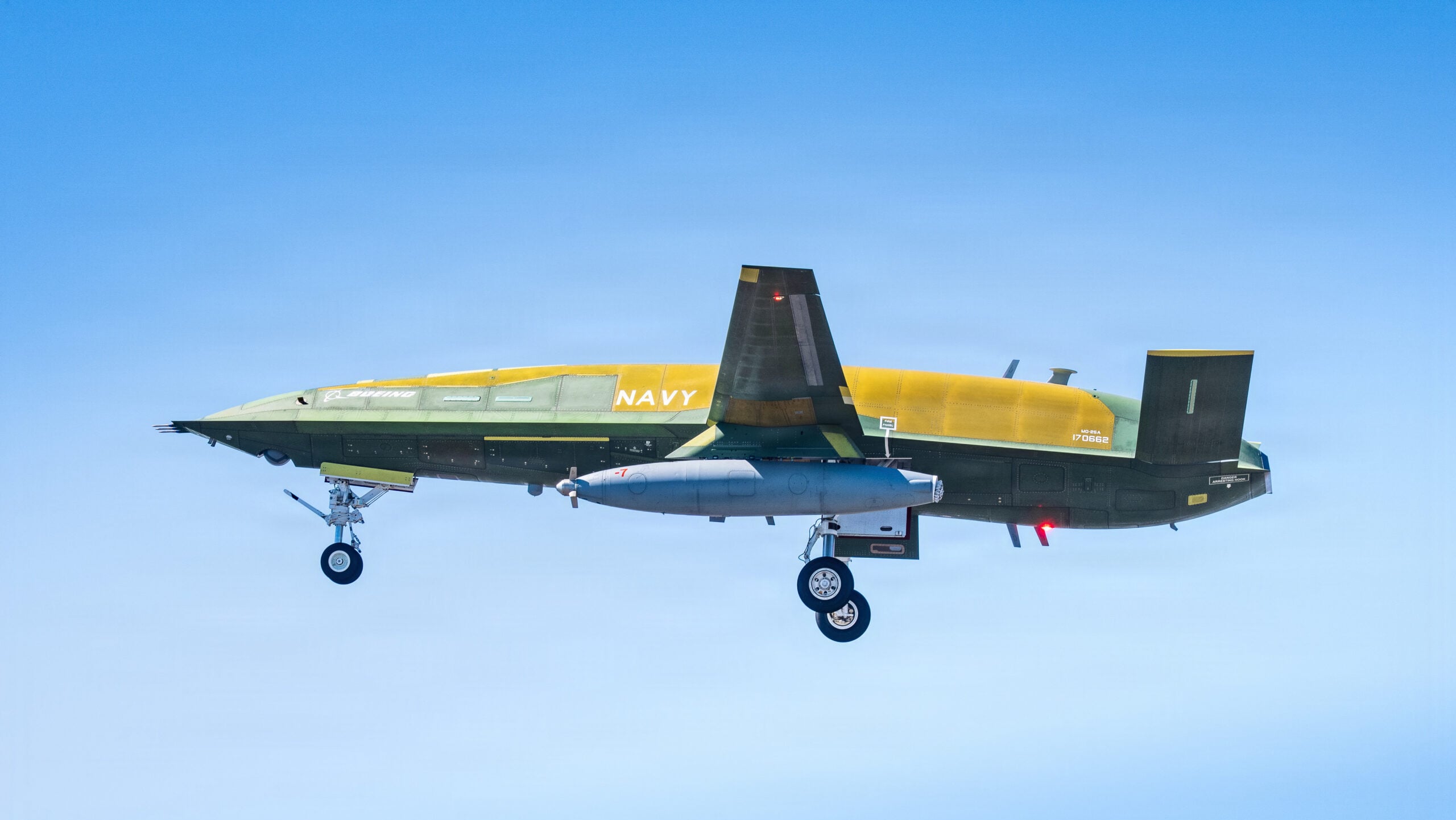
The US Navy’s MQ-25A Stingray completed the first test flight of a production-representative aircraft on April 25, a step that moves the service closer to putting its first operational carrier-based unmanned aircraft into the fleet. Boeing said the aircraft flew for about two hours from MidAmerica Airport in Mascoutah, Illinois, autonomously taxiing, taking off, flying, landing, and responding to commands from a ground control station.
That sequence matters because the MQ-25 is not just another drone development program. It is designed to extend the range and flexibility of the carrier air wing by taking on the mission of aerial refueling. In practical terms, that means manned aircraft that would otherwise be used as tankers can stay focused on combat and surveillance roles, while strike fighters can reach further targets with less strain on the rest of the force structure.
Why this test flight matters
Rear Adm. Tony Rossi, who oversees the Navy’s unmanned aviation and strike weapons portfolio, described the aircraft as the first step toward integrating unmanned aerial refueling onto the carrier deck. That description is notable because it frames the Stingray less as a standalone aviation novelty and more as an enabler for the rest of naval aviation.
The Navy has already shown that a previous MQ-25 test aircraft could refuel several front-line platforms, including the F/A-18 Super Hornet, the E-2D Hawkeye, and the F-35C Lightning II. The new flight therefore builds on an earlier proof of concept and begins to shift attention toward fielding a version of the system that is closer to what sailors and aviators would actually use.
Boeing called the new aircraft the most complex autonomous system ever developed for the carrier environment. That is a high bar, but it reflects a real operational challenge. Aircraft carriers are among the most demanding places in the world to fly from and recover to. The deck is crowded, dynamic, and tightly choreographed. Adding autonomous refueling aircraft to that environment requires not only reliable flight performance but predictable behavior across taxi, launch, recovery, and deck integration.
A program aimed at changing how the carrier air wing works
The Stingray’s role is strategically straightforward even if the engineering is not. Carrier air wings have long used manned aircraft to perform tanking missions, which consumes flight hours, airframe life, and pilot effort that could be used elsewhere. An unmanned refueler changes that equation by offloading a support task that is essential but not well matched to a costly tactical jet.
If the MQ-25 performs as intended, it could help the Navy increase the range of its manned fighters and reduce operational compromises inside contested environments. Rossi’s statement made that point directly, arguing that the capability will let manned fighters fly further and faster. In a Pacific scenario or any theater where reach and persistence are central, that is not a marginal gain. It is part of how the Navy preserves the relevance of the carrier as threats become longer-ranged and more networked.
The Stingray is also significant because it marks a more mature stage in the Navy’s broader unmanned aviation push. Carrier aviation has experimented with unmanned systems before, but the MQ-25 is positioned as an operational aircraft with a defined mission rather than a technology demonstration. That distinction shapes expectations. The question is no longer whether autonomous systems can contribute at sea; it is whether the Navy can integrate them at scale without disrupting the tempo and safety standards of carrier operations.
Progress after delays
The program has not moved without friction. Breaking Defense noted that the first flight of an operational aircraft comes after production delays, while an earlier demonstrator made its first flight in 2019. That gap is a reminder that the path from prototype to deployable system is often slower than advocates hope, especially when the aircraft must operate in one of the hardest environments in aviation.
Still, this latest flight suggests the program is advancing from demonstration toward execution. Dan Gillian, Boeing’s vice president and general manager for Air Dominance, said the event reflects years of learning from the MQ-25A T1 prototype and represents a major maturation point for the effort. The language is corporate, but the underlying point is concrete: the Navy and Boeing are now testing a system that is materially closer to the one intended for service use.
The aircraft is powered by a Rolls-Royce AE 3007N engine, and Rolls-Royce said it would continue working with Boeing and the Navy to make the platform operational. The engine detail is more than a supplier note. Mature propulsion is one of the practical building blocks that determine whether a program can move from milestone events to repeatable fleet performance.
What comes next
The first flight does not place the MQ-25 on a carrier tomorrow. The harder work now lies in expanding the test envelope, validating reliability, and proving the aircraft can fit into carrier routines without creating new bottlenecks. Autonomous taxi, launch, and landing are important achievements, but carrier qualification and sustained operations are the standard that matters.
Even so, this flight is one of the clearer signs in recent months that naval unmanned aviation is moving from concept to capability. The MQ-25 is intended to solve a specific operational problem, and that focus has helped it stand out from more speculative autonomous programs. If subsequent testing stays on track, the Stingray could become one of the Navy’s most consequential near-term aviation additions, not because it replaces pilots, but because it makes the rest of the air wing more effective.
This article is based on reporting by Breaking Defense. Read the original article.
Originally published on breakingdefense.com