Australia turns to Japan for a rapid frigate expansion
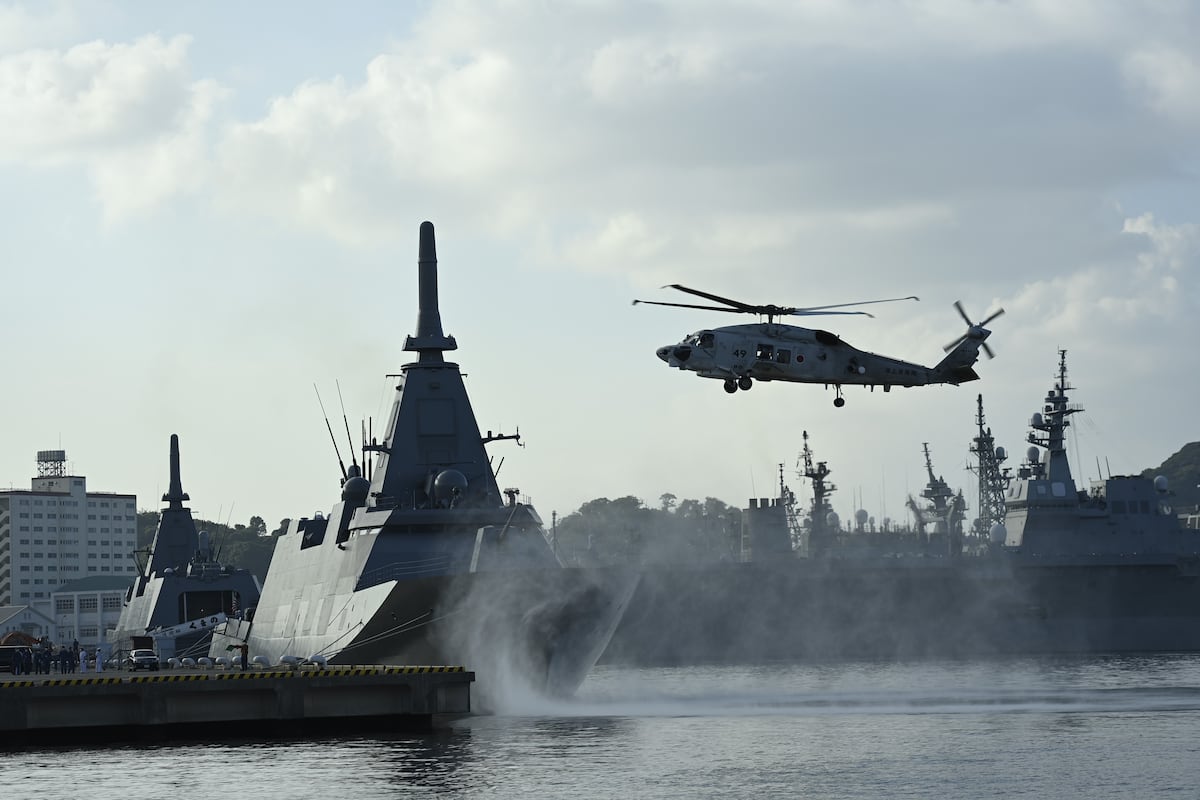
Australia has committed to a major frigate acquisition that ties together naval urgency, industrial policy and deeper strategic alignment with Japan. Under Project Sea 3000, Australia and Japan have signed a deal for three upgraded Mogami-class frigates to be built by Mitsubishi Heavy Industries in Japan, with another eight to follow in Western Australia.
The agreement, signed earlier in April aboard JS Kumano in Melbourne, is notable on several fronts. It is described as Japan’s largest-ever defense export, it gives Australia a faster path to replacing aging warships, and it expands a defense relationship that has become more important as Indo-Pacific security concerns intensify.
The first Japanese-built frigate is scheduled for delivery by December 2029. The broader effort, including construction in Australia, is expected to cost as much as A$20 billion over the next decade, about double the amount indicated two years earlier.
Why Australia is moving quickly
The Royal Australian Navy’s surface fleet is under pressure. Australia currently operates 10 surface combatants: three Hobart-class destroyers and seven Anzac-class frigates. The Anzac class is due to be replaced by the upgraded Mogami design.
That transition matters because officials are trying to avoid a prolonged dip in fleet capacity as older ships age out before new ones arrive in force. Defense Minister for Defence Industry Pat Conroy described the procurement as the fastest peacetime acquisition for the Royal Australian Navy, underscoring how urgently Canberra views the need.
Rear Adm. Stephen Hughes, the navy’s Head of Naval Capability, framed the issue less as a simple decline in ship count than as a transition toward more capable vessels. In his account, the Mogami program is intended to deliver a generational shift not just in weapons and sensors, but also in how the navy crews and operates ships.
What the Mogami brings
The upgraded Mogami-class frigates are presented as significantly more capable than the Anzac-class ships they will replace. Hughes said the design would allow the navy to “jump a generation in technology,” especially because of the ships’ automation and overall operating model.
The frigates are also meant to spend more time at sea. Hughes said they are expected to offer availability of 300 days at sea annually, a notable figure for a fleet under pressure to maintain presence across long distances.
The planned armament reflects a modern multirole combatant. According to the source text, the ships will carry ESSM Block 2 surface-to-air missiles in a 32-cell Mk 41 vertical launch system, deck-mounted Naval Strike Missiles, Mk 54 lightweight torpedoes and SeaRAM. They will also rely heavily on Japanese systems, including the combat management system, sonar and the UNICORN integrated mast.
Subcontracts are already moving. NEC is supplying nine types of equipment, including sonars and UNICORN masts, while Rolls-Royce will provide MT30 gas turbines. Those awards show that even at this stage the program is already extending beyond a headline procurement into a wider supplier network.
Industrial strategy and limits on customization
A critical issue in multinational shipbuilding programs is how far the buyer insists on redesigning a base platform. Hughes said Australia’s aim is to make as few “Australianized” changes as possible because additional custom work would delay delivery.
That is a pragmatic signal. Australia appears to be prioritizing schedule and baseline capability over an extensively modified local variant. For a navy that needs replacements quickly, that tradeoff could prove decisive. It may also help explain why the first three hulls are being built in Japan rather than waiting for local production to begin from the outset.
At the same time, the follow-on plan for eight more frigates in Western Australia keeps the program tied to domestic shipbuilding. That combination gives Canberra early deliveries from an established production line while preserving a longer-term industrial role at home.
A bigger meaning beyond the ships
The frigate deal carries significance outside naval procurement. For Japan, it marks a major export milestone and a boost to its shipbuilding sector. For Australia, it binds future fleet readiness partly to Japanese industrial performance and technical systems. For both countries, it reinforces a defense relationship that now extends from strategy into long-cycle industrial cooperation.
The success of the program will ultimately be judged on delivery, cost control and how smoothly the Royal Australian Navy integrates the ships into service. But the immediate logic is clear: Australia is trying to stop a slide in hull numbers by buying a more automated, more heavily armed, and faster-to-field frigate design, while Japan is demonstrating that its defense industry can compete in a major allied market.
In that sense, Project Sea 3000 is not just a ship order. It is a test of whether allied naval rearmament can move faster by accepting common designs, limiting customization and dividing production between trusted partners.
This article is based on reporting by Defense News. Read the original article.
Originally published on defensenews.com