Heavy Patriot use in the Iran conflict is creating a new readiness debate
The United States has used roughly two-thirds of its pre-war Patriot missile interceptor inventory during the conflict with Iran, according to a new analysis cited by Defense News. The estimate, produced by the Center for Strategic and International Studies, points to a potentially serious stress point in U.S. air and missile defense readiness: not whether current operations can continue in the immediate term, but whether the United States could respond to another high-intensity conflict before stocks are rebuilt.
The figures in the analysis are stark. Using publicly available information on missile expenditures, production rates, and estimated inventories, CSIS concluded that the United States has expended about 65% of its Patriot inventory, leaving fewer than 1,000 interceptors. The same assessment found that inventories of Terminal High Altitude Area Defense interceptors have fallen by about 38%, leaving an estimated 234 to 278 missiles.
For a military that depends on layered air defense to protect forces, bases, and partners, those numbers sharpen an old concern into a current one: advanced interceptors are not only expensive, they are also difficult to replenish quickly once a major conflict consumes them at scale.
The bigger risk is the next crisis, not only the current one
CSIS’s conclusion, as summarized in the source material, is that the greater strategic danger is not necessarily sustaining the present fight. The bigger risk is facing another major contingency before Patriot and THAAD stocks recover. In practical terms, that means a second crisis elsewhere could force the United States and its coalition partners to operate with tighter constraints on one of their most important defensive tools.
That matters because missile defense is often assumed to be available when needed, especially for protecting fixed sites and high-value assets. But inventory depletion changes the planning calculus. If commanders believe interceptor supplies are limited, they may need to conserve missiles, narrow engagement criteria, or reserve defenses for only the most critical threats. Each of those choices raises operational risk.
The source text makes that point directly: depleted inventories could force the United States and its partners to accept greater risk during air-defense operations by conserving interceptors or prioritizing only the highest-value targets. In a conflict environment where incoming missile attacks can threaten troops, infrastructure, and civilian populations, such tradeoffs are consequential.
Patriot and THAAD are central to modern air defense
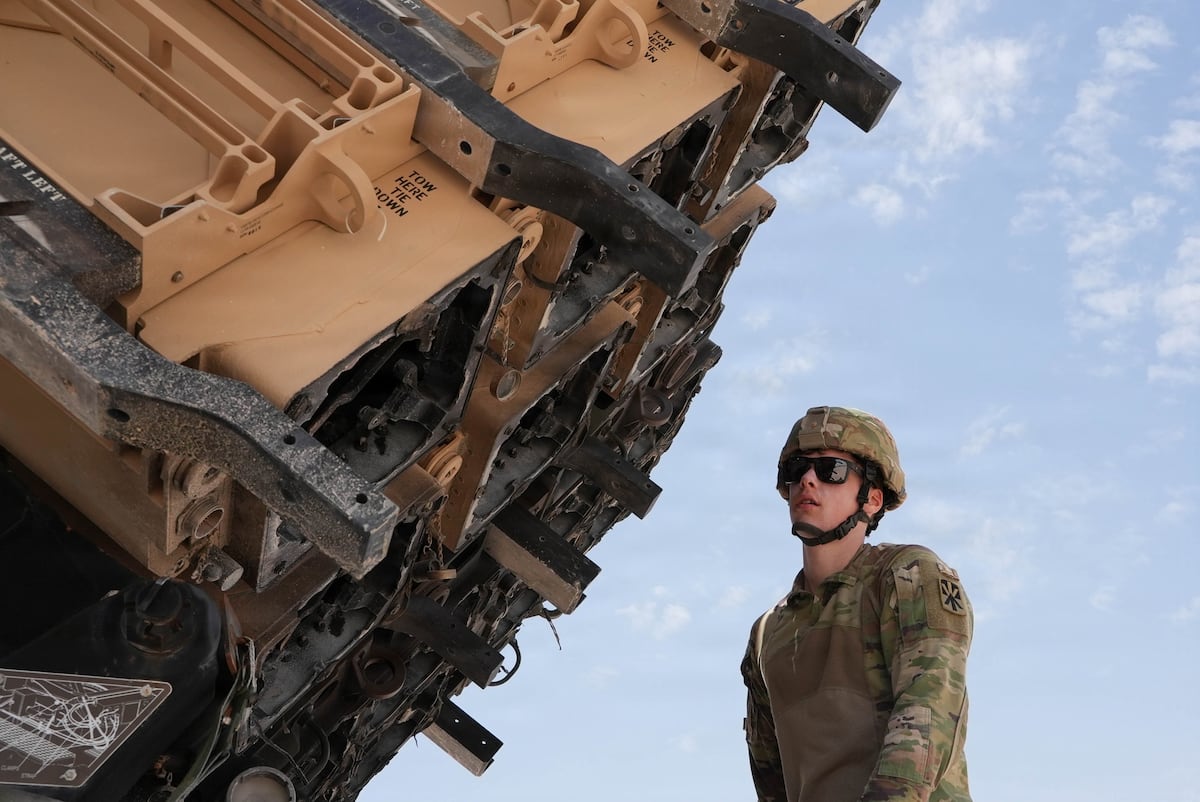
The Patriot system remains one of the U.S. military’s primary defenses against ballistic missiles. It is used to help shield troops, military installations, and allied populations from attack. THAAD adds another layer in the defensive architecture, designed to intercept ballistic missiles in their terminal phase. Together, the systems form an important part of the U.S. approach to regional missile defense.
During the Iran conflict, those systems were used to help defend U.S. forces and partner nations from ballistic missile attacks. The source material also notes that some missiles still penetrated air defenses and caused casualties and damage. That detail is important because it shows two realities at once: missile defenses were heavily employed, and even substantial defensive effort did not produce a perfect shield.
In other words, the cost of defense in a dense missile environment is measured not only in money, but also in finite industrial capacity and readiness posture. Using large numbers of interceptors to blunt attacks may be necessary, but it can leave lasting downstream effects if production cannot restore inventories at a similar pace.
Industrial capacity is becoming a strategic issue
Although the supplied source text does not provide fresh production timelines, the argument embedded in the CSIS analysis is clear enough: the United States cannot treat missile stocks as an abstract reserve when real conflicts are burning through them. Inventory depth and manufacturing throughput become part of deterrence. If adversaries believe U.S. or allied missile defenses are constrained by low stocks, that perception alone could alter strategic calculations.
This is why missile inventories increasingly matter beyond procurement debates. They influence alliance assurance, force posture, deployment options, and escalation management. A defense system is only as usable as the number of shots available and the speed at which those shots can be replaced.
The issue also reaches beyond the United States. Coalition planning depends on confidence that defensive systems can be sustained through prolonged operations. If stockpiles are strained, partners may face harder questions about burden-sharing, resupply priorities, and which theaters receive the strongest protection first.
What policymakers will be watching
The most immediate policy implication is likely renewed scrutiny of munitions production, stockpile transparency, and allocation priorities. If the estimate that roughly 65% of Patriot inventory has been spent is even directionally accurate, officials will face pressure to show how quickly inventories can recover and what assumptions underpin readiness for other scenarios.
Another likely focus is force prioritization. With fewer than 1,000 Patriot interceptors remaining by the CSIS estimate, planners may need to think more explicitly about where these systems matter most and how to preserve them for the highest-priority missions. Similar questions apply to THAAD, whose remaining stock in the analysis is estimated at 234 to 278 interceptors.
None of that means the United States is suddenly without missile defenses. It does mean that missile defense capacity is no longer a background assumption. It is becoming a visible operational variable, shaped by wartime expenditure and the slower rhythms of industrial replenishment.
A warning signal, not just a battlefield statistic
The reported Patriot and THAAD drawdown is more than a tally of munitions used in one conflict. It is a warning about the strain that modern missile warfare places on even advanced militaries. Defensive success can require large numbers of interceptors, and those interceptors can disappear faster than peacetime planning models once assumed.
For Washington, the central question now is not simply how many missiles were fired. It is whether the United States can restore depth in time to deter or fight another crisis without accepting a materially higher level of risk. The CSIS analysis suggests that answer may depend less on doctrine than on production, procurement urgency, and how quickly policymakers treat missile stockpiles as a front-line strategic issue rather than a back-office inventory problem.
This article is based on reporting by Defense News. Read the original article.
Originally published on defensenews.com