The services are looking for output, not just inventory
The U.S. Navy and Marine Corps are examining whether they can get more operational use from their amphibious fleet without waiting years for additional ships to be built. Senior leaders say one answer may be a redesign of the force-generation cycle itself, replacing the current model with a longer framework that could support two deployments within a single readiness cycle.
The discussion reflects a practical problem. The Department of the Navy is required to maintain at least 31 amphibious ships, yet service leaders have repeatedly argued that demand exceeds what the current fleet can comfortably sustain. Building more hulls is a long process. In the meantime, the services are searching for efficiencies that would allow the ships they already have to spend less time trapped in administrative and training overhead and more time available for operations.
That is the logic behind the review now underway. Adm. Daryl Caudle, the Chief of Naval Operations, said the goal is to reduce phases of the cycle that do not meaningfully contribute to deployment readiness. In blunt terms, the question is whether the Navy can get more useful work out of each ship before the cycle resets.
Why the 36-month model is being challenged
Today, amphibious ships operate under a 36-month Optimized Fleet Response Plan that is meant to accommodate maintenance, training, and roughly seven-month deployments. In practice, leaders suggest that cadence is closer to 40 months by the time the full process plays out.
Caudle said the services are exploring whether a longer cycle could be more efficient overall. Rather than producing one deployment every 36 to 40 months, a model closer to 50 to 52 months might enable two deployments in one cycle. That approach would not magically create more ships, but it could raise effective availability if the overhead between deployments can be compressed.
The underlying argument is straightforward: if large portions of the current force-generation process add limited value, then preserving them out of habit is a readiness cost. Extending the cycle while using it more intensively could produce more deployable presence from the same fleet.
Marine Corps leaders are clearly aligned with that view. Lt. Gen. Jay Bargeron said the services are evaluating several force-generation options, including a 56-month model. The fact that both sea services are discussing alternatives publicly suggests the review is more than a theoretical exercise.
Readiness and demand are colliding
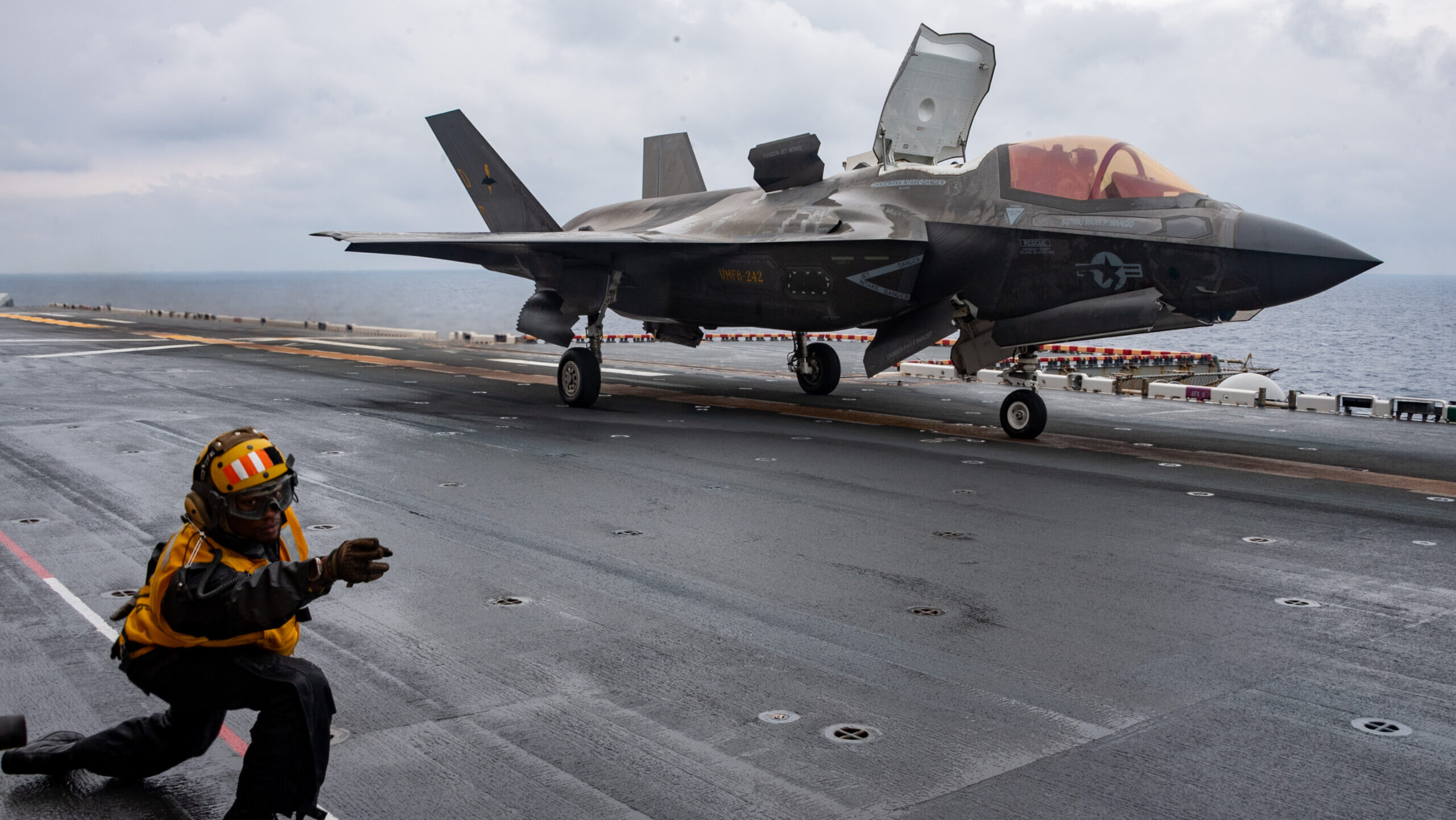
Amphibious ships are central to one of the military’s most flexible crisis-response formations. A typical Amphibious Ready Group includes an assault ship, a transport dock, and a support vessel carrying an embarked Marine Expeditionary Unit of at least 2,200 Marines. Together, the combination becomes the ARG-MEU construct the Marine Corps relies on for forward presence, contingency response, and maritime operations.
The Corps aims to sustain a global presence of 3.0 ARG-MEUs. According to the source report, three ARG-MEUs are currently deployed, but demand from combatant commanders is still higher than the services can easily satisfy. That gap between requirement and supply is central to the current rethink.
When leaders talk about changing the readiness cycle, they are responding to persistent strain. If commanders need more amphibious presence than the current fleet can generate under the existing model, then a force-generation redesign becomes one of the few levers available in the near term. It is cheaper and faster than procuring new ships, even if it carries its own risks.
The Amphibious Force Readiness Board adds urgency
The timing is not accidental. In March, the Navy and Marine Corps launched the Amphibious Force Readiness Board to tackle long-running readiness problems and help determine how many ships are actually needed. That body gives the current review a more formal structure and suggests the services want not only anecdotal fixes, but a broader framework for how the fleet should be managed.
The board’s work matters because amphibious readiness problems are rarely caused by a single issue. Maintenance delays, training demands, deployment schedules, and industrial-base constraints all intersect. A new cycle can improve output only if those surrounding systems can support it. Stretching deployments or compressing non-deployment phases without fixing maintenance bottlenecks would risk shifting pressure rather than solving it.
That is why the discussion is notable: leadership appears to believe there is enough inefficiency in the current process that a redesigned model could unlock real gains without simply exhausting ships and crews faster.
The tradeoff the services will have to manage
Longer readiness cycles paired with multiple deployments may offer better fleet utilization, but they will also raise questions about wear on ships, predictability for sailors and Marines, and the ability to keep maintenance on schedule. The source material does not present a final model, and that caution is appropriate. The services are evaluating options, not announcing a settled replacement.
Still, the direction of travel is clear. The Navy and Marine Corps appear less interested in preserving a familiar 36-month construct than in building one that better reflects operational demand and the hard realities of a constrained fleet. If a 50- to 56-month cycle can reduce repetitive overhead and produce more deployments per ship, leaders may judge that trade worthwhile.
The broader significance is that readiness reform is becoming a substitute for force growth. In an environment where new ships take years and budgets face competing pressures, organizational redesign becomes one of the few tools available to expand usable capacity.
A practical test for amphibious strategy
This debate is ultimately about whether process can partially compensate for shortage. The services know they need amphibious ships; they also know they cannot solve every shortfall by buying them quickly. The readiness-cycle review is an attempt to narrow that gap through operational design.
If leaders can prove that two deployments inside a longer cycle generate more effective presence without unacceptable readiness costs, the amphibious fleet may gain a near-term boost in relevance and availability. If not, the review will reinforce the harder conclusion already familiar to Navy and Marine planners: there is no durable substitute for sufficient capacity.
- The Navy and Marine Corps are reviewing whether amphibious ships should move beyond the current 36-month readiness cycle.
- Leaders say a longer 50- to 56-month model might support two deployments within one cycle.
- The effort is tied to broader readiness concerns and persistent demand for ARG-MEU deployments worldwide.
This article is based on reporting by Breaking Defense. Read the original article.
Originally published on breakingdefense.com