Kyiv is loosening a wartime restriction on arms exports
Ukraine is preparing to partially lift one of the more consequential industrial restrictions put in place after Russia’s full-scale invasion in 2022: the ban on exporting domestically produced weapons. President Volodymyr Zelenskyy said local manufacturers will be allowed to sell systems abroad, but only after the needs of Ukraine’s own armed forces are met and only to countries considered non-cooperative with Russia.
The move is a notable policy adjustment for a country that has spent the past several years trying to turn battlefield necessity into a durable defense-industrial base. Since the invasion, the export embargo has helped channel available weapons output toward the Ukrainian military. But manufacturers have argued that a total ban also limits their ability to attract outside money, expand production and keep developing new technologies at a pace the war demands.
Zelenskyy’s announcement suggests Kyiv now believes a controlled export mechanism can support the war effort rather than undermine it.
How the new system is supposed to work
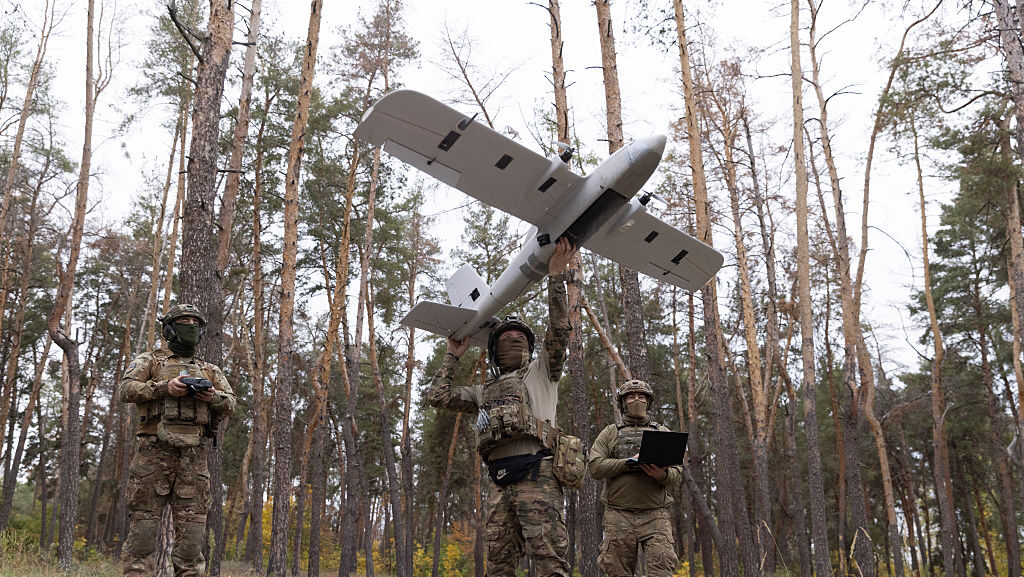
According to Zelenskyy’s statement, companies will be able to export only what they produce beyond the state order. In other words, the Ukrainian military is to remain first in line, while surplus or additional output can be directed to partner markets. The mechanism is expected to be implemented through what Zelenskyy described as “drone deals,” though the scope is broader than drones alone.
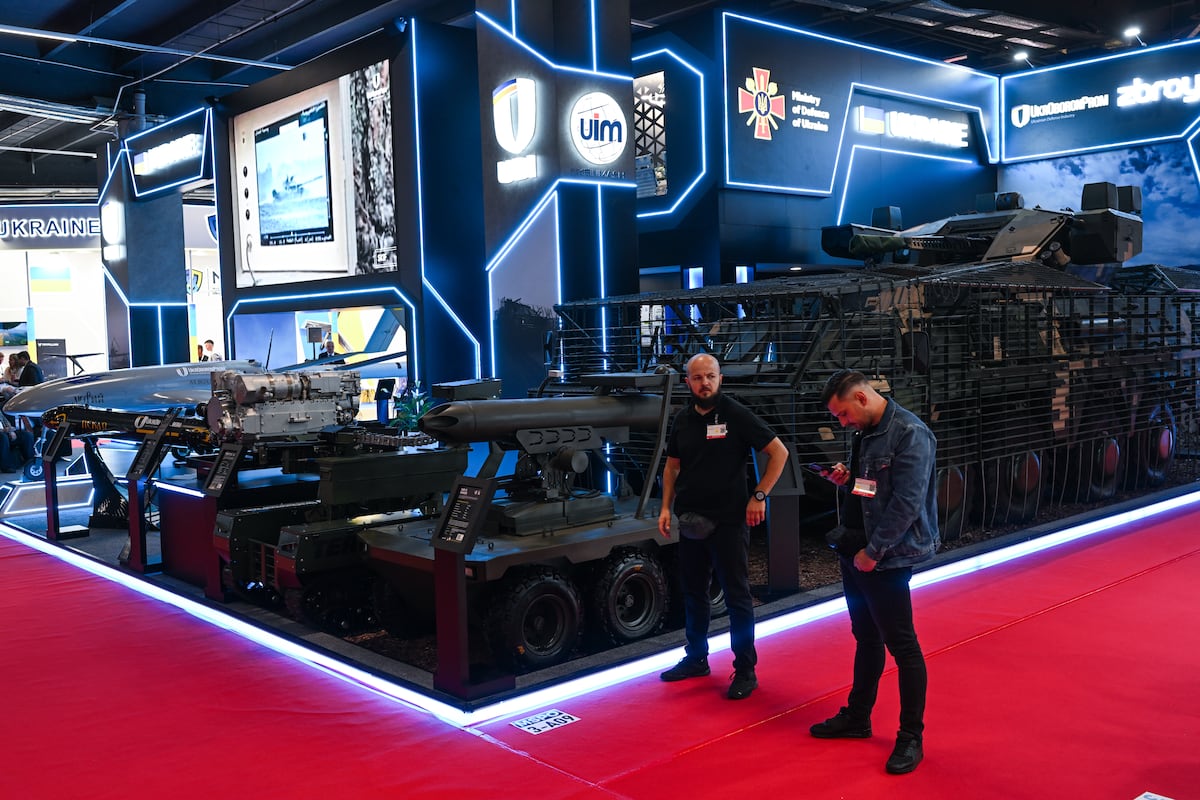
Those arrangements would cover Ukrainian-made drones, missiles, ammunition, software and other weapons types that have become highly sought after during the war. The concept is significant because Ukraine’s defense sector is no longer just a consumer of foreign aid and imported hardware. It has become a source of combat-tested systems, particularly in unmanned warfare, that other countries may want to buy or co-produce.
The caveat is geopolitical as much as industrial. Exports would be limited to countries that are not cooperating with Russia. That condition turns arms sales into an extension of Ukrainian wartime diplomacy, screening out buyers whose broader relationships could conflict with Kyiv’s security interests.

Why manufacturers pushed for this change
Ukrainian companies have spent years saying the export ban was starving them of capital. Their argument is straightforward: if firms can sell excess output abroad, they can bring in money to scale factories, hire talent, improve components and invest in research. Those gains, they contend, would feed back into domestic defense by increasing the total amount and sophistication of what they can build.
That case gained traction because the war has accelerated innovation cycles, especially in drones, electronic warfare-adjacent software and munitions. Companies working in those areas need financing, and access to international markets offers one of the clearest ways to obtain it without relying solely on government orders.
The export ban may have made sense when the overriding concern was immediate diversion of all available systems to the front. But as Ukraine’s domestic industry has matured, the cost of shutting it out of global demand has become harder to ignore.
A strategic industrial signal to partners
The announcement also sends a message to partner countries. Ukraine is positioning itself not merely as a recipient of defense support but as a long-term industrial participant in allied security networks. Breaking Defense reports that officials had previously discussed opening exports and cooperation with countries in the UK-led Joint Expeditionary Force, a grouping that includes Nordic and Baltic states as well as the Netherlands.
That matters because Ukraine’s defense sector now carries a form of credibility difficult to replicate in peacetime. Its products are being developed and refined under live operational pressure. For foreign buyers, that can make Ukrainian systems attractive. For Kyiv, it creates an opportunity to convert battlefield adaptation into industrial leverage.
There are still clear constraints. The policy does not signal a broad, unrestricted opening of the arms trade. It remains tied to national military requirements, and the government is explicitly reserving the right to prioritize domestic forces ahead of exports.
What the shift could change
If implemented effectively, the policy could help Ukraine in three ways at once. It could strengthen manufacturers’ balance sheets, deepen ties with foreign partners and increase the overall resilience of the country’s defense industry. Those outcomes are connected. Better-funded companies can produce more. Stronger international relationships can lead to co-production and shared supply chains. A healthier industrial base can support the front over a longer war.
The risks are mostly in execution. Kyiv will need a credible method for determining what counts as output beyond the state order and for ensuring export activity does not create shortages for Ukrainian forces. It will also need to decide how restrictive the political test for eligible buyer countries will be.
None of that is trivial. But the direction is clear. Ukraine is no longer treating defense manufacturing solely as a wartime emergency function. It is beginning to treat it as an economic and strategic asset that can be integrated into allied markets while still serving immediate battlefield needs.
That marks a meaningful evolution in wartime policy. The question now is not whether Ukrainian weapons have demand abroad. It is how Kyiv can tap that demand without weakening the military effort at home. Zelenskyy’s answer, at least for now, is a tightly managed export opening built around surplus production and friendly markets.
Key points
- Ukraine plans to let domestic companies export weapons produced beyond state orders.
- The policy keeps Ukrainian military requirements as the top priority.
- Kyiv says exports will be limited to countries that are not cooperating with Russia.
This article is based on reporting by Breaking Defense. Read the original article.
Originally published on breakingdefense.com