The Marine Corps is formalizing how it tracks blast-related brain risk
The U.S. Marine Corps is beginning to weave brain-function monitoring into the health record of troops exposed to blast overpressure, marking a significant institutional step in a problem the Pentagon is still trying to fully understand. According to officials speaking at the Modern Day Marine exposition in Washington, the Corps has already launched baseline evaluations for high-risk personnel and plans to integrate that data into periodic health assessments by September.
The assessment tool is the Automated Neuropsychological Assessment Metrics, or ANAM, a computer-based brain-function evaluation. Brig. Gen. Sean Hoewing, who leads the Corps’ newly established Risk Management Directorate, said baseline ANAM testing began in February for troops designated high risk, including weapons instructors, range staff and others whose jobs routinely place them near overpressure events.
The near-term policy change is concrete. By September 2026, ANAM data is expected to be incorporated into Marines’ periodic health assessments, an annual four-part screening administered by Navy medicine. By September 2027, baseline ANAM evaluations are slated to be complete for all troops, according to Hoewing’s presentation.
From study phase to operating practice
The Marine Corps is acting while the science is still evolving. Hoewing acknowledged that researchers and medical professionals continue to debate the long-term impacts of repeated blast exposure and how often follow-up testing should occur. Even so, the Corps has decided it can no longer wait for perfect clarity before building a monitoring framework.
That tension defines much of the military’s current approach to blast exposure. On one hand, Congress has imposed deadlines for the services to evaluate injury impacts and implement mitigation measures. On the other, scientists are still refining the links between exposure levels, frequency and lasting neurological harm. The result is a policy environment in which data collection and protective measures must advance in parallel.
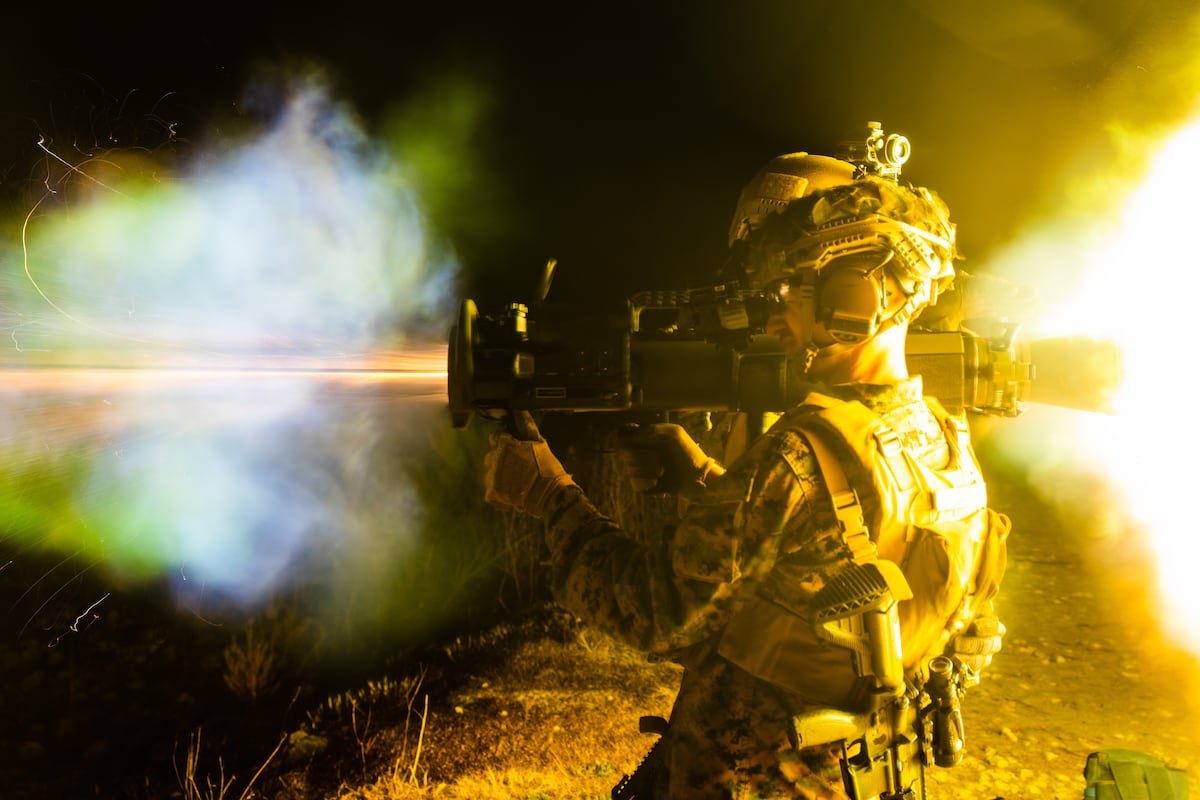
Training practices are already changing. Hoewing said instructors on ranges have been directed to maintain distance requirements for observers around certain weapon systems, on the logic that only personnel who must be close to the weapon should be within the higher-risk zone. Others assisting with training can be positioned farther away to reduce unnecessary exposure.
What the Corps is trying to build
The Marine Corps is not just collecting scores. It is building an information system around risk. Hoewing said the service has created a working group to determine how to use the data being gathered. That could shape how Marines are educated about blast hazards, how training procedures are adjusted and how equipment makers think about protective gear and weapon-system design.
The current risk threshold is set at 4 pounds per square inch of overpressure, but that is not fixed. The Corps plans to evaluate a study on blast impacts at different exposure levels and update the threshold by September 2029. That timeline suggests the present policy is an interim structure meant to improve as evidence accumulates.
Institutionally, the move matters because it normalizes neurological surveillance for a category of military risk that has often been difficult to capture. Acute traumatic brain injuries are easier to recognize than the cumulative effects of repeated lower-level exposure. By inserting ANAM into routine health processes, the Corps is attempting to create a longitudinal record that could reveal changes over time rather than only after severe symptoms emerge.
There are still important unanswered questions. The Corps has not finalized the frequency of future testing after the baseline is established. Nor is it yet clear what interventions will follow when assessments show decline or elevated concern. Screening systems are only as useful as the decisions they trigger, and that operational layer is still being developed.
Even so, the policy shift is meaningful. It indicates that blast exposure is being treated less as an unavoidable byproduct of training and more as a measurable health risk that should be documented and managed. That may prove consequential not only for active-duty readiness, but also for future clinical care and veterans’ health records.
For the military more broadly, the Marine Corps is offering a template: start with baseline data, move it into routine medical workflows and adjust the rules as the science improves. In an area where uncertainty has often slowed action, that is a notable change in posture.
This article is based on reporting by Defense News. Read the original article.
Originally published on defensenews.com