Military satellites are being asked to do more than survive in orbit
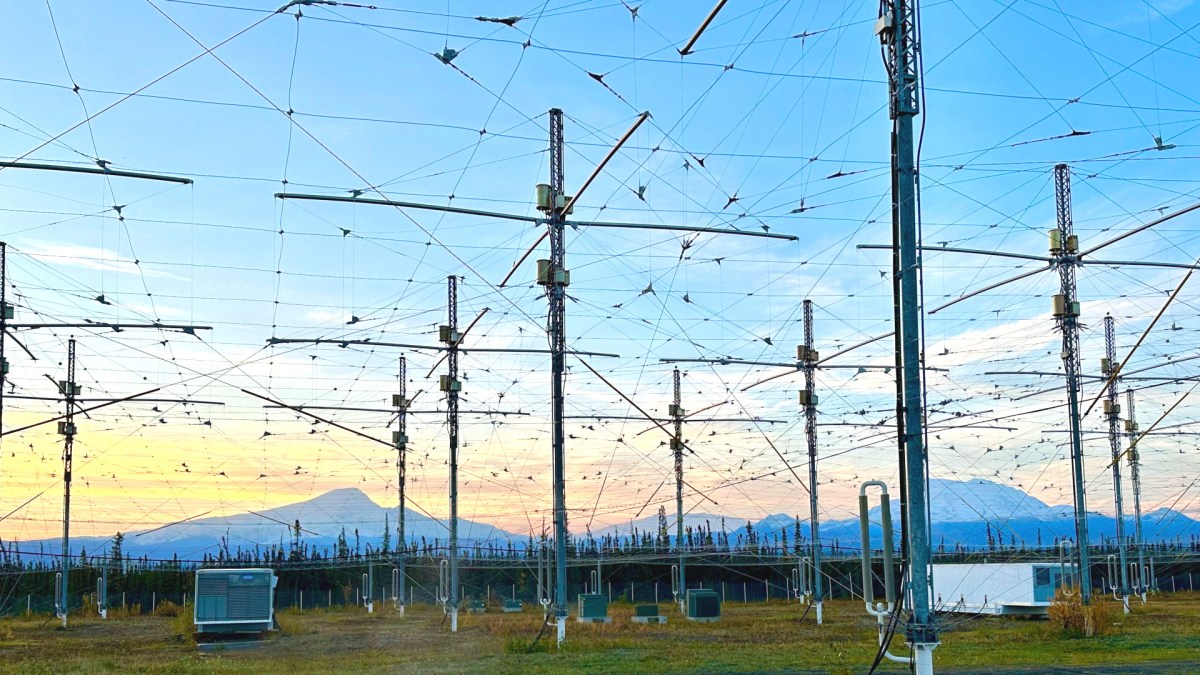
The US Space Force is moving to equip future geosynchronous satellites with onboard sensors that can detect when ground-based radars are observing, tracking, or potentially targeting them. The Space Rapid Capabilities Office, working with SpaceWERX, has awarded three $3 million contracts to Assurance Technology Corporation, Raptor Dynamix, and Innovative Signal Analysis to develop radar warning receivers for that mission.
The payloads are intended for highly maneuverable satellites operating in geosynchronous Earth orbit, a region that has become more strategically important as military and commercial systems crowd into valuable orbital slots. According to the Space RCO, the receivers will detect and characterize emissions from ground-based radars that are tracking Space Force satellites, improving what the service calls tactical awareness in orbit.
The basic logic is familiar from other military domains: if a platform can recognize that it is being surveilled or targeted, it can make better decisions about maneuver, posture, and mission risk. The difference is that this concept is now being pushed deeper into space operations, where awareness has historically depended more on external ground networks than on satellites sensing threats for themselves.
Why the contracts matter
Each award was made through the Small Business Innovation Research Direct-to-Phase II program, signaling that the Space Force wants to move quickly from concept to relevant prototypes. The immediate customer is the service’s next-generation “neighborhood watch” architecture in geosynchronous orbit, developed under the Andromeda program, formerly known as RG-XX.
These satellites are designed to be more maneuverable than today’s Geosynchronous Space Situational Awareness Program spacecraft and to support on-orbit refueling, extending useful life while allowing them to reposition more aggressively. In that context, a radar warning payload is not an optional add-on. It becomes part of a broader effort to make military satellites more responsive, harder to monitor without detection, and better able to operate in a contested environment.
Space RCO Director Kelly Hammett framed the capability as a baseline need rather than a specialized luxury, arguing that operators should know whether their assets are being watched or threatened. That reflects an important shift in military space thinking. The assumption is no longer that major satellites can operate as relatively passive platforms protected mainly by distance and orbital mechanics. Instead, they are increasingly being treated as maneuverable assets in an environment where adversaries actively probe for position and intent.
A contested geosynchronous belt changes spacecraft design
Geosynchronous orbit has long hosted some of the military’s most valuable assets, including systems for communications, warning, and strategic support. It is also a region where proximity operations, surveillance, and tracking matter enormously because a small number of spacecraft can have outsized consequences.
The Space Force’s interest in radar warning receivers suggests it wants satellites that can generate a more self-contained picture of threat conditions. Ground systems will still matter, but onboard awareness can shorten the loop between detection and action. A satellite that knows it is being illuminated by radar can help operators understand intent, confirm patterns of monitoring, and potentially cue other defensive or analytical responses.
The office has already experimented with this concept. Space RCO disclosed in late 2023 that it had launched early threat-warning prototypes, and Hammett said in 2025 that those systems had achieved a “quasi-operational success” in monitoring Chinese capabilities used to locate US satellites. The new contracts build on that experience and move the idea toward a more scalable operational payload.
Small companies are getting a bigger role in classified capability development
Another notable aspect of the announcement is the use of small firms to push a strategically sensitive capability. Space RCO was created to move faster than traditional acquisition channels and to pull promising technology into the field quickly, often with a classified or semi-classified edge. The new awards continue that pattern by using targeted, comparatively low-cost contracts to mature mission-specific hardware.
That approach gives the Space Force flexibility. It can test competing designs, avoid overcommitting early, and adapt quickly as operators refine what they need from these warning sensors. It also reflects the wider national security trend of relying more heavily on specialized commercial suppliers for rapid iteration in areas once dominated by a smaller pool of prime contractors.
What this signals about the future of military satellites
The larger story is not just about radar warning receivers. It is about the gradual transformation of military spacecraft into more autonomous, maneuverable, and tactically aware systems. Refueling, mobility, and onboard threat sensing all point in the same direction: satellites that can survive longer and act more intelligently under pressure.
That is an important development because orbital competition is becoming more active, not less. Tracking, stalking, and characterizing other nations’ space assets is already part of the strategic environment. The Space Force appears to be building toward a future in which its own satellites can recognize those actions in real time rather than depend solely on Earth-based awareness architectures.
If these payloads mature as intended, radar warning could become standard equipment for certain classes of military satellites. That would mark a subtle but meaningful shift in space operations: from watching the space domain from the ground to giving spacecraft themselves a clearer sense of who is watching them back.
This article is based on reporting by Breaking Defense. Read the original article.
Originally published on breakingdefense.com