A key carrier milestone for the Navy’s tanker drone
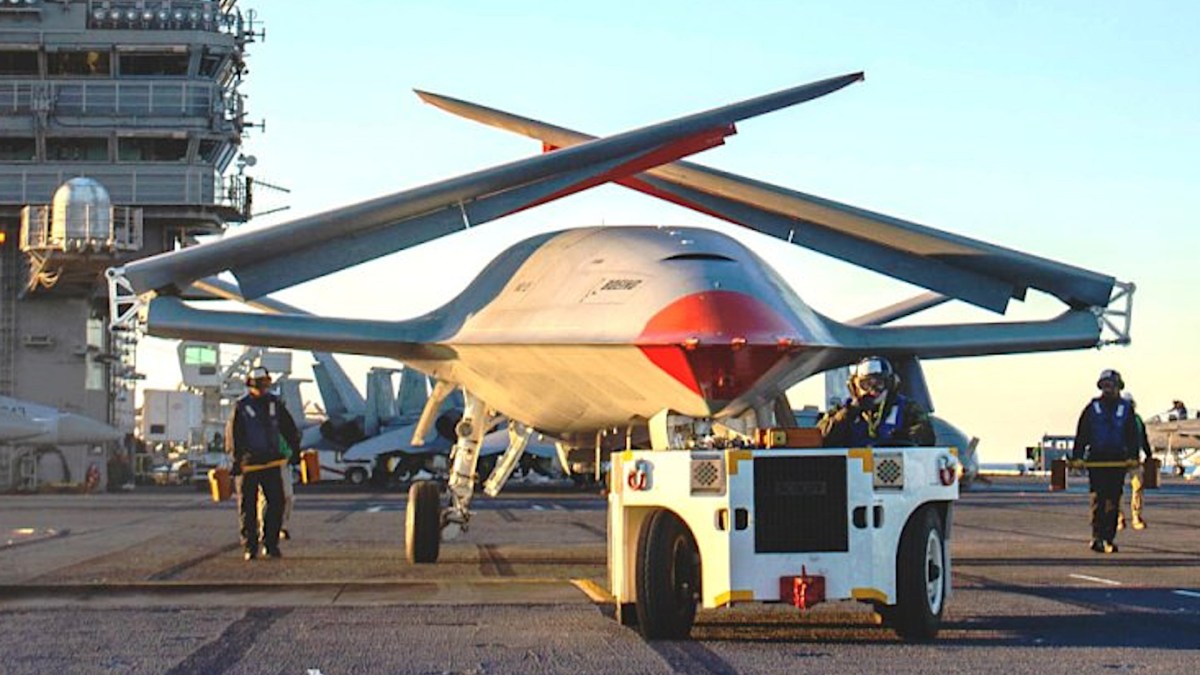
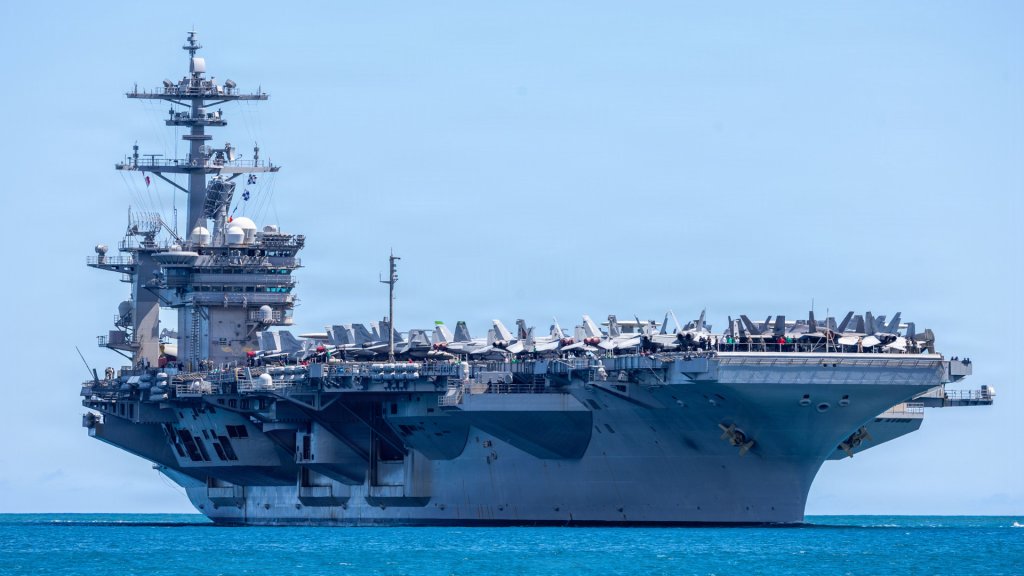
The U.S. Navy has reached a notable infrastructure milestone in its long-running push to integrate the MQ-25 Stingray into carrier operations. According to details in a Pentagon acquisition report dated April 21, 2026, the aircraft carrier USS Theodore Roosevelt became the first fully operational and deployable U.S. supercarrier equipped with an Unmanned Air Warfare Center capable of supporting the forthcoming MQ-25.
That does not mean the Navy is ready to begin routine operational flights tomorrow. The same report says the service is now aiming to reach initial operational capability for the MQ-25 in 2029, underscoring how the program remains years behind earlier expectations. Even so, the Theodore Roosevelt milestone matters because it shifts part of the challenge from concept and demonstration work to the practical business of readying the fleet’s ships, spaces, and operator workflows for an uncrewed aircraft that will have to function as part of normal carrier aviation.
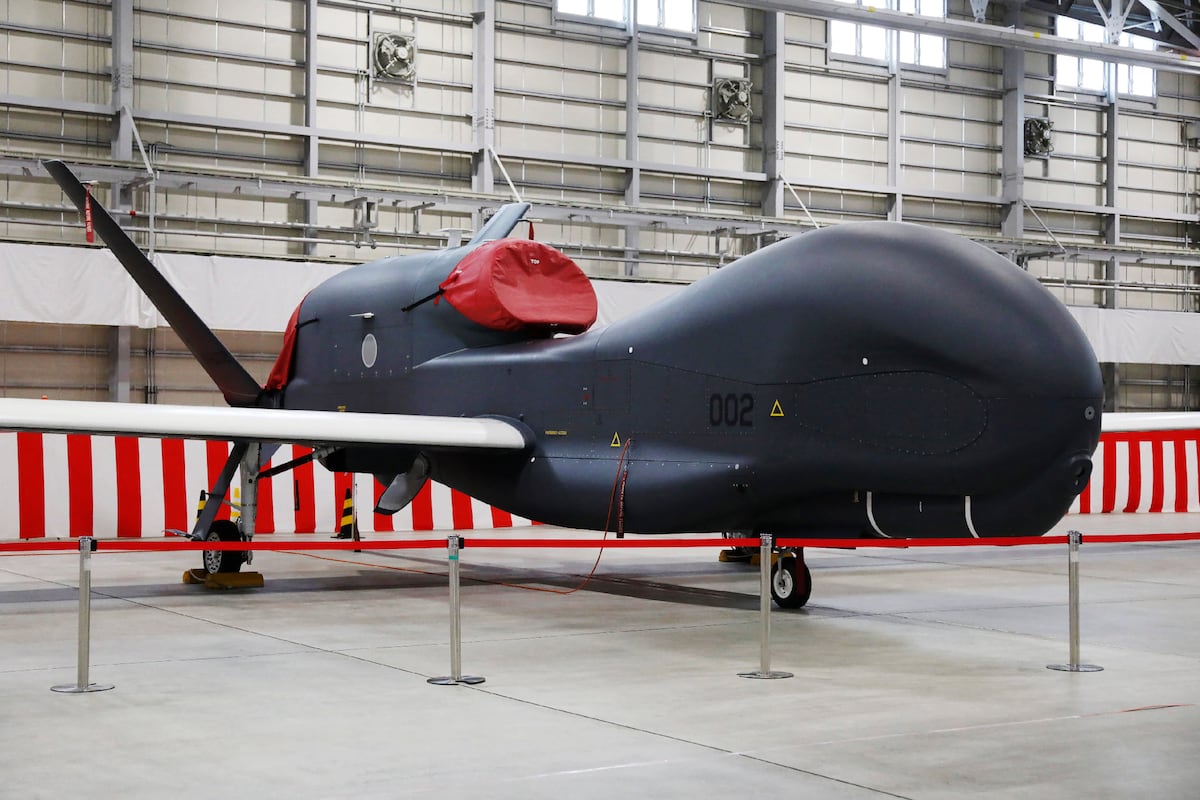
The MQ-25 is designed to serve as a carrier-based tanker drone. That role may sound narrow, but it is strategically important. A tanker aircraft extends the reach of crewed jets by refueling them in flight, which can expand mission range and reduce the amount of time strike fighters spend performing refueling duties for other aircraft. A functioning tanker drone could therefore help carriers use their manned air wings more efficiently.
Why the control center matters
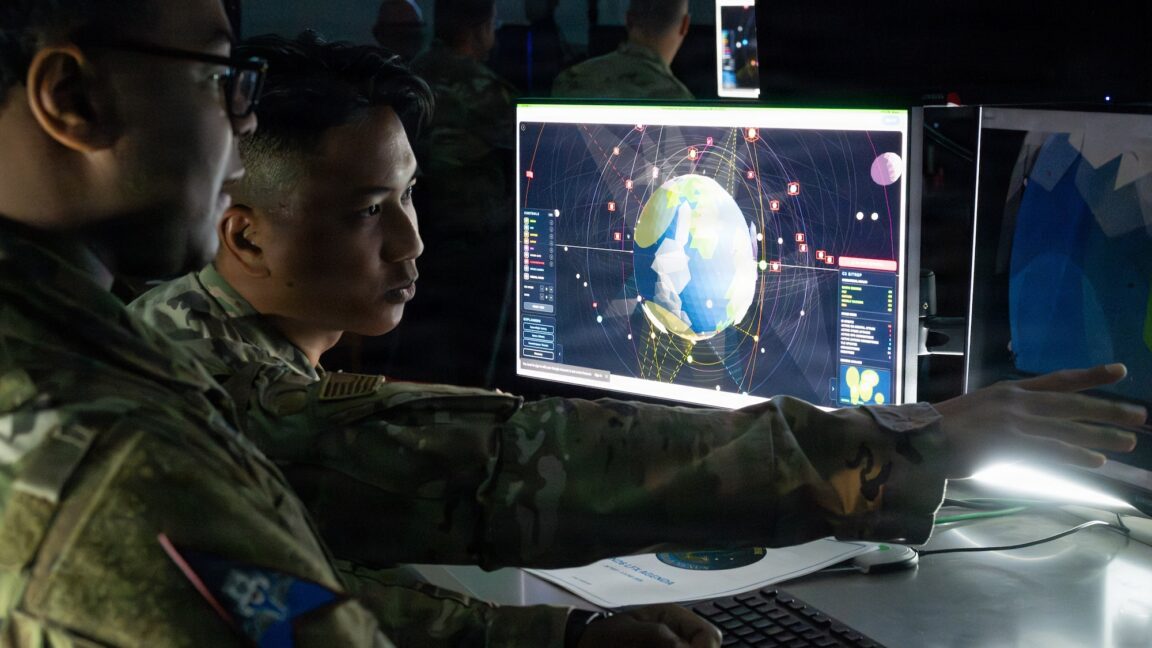
The Unmanned Air Warfare Center, or UAWC, is the onboard hub from which air vehicle pilots will control future MQ-25 airborne operations. On a carrier, that means the drone is not just another aircraft parked on deck. It requires a dedicated command-and-control architecture, trained personnel, and integration with the routines that govern launches, recoveries, airspace management, and the larger battle rhythm of the ship.
In practical terms, the Theodore Roosevelt’s newly certified status signals that one of the Navy’s carriers now has the physical and operational backbone to host MQ-25 activity when the aircraft is ready for fleet service. That is a different kind of milestone than a test flight or an engineering demo. It is about institutional readiness inside the carrier force.
The report also says the USS Ronald Reagan is expected to have its own operational and deployable MQ-25-capable UAWC by the end of August 2026. That suggests the Navy is not treating this as a one-ship experiment. It is beginning to build a broader base of support across the carrier fleet, which will be necessary if the Stingray is to become a durable part of naval aviation rather than a niche capability attached to a single platform.
From test installation to deployable capability
The Theodore Roosevelt milestone stands out even more when placed next to earlier steps in the program. The Navy publicly announced in 2024 that a first test UAWC had been installed aboard the USS George H.W. Bush. That installation was important as a proof point, but the newly released acquisition report draws a distinction between a test configuration and a fully operational, deployable setup.
That distinction helps explain why the Theodore Roosevelt now carries the “first” label even though another carrier hosted an earlier UAWC installation. Testing a system aboard a ship and certifying it for operational use are different thresholds. The latter implies that procedures, equipment, and readiness standards have advanced enough for the Navy to treat the center as a real deployable capability.
The report does not fully explain why Theodore Roosevelt, rather than George H.W. Bush, became the first carrier to achieve that status. But it does note that the Navy had previously been expected to deploy Stingrays first aboard Theodore Roosevelt. If that plan remained in place, it would make sense for the service to concentrate shipboard readiness work there.
A program still defined by delays
For all the significance of the new control center, the broader MQ-25 story is still one of delay and extended timelines. The Navy now expects initial operational capability in 2029. That date is crucial because it shows the service is still in the preparatory phase, even as it equips carriers for the aircraft’s eventual arrival.
That mismatch between ship readiness and aircraft program timing is not necessarily a sign of disorder. Large military aviation programs often require parallel workstreams. Aircraft development, ship modifications, operator training, software integration, logistics planning, and certification processes rarely line up perfectly. In that sense, having a carrier ready before the program is fully operational can be viewed as risk reduction. It gives the Navy time to refine procedures and identify integration problems before the MQ-25 enters routine service.
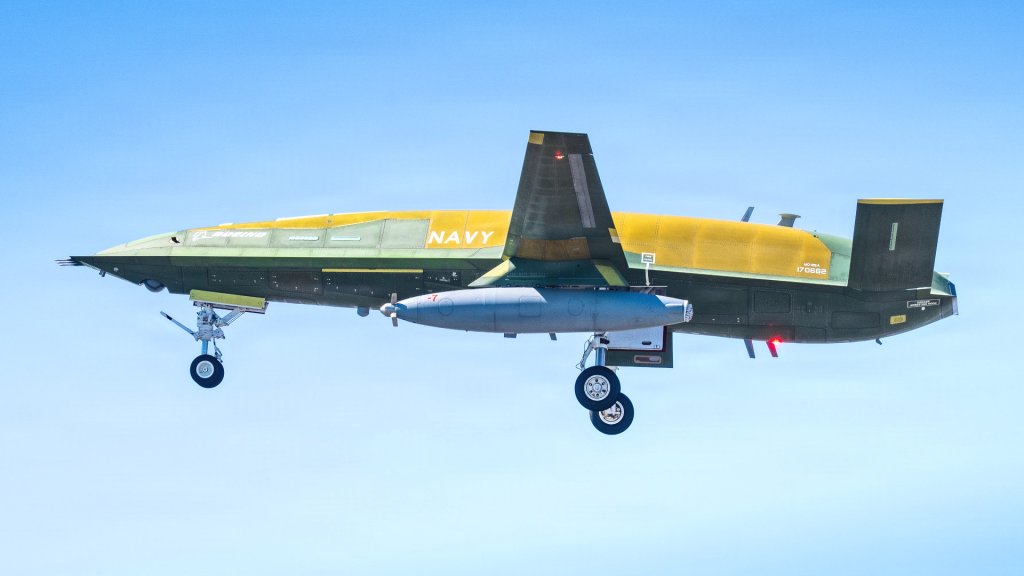
Still, the long runway to 2029 highlights how difficult it is to introduce a new category of aircraft into one of the military’s most demanding operating environments. Carrier aviation compresses enormous complexity into a small, moving deck at sea. Adding an uncrewed tanker to that ecosystem means the Navy must solve not only technical questions, but also human, organizational, and procedural ones.
What the milestone says about naval aviation
The Theodore Roosevelt’s upgraded status points to something larger than one drone program. It reflects a gradual shift in how the Navy is preparing for uncrewed systems to become normal participants in front-line operations. A carrier air wing has long been organized around crewed aircraft and the people, spaces, and rhythms built around them. The UAWC is a sign that the architecture of the carrier itself is changing to accommodate a different model of airpower.
That shift may begin with tanking, a role that is comparatively bounded and operationally useful, but it has broader implications. Once a carrier force develops habits, spaces, command workflows, and trust around uncrewed aircraft, it lowers barriers for future systems and missions. The MQ-25 is therefore important not only for what it does, but also for the institutional pathway it opens.
The Pentagon report does not claim that all the hard problems have been solved. It says the opposite, in effect, by showing that operational service remains years away. But it also shows steady, concrete movement. The Navy now has one carrier certified to support the MQ-25 and another expected to follow shortly. That is measurable progress in a program often discussed mainly in terms of delays.
What comes next
The immediate next phase is likely to center on continued fleet preparation and further maturation of the MQ-25 program itself. More carriers will need compatible facilities, more personnel will need training, and the Navy will need to keep translating demonstrations into repeatable operational practice.
For now, the significance of the Theodore Roosevelt milestone is straightforward. The Navy has moved beyond abstract ambition and created its first deployable shipboard control node for the Stingray. The aircraft may still be years from routine fleet operations, but one of the fleet’s most important platforms is already being reshaped around its arrival.
- The USS Theodore Roosevelt is now the first fully operational and deployable MQ-25-capable carrier.
- The Navy says the USS Ronald Reagan is expected to reach the same status by the end of August 2026.
- Initial operational capability for the MQ-25 Stingray is now targeted for 2029.
This article is based on reporting by twz.com. Read the original article.
Originally published on twz.com