A battered KC-135 has entered the Air Force’s most specialized repair pipeline
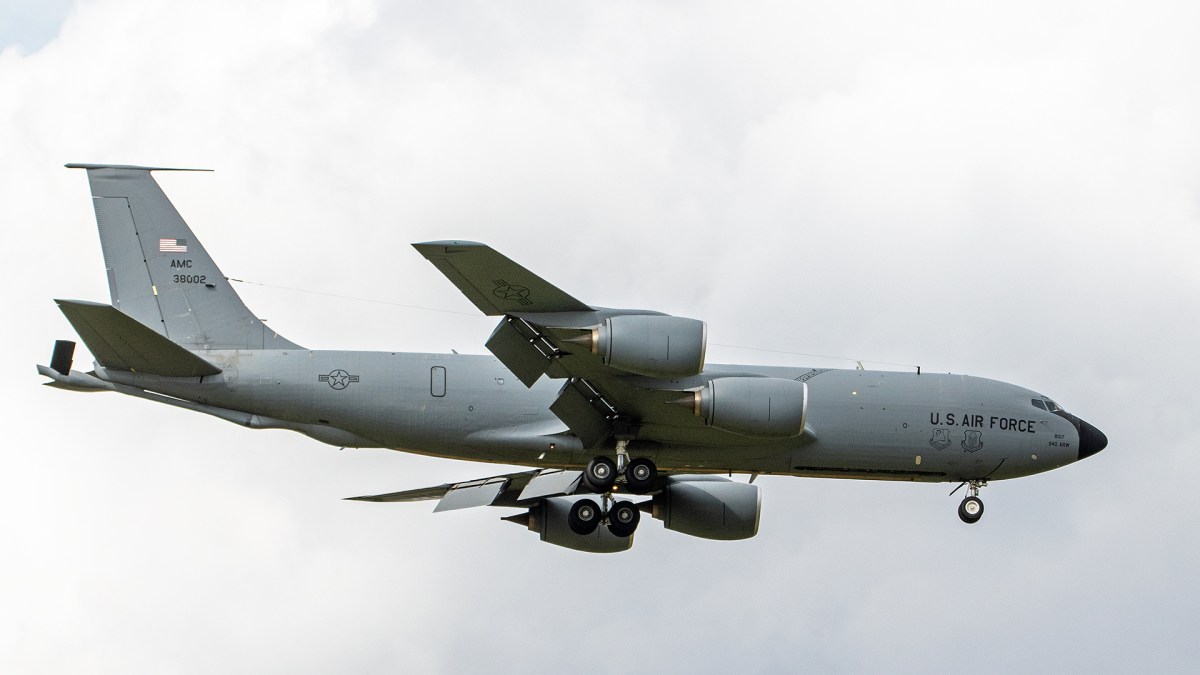
A KC-135 Stratotanker that survived a catastrophic midair collision over Iraq in March has now reached Tinker Air Force Base in Oklahoma for full repair, marking a new phase in one of the most closely watched aircraft recovery efforts of the year. The aircraft, serial 63-8017, had previously made an emergency landing in Israel after losing a major portion of its tail in the accident.
The new development is significant for two reasons. First, it confirms that the Air Force believes the aircraft is repairable despite the scale of the damage visible after the incident. Second, it places the work at the installation that hosts the only unit specifically designed to repair battle damage to the Air Force’s fleet of aerial refuelers and strategic bombers.
The damaged jet’s arrival at Tinker also extends the public story of a collision that was already exceptional in both operational and human terms. The March 12 accident did not only leave one tanker gravely damaged. It also killed the entire six-person crew aboard the other tanker involved in the crash.
A deadly March collision still hangs over the recovery effort
According to the source report, the collision took place during an Operation Epic Fury sortie over Iraq. The tanker with the call sign Zeus 95 was lost, and all six service members on board were killed. The dead were identified as Maj. John A. Klinner, Capt. Ariana G. Savino, and Tech. Sgt. Ashley B. Pruitt of the 6th Air Refueling Wing at MacDill Air Force Base in Florida, along with Capt. Seth R. Koval, Capt. Curtis J. Angst, and Master Sgt. Tyler H. Simmons of the 121st Air Refueling Wing at Rickenbacker Air National Guard Base in Ohio. Simmons was posthumously promoted.
That casualty toll turned what might otherwise have been an unusual airframe repair story into something much larger: a reminder of the risks surrounding tanker operations that are often perceived as routine support work. Aerial refueling aircraft are critical to U.S. power projection, but they also operate in complex, high-tempo environments where formation flying, fuel transfer, and mission coordination leave little room for error.
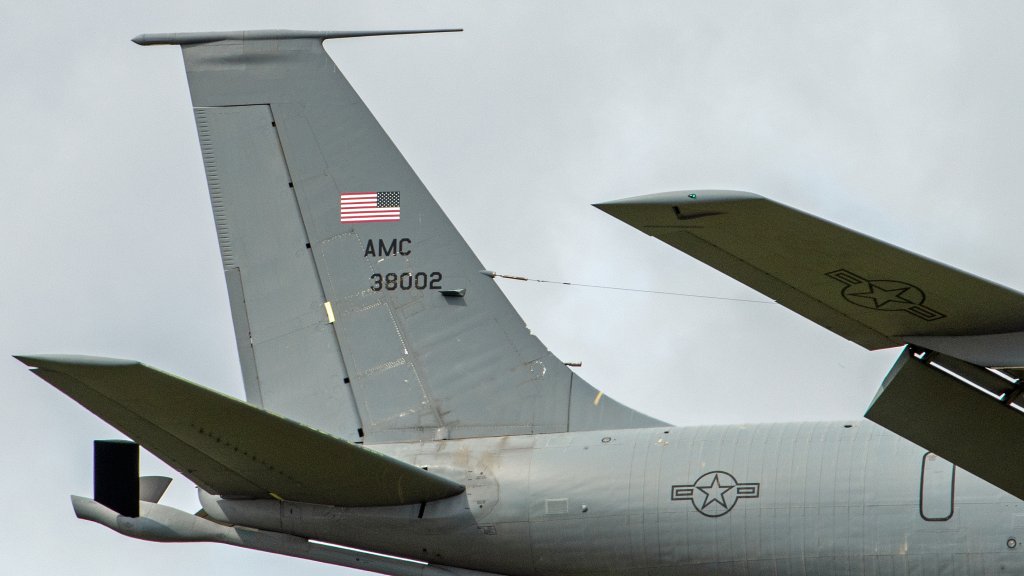
The surviving aircraft’s condition became public almost immediately after the emergency landing. Images from Israel’s Ben Gurion Airport showed a KC-135 with roughly half its tail sheared away. Those pictures helped define the incident in the public imagination. They also raised a practical question: would the jet ever fly again, or would it be written off?
The route back was slow, visible, and highly deliberate
Publicly, little was known about the aircraft for months after the March collision. The next notable update came when the tanker appeared at RAF Mildenhall in the United Kingdom on August 2 with a replacement tail. That sighting strongly suggested the Air Force had committed to a complex salvage-and-repair plan rather than a simpler decision to retire the aircraft.
From there, serial 63-8017 continued on to Oklahoma, arriving at Tinker on August 3 after departing Mildenhall. The movement itself mattered. Transporting a heavily damaged legacy tanker across multiple stops implies extensive engineering assessment, controlled preparation, and confidence that the airframe could safely complete the transit to the depot-level repair location.
While the source report does not detail the exact repair sequence, the appearance of a donor tail at Mildenhall points to the scale of structural work involved. Tail damage on a KC-135 is not cosmetic. It affects core flight stability and control. Replacing major structural sections on an aging tanker requires alignment, inspection, and likely substantial systems integration work before the aircraft can return to service.
Why Tinker matters
Tinker Air Force Base is not just another maintenance stop. The source describes it as the home of the only unit specifically designed to repair battle damage to the Air Force’s fleets of aerial refuelers and strategic bombers. That specialization makes Tinker the logical destination for an aircraft that survived damage well beyond ordinary depot work.
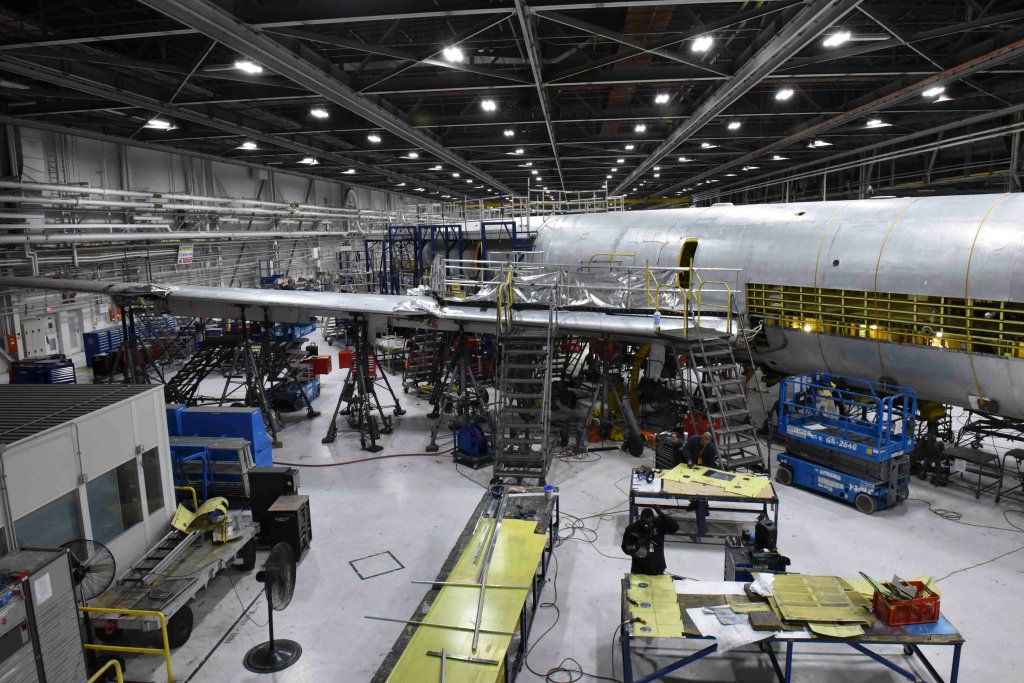
The decision to repair 63-8017 there suggests the Air Force sees enough remaining value in the KC-135 fleet to justify intricate recovery efforts even for severely damaged aircraft. That should not be surprising. The KC-135 remains a backbone asset, and replacing tanker capacity is neither quick nor cheap. Keeping existing aircraft viable has operational value, especially when global demand for refueling support remains high.
There is also an institutional message in depot-level recovery. Restoring a damaged aircraft demonstrates not just technical capability but fleet resilience. For maintainers, engineers, and planners, the project is a real-world test of whether legacy aircraft can absorb extraordinary damage and still be brought back into useful service.
What this episode says about the tanker fleet
The story also underscores a tension inside U.S. air mobility. The KC-135 is an old platform that continues to do essential work. Its longevity is a testament to durable design and deep sustainment expertise, but every major accident or repair saga also highlights how much the force still relies on airframes built generations ago.
In that context, 63-8017 has become more than an individual aircraft. It now sits at the intersection of operational necessity, depot craftsmanship, and the long tail of legacy fleet management. If repairs succeed, the aircraft could stand as a notable example of how far the Air Force is willing and able to go to preserve tanker capacity. If the process proves more difficult than expected, it may still yield important lessons about structural recovery, parts sourcing, and the limits of aging airframes.
For now, the clearest development is straightforward: a KC-135 that looked barely recoverable in March is no longer stranded abroad or hidden from view. It is at the Air Force’s premier heavy repair location, and the service is moving from emergency survival to restoration.
Key facts from the source report
- The collision occurred on March 12 during an Operation Epic Fury sortie over Iraq.
- The surviving aircraft was KC-135 serial 63-8017.
- The jet landed at Ben Gurion Airport in Israel after losing a substantial portion of its tail.
- The aircraft appeared at RAF Mildenhall on August 2 with a replacement tail.
- It arrived at Tinker Air Force Base on August 3 for full repairs.
This article is based on reporting by twz.com. Read the original article.
Originally published on twz.com