Taiwan puts new Abrams tanks into a high-stakes airport defense scenario
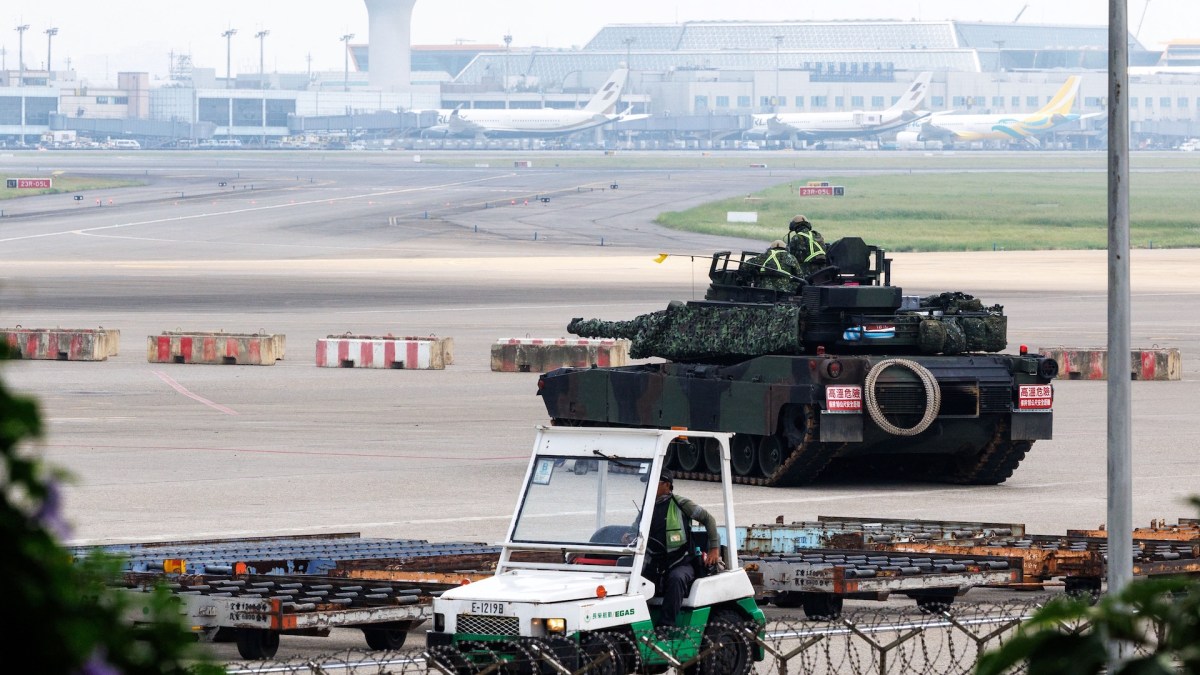
Taiwan has deployed its newest M1A2T Abrams main battle tanks to Taoyuan International Airport for the first time during the Han Kuang 42 exercise, a move that highlights how seriously it treats the risk of an attempted airborne seizure of critical infrastructure near Taipei.
The drill centered on a scenario in which enemy airborne forces try to capture Taiwan’s largest international airport and turn it into an airbridge for follow-on troops and logistics. By placing newly fielded Abrams tanks at the airport, Taiwan sent a clear message about how it sees the early stages of a possible invasion: key civilian infrastructure is not separate from the battlefield, and denying its use could be decisive.
Taoyuan is not just another transport hub. It is the main airport serving Taipei, and its proximity to the capital gives it strategic significance well beyond civil aviation. In any conflict scenario, an airport capable of receiving troops, equipment and supplies quickly becomes a military objective. The exercise shows Taiwan planning around exactly that risk.
What the drill included
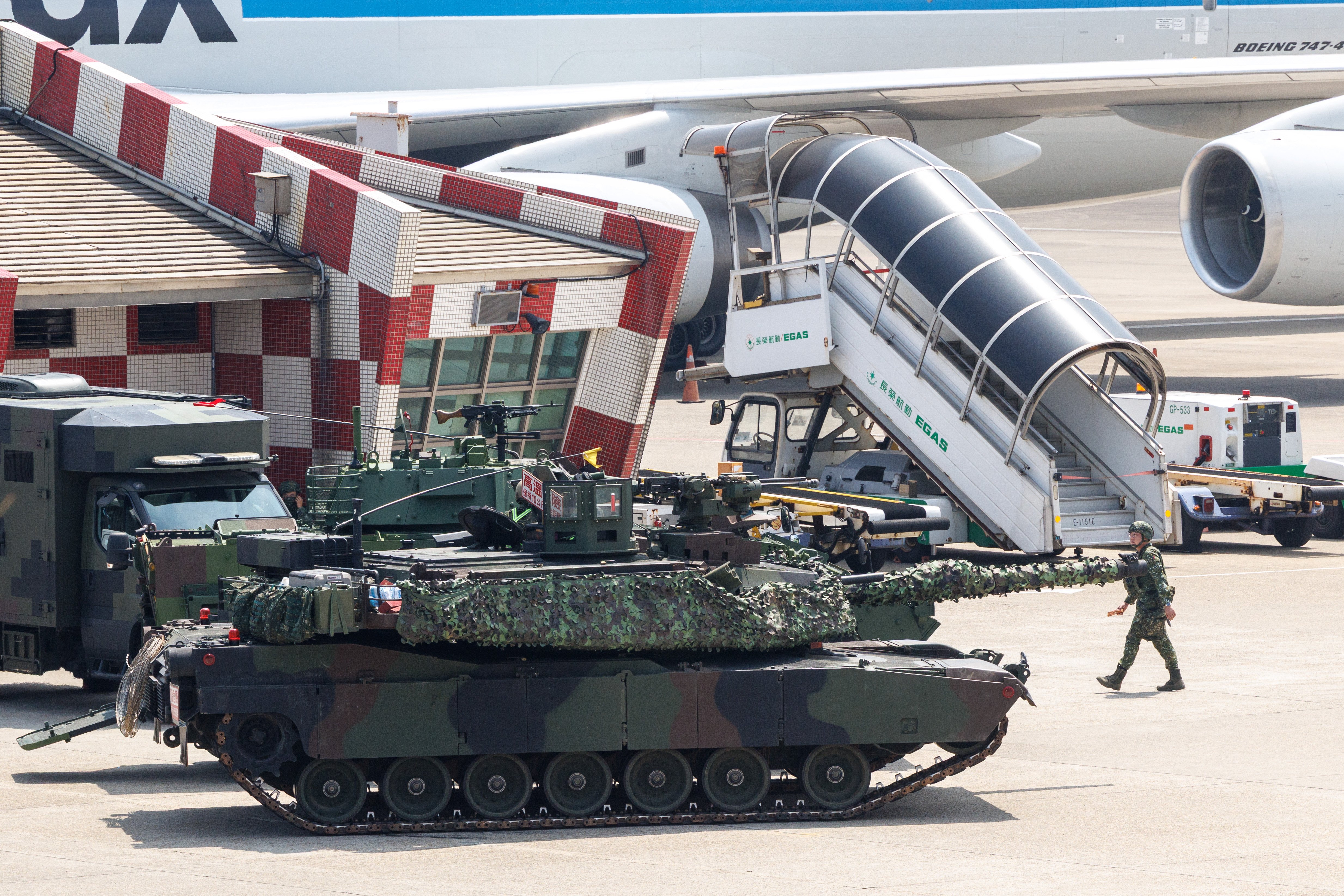
According to the reported exercise details, armored vehicles from the Republic of China Army’s 584th Armored Brigade established firing positions around the airfield. The formation included four M1A2T tanks and six Clouded Leopard 8x8 vehicles in three different variants. These units were supported by combat engineers who built temporary obstacles intended to complicate or block an assault.
Steel anti-vehicle hedgehog barriers were assembled in teams and placed around the airfield, while additional barriers were created using cargo containers and airport vehicles supplied by airport authorities. That detail is especially important. It suggests the drill was not only about armored response but also about how civilian assets and operators could be integrated into wartime denial measures.
The scenario reportedly focused on preventing the landing of enemy aircraft, airborne troops and special operations forces. That emphasis aligns with a broader defensive logic: an attacker does not need to conduct a full amphibious landing everywhere if it can open a rapid-entry corridor through a major airport. A functioning airport near the capital could offer an invading force a powerful logistical and symbolic advantage.
Why the Abrams deployment stands out
The presence of the M1A2T tanks is significant because these are Taiwan’s newest Abrams variants and because this appears to have been their first deployment to Taoyuan Airport. That makes the exercise both practical and political. Practically, it tests how quickly heavy armor can be positioned to defend a critical site. Politically, it showcases Taiwan’s effort to harden important infrastructure with more capable ground forces.
The Abrams is associated with survivability, firepower and shock effect. Even without introducing claims beyond the drill description, its use around the airport indicates Taiwan wants a visibly credible response ready for any attempt to seize fixed infrastructure by force. In defensive planning, that matters as much as the hardware itself. The point is not only to counter an assault if it happens, but to complicate the attacker’s assumptions before it begins.
The drill also paired the tanks with Clouded Leopard infantry fighting vehicles, reinforcing the idea that airport defense would require combined arms coordination rather than static perimeter security. Engineers, armored vehicles and local infrastructure all featured in the scenario, suggesting Taiwan is rehearsing not just combat response but battlefield shaping.
Airports as invasion gateways
The strategic logic behind the exercise is straightforward. If an attacking force can secure a major airport, it may be able to move additional personnel and equipment rapidly while also disrupting the defender’s command, mobility and public confidence. Taoyuan’s status as Taiwan’s largest international airport makes it an obvious target in that kind of planning.
The exercise reflects what may be one of the hardest problems in homeland defense: how to deny a complex, high-value civilian site without waiting until it is already partially lost. Airports are open, expansive and difficult to harden in peacetime. Their runways, approach routes and service areas create multiple avenues for attack. By training with armor and improvised obstacles, Taiwan appears to be preparing for a contest over terrain that cannot simply be sealed off in advance.
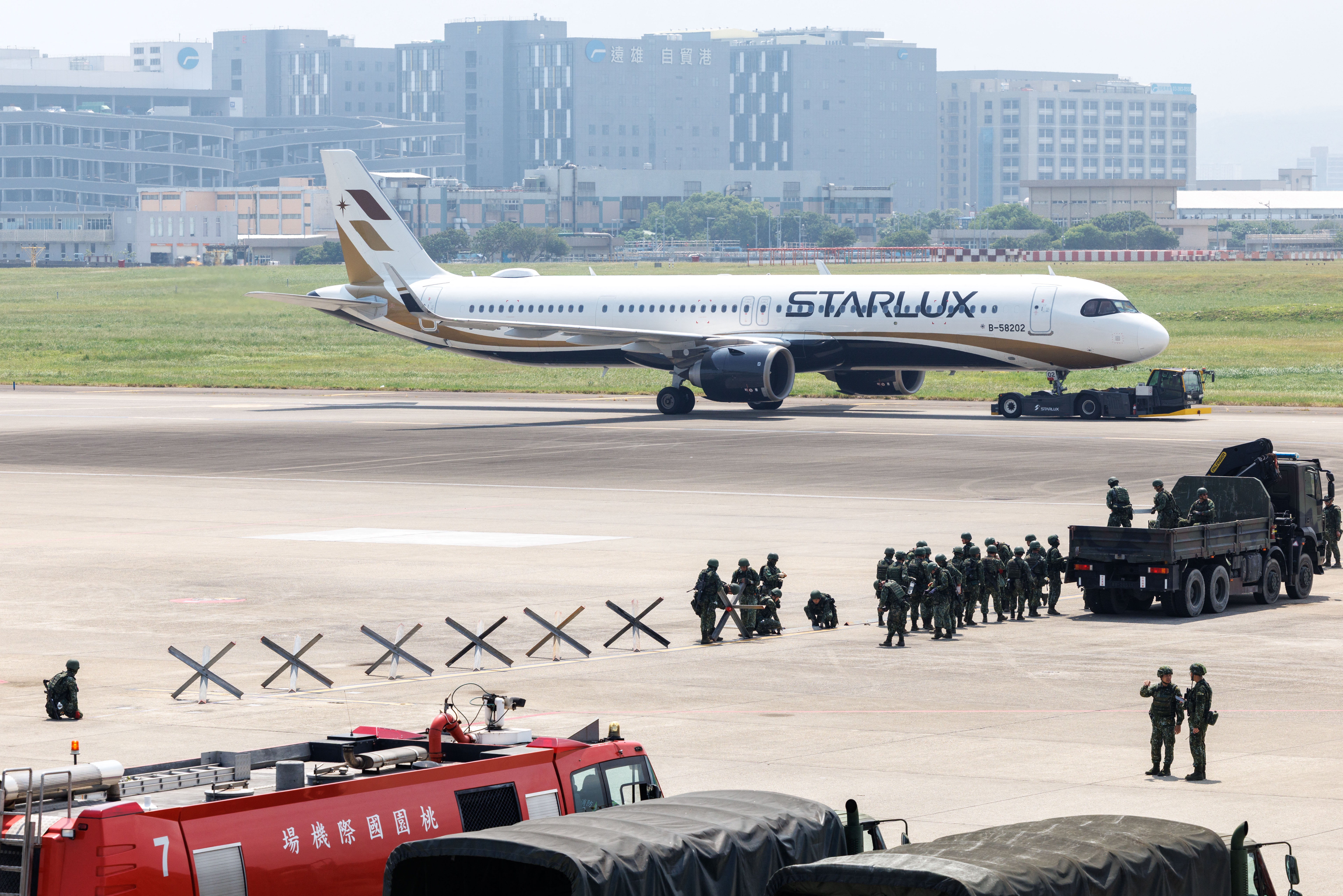
The reported use of airport vehicles and containers is also revealing because it shows how a civilian facility might be rapidly transformed into a defensive zone. That is a reminder that resilience in a crisis depends not only on military units, but on how quickly authorities can repurpose ordinary assets under pressure.
A signal about Taiwan’s defense priorities
Han Kuang exercises are closely watched because they provide clues about what Taiwan considers most urgent in a potential conflict. This airport defense scenario points to a priority on defeating attempts to establish footholds close to political and logistical centers. Rather than assuming a threat would arrive only from the coastline in conventional form, the drill acknowledges the danger of airborne insertion and rapid seizure operations.
That focus fits a broader emphasis on protecting nodes that would matter immediately in the opening phase of a war. An airport near Taipei is exactly that kind of node. If it stays denied, an attacker loses a potentially valuable entry point. If it is taken, the defender faces a far more dangerous operating picture.
The deployment of M1A2T tanks to Taoyuan therefore matters for more than imagery. It shows Taiwan aligning new equipment with one of its most sensitive defensive missions: keeping strategic infrastructure out of enemy hands long enough to prevent a quick operational breakthrough.
In that sense, the exercise was not simply about moving tanks onto an airfield. It was about rehearsing the defense of a gateway whose loss could alter the shape of a wider conflict.
This article is based on reporting by twz.com. Read the original article.
Originally published on twz.com