Production milestone turns a long-range bomb kit into a fleet program
The U.S. Navy is moving ahead with production of a new jet-powered precision weapon that aims to add standoff range without the price tag of a traditional cruise missile. Boeing says it has received a $75 million undefinitized contract action from the U.S. Air Force related to production of the Joint Direct Attack Munition-Long Range, or JDAM-LR, for the Navy.
That makes the program more than a test concept. It marks the point where the JDAM-LR begins to transition into an actual procurement effort, with the Navy positioning it as a practical way to expand the strike options available to carrier air wings. The Air Force manages the joint-service JDAM program, which is why the production contract was issued through that service even though the initial requirement is for naval use.
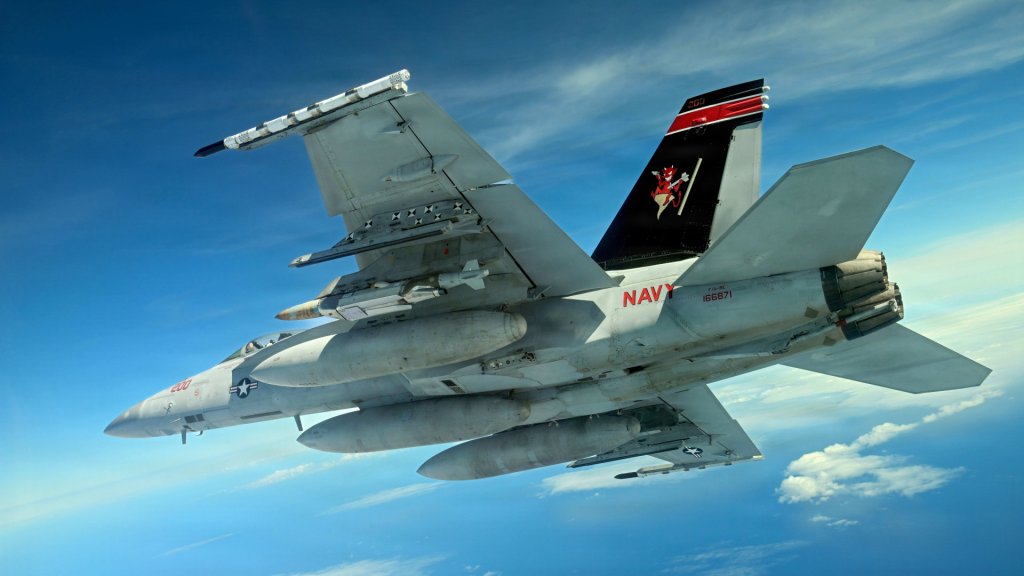
The contract follows the Navy’s announcement in April that it had successfully test-launched JDAM-LRs from F/A-18E/F Super Hornets. With those launches complete and a production action now in place, the service appears to be pushing the weapon forward as a lower-cost addition to its inventory of air-launched stand-off munitions.
What the JDAM-LR is
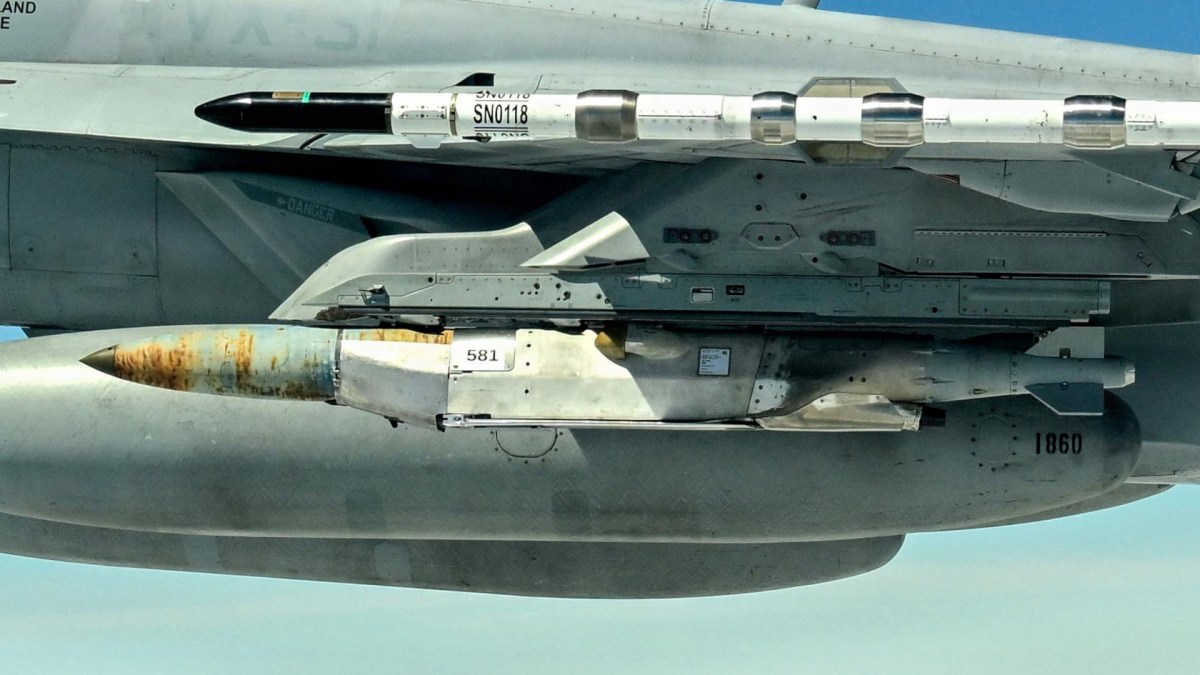
The JDAM-LR is not a clean-sheet missile. It is best understood as a powered extension of the long-running JDAM family, which is already widely used to turn conventional bombs into precision-guided weapons. According to Boeing’s description, the long-range version is built around a core component called the Payload Delivery Unit, now designated BSU-111/B. Complete JDAM-LR munitions are designated GBU-75/B.
Like standard JDAMs, the system is kit-like in nature rather than a single monolithic weapon. The Payload Delivery Unit contains the guidance section, interfaces with the launch aircraft, and adds the propulsion and airframe features that allow the weapon to travel much farther than an unpowered glide bomb. In effect, the Navy is acquiring something that bridges categories: more capable and survivable at range than a conventional bomb, but potentially much cheaper and easier to scale than a purpose-built cruise missile.
That positioning is central to why the program matters. The Navy has a persistent need for affordable stand-off strike capacity, especially for carrier aircraft that may need to launch from farther away in contested environments. Longer-range weapons allow those aircraft to threaten defended targets without driving as deeply into enemy air defense zones. If the system performs as intended, it could help stretch the combat value of existing aircraft and bomb bodies rather than depending only on far more expensive missiles.
Why the contract matters
The use of an undefinitized contract action, or UCA, is a notable part of the story. By definition, a UCA starts work before the final terms are fully settled, which can include the ultimate price. These mechanisms are often used when the government wants to accelerate production or respond to an urgent need. In this case, that suggests the Navy sees value in getting the weapon moving quickly instead of waiting for every contracting detail to be resolved before work begins.
Boeing framed the award as a major milestone, saying it demonstrates the ability to deliver long-range precision-strike capability at significantly lower cost while scaling production for the fleet. The company also said the weapon is designed to help eliminate long-range land and sea-based threats and support operations in contested battlespaces. That language aligns with current U.S. military priorities, especially the demand for weapons that are both numerous and affordable enough to sustain a high-tempo conflict.
The affordability angle is especially important. Modern militaries have learned that exquisite munitions can become a bottleneck when inventories are limited and replenishment is slow. A powered JDAM derived from an established family could offer a different model: accept some tradeoffs in exchange for faster scaling, lower unit cost, and integration paths that build on equipment and procedures already familiar to the services.
A response to a broader munitions problem
The Navy’s interest in the JDAM-LR fits a wider pattern across the U.S. military. Services are looking for ways to increase the depth of their strike inventories while controlling cost and production complexity. That does not mean replacing top-tier cruise missiles or other advanced weapons. It means creating additional layers in the arsenal so commanders have more options for different target sets and threat conditions.
For carrier aviation, that issue is especially sharp. Naval aircraft need weapons that can reach defended targets at useful distances, but they also need quantity. A small stockpile of highly sophisticated missiles may not be enough in a prolonged fight. A lower-cost standoff weapon derived from a proven bomb kit offers a potentially attractive compromise, giving air wings a weapon that can be bought in greater numbers and used across a broader range of missions.
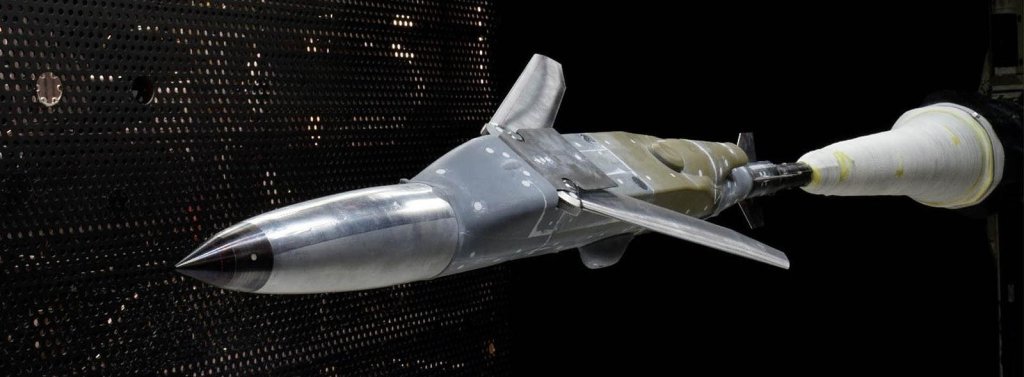
The April test launches from Super Hornets were an early sign that the concept had matured beyond paper studies. Production is the next threshold because it brings industrial planning, fleet demand, and sustainment into the picture. Once a program enters this stage, the central questions shift from whether the weapon can work to how fast it can be built, how many can be fielded, and where it fits within operational doctrine.
What comes next
The contract does not answer every open question. Because it is an undefinitized action, final details still need to be worked out. The award value also reflects only this initial production step, not the full long-term scale of procurement. The weapon’s eventual role across the Navy and possibly other services will depend on follow-on buys, operational testing, and how the military balances it against other stand-off munitions.
Still, the direction is clear. The JDAM-LR is no longer just an experimental offshoot of a familiar bomb kit. It is becoming part of the Navy’s effort to build a more layered strike portfolio, one that values cost, range, and producibility alongside precision.
That combination could prove increasingly important. In an era when militaries are relearning the importance of industrial capacity and magazine depth, the most useful weapons are not always the most advanced in absolute terms. They are often the ones that can be fielded in meaningful numbers and integrated quickly into existing operations. The Navy’s move into JDAM-LR production suggests it believes the powered JDAM belongs in that category.
If that judgment holds, the GBU-75/B may become one of the more important examples of a broader defense trend: extending the life and utility of proven weapon families by adding range and flexibility, rather than relying only on costly clean-sheet programs. For the Navy, the immediate result is straightforward. Carrier aircraft are on track to gain a new stream of precision stand-off firepower built around a weapon system the U.S. military already knows how to use at scale.
This article is based on reporting by twz.com. Read the original article.
Originally published on twz.com