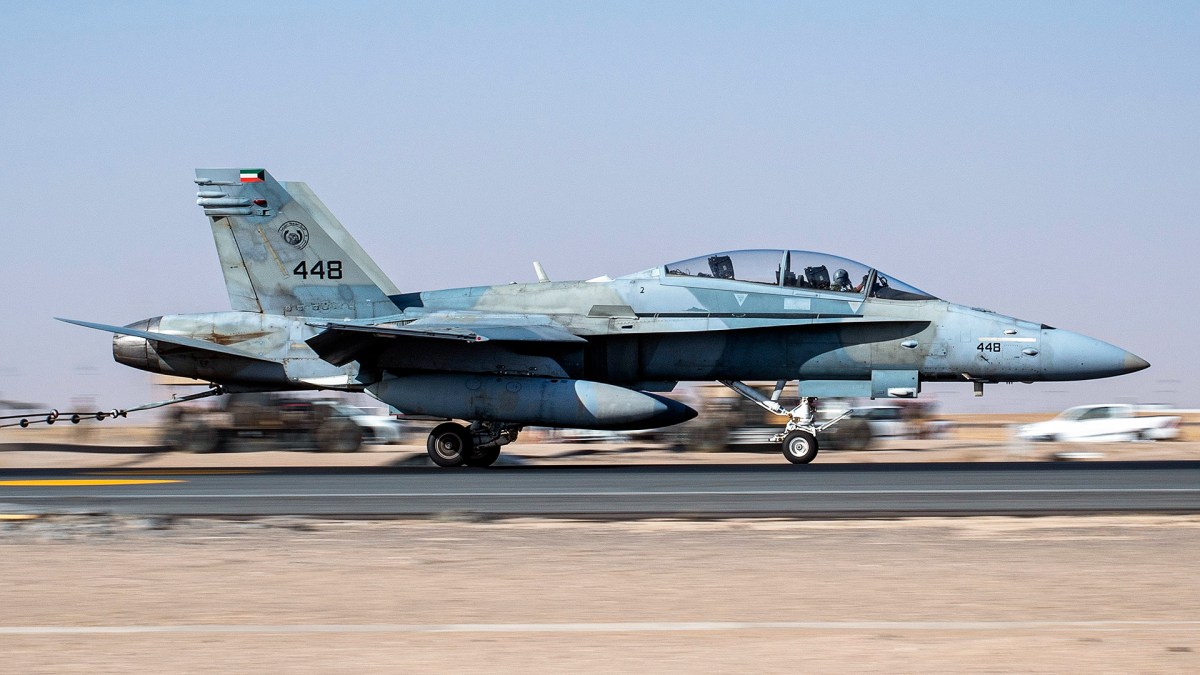
Declassified Report Reveals Friendly Fire Details
A newly surfaced report has revealed that a Kuwaiti Air Force F/A-18 Hornet was responsible for shooting down three United States Air Force F-15E Strike Eagles in what stands as one of the most significant air-to-air friendly fire incidents in modern military aviation history. The details, long obscured by classification and diplomatic sensitivity, provide new insight into the catastrophic failure of identification protocols that led to the shootdowns.
The incident, which resulted in the loss of the three advanced fighter-bombers, has been the subject of speculation and limited disclosure for years. The full report's emergence sheds light on the sequence of events that led a coalition partner aircraft to engage and destroy friendly aircraft during combat operations.
How It Happened
According to the report, the Kuwaiti F/A-18 pilot engaged what were identified as hostile aircraft based on available sensor data and situational awareness at the time. The F-15E Strike Eagles, operating in the same airspace during a complex multi-national military operation, were misidentified as enemy targets.
The failure points appear to have been multiple and systemic rather than attributable to a single error. Communication breakdowns between coalition command and control centers, inadequate real-time coordination of airspace deconfliction, and the inherent fog of war in a fast-moving combat environment all contributed to the tragic outcome.
Identification Friend or Foe Systems
The incident raises serious questions about the effectiveness of Identification Friend or Foe systems during complex coalition operations. IFF systems are designed to prevent exactly this type of incident by allowing aircraft to electronically identify friendly forces. However, the systems have known limitations, including susceptibility to electronic interference, procedural errors in code management, and scenarios where the technology is overwhelmed by the complexity of the battlespace.
The report suggests that IFF procedures may not have been properly coordinated across all coalition participants, a recurring challenge when military forces from multiple nations operate in the same airspace with different equipment, procedures, and levels of training.
The F-15E Strike Eagle
The loss of three F-15E Strike Eagles represents a significant material cost. The F-15E is one of the most capable multi-role fighter aircraft in the US Air Force inventory, with each aircraft valued at tens of millions of dollars. More importantly, each aircraft carries a crew of two — a pilot and a weapons systems officer — meaning the incident put six crew members at risk.
The F-15E was designed for deep interdiction and air superiority missions, equipped with advanced radar, targeting pods, and the ability to carry a wide range of precision-guided munitions. The loss of three aircraft in a single friendly fire incident would have significantly impacted the strike capacity available to coalition commanders during the operation.
Coalition Warfare Challenges
The incident highlights the enduring challenges of multinational military operations. When air forces from different countries operate in close proximity, differences in tactics, procedures, equipment interoperability, and communication protocols create opportunities for tragic misidentification.
Military alliances invest heavily in joint training exercises and standardized procedures specifically to prevent such incidents. However, the complexity of modern air combat, combined with the stress and information overload of actual combat operations, means that friendly fire risk can never be completely eliminated.

Diplomatic Sensitivity
The long delay in the full details becoming public reflects the diplomatic sensitivity inherent in allied-on-allied friendly fire incidents. Publicly attributing the loss of American aircraft and potential casualties to a coalition partner's actions creates obvious diplomatic tensions, particularly with Kuwait, a key US ally in the Gulf region.
Military relationships between the US and Kuwait remain strong and strategically important for both nations. The handling of this incident's investigation and disclosure illustrates the careful balance military and diplomatic officials must strike between accountability, transparency, and alliance management.
Lessons for Modern Operations
As military coalitions continue to operate in complex environments around the world, the lessons from this incident remain urgently relevant. The integration of advanced networking and data-sharing technologies, improved IFF systems, and better real-time airspace management tools are all areas where military planners are working to reduce friendly fire risk in future operations.
This article is based on reporting by twz.com. Read the original article.
Originally published on twz.com