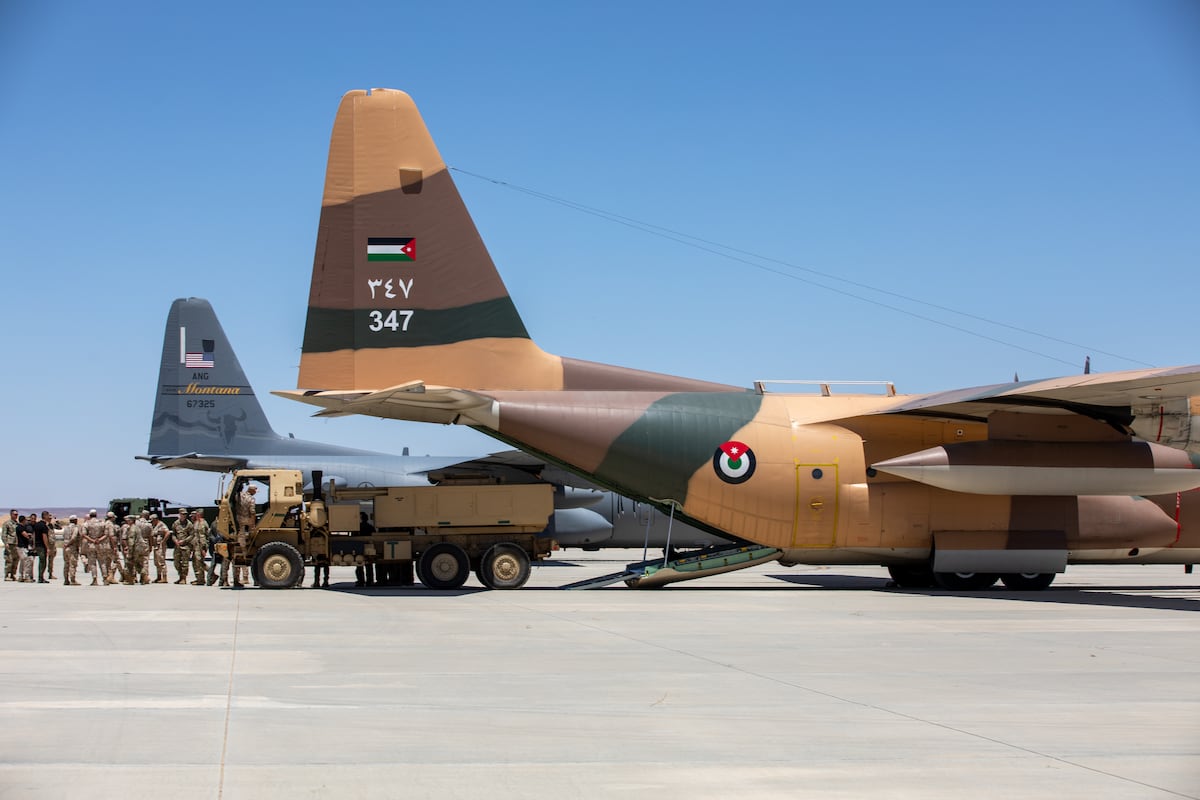
U.S. military reports deadly strike on forces in Jordan
Two U.S. service members were killed and a third is missing after an Iranian ballistic missile and drone attack on U.S. and partner forces in Jordan, according to U.S. Central Command. Four additional troops were medically evacuated to hospitals in Jordan and later discharged, while other personnel treated for minor injuries returned to duty.
The announcement marks another deadly escalation in the conflict involving U.S. forces and Iran-aligned military action in the region. Central Command did not disclose the exact location of the strike at the time of publication, and it said the identities of the two dead service members were being withheld until 24 hours after their next of kin had been notified.
Even with limited operational detail, the immediate significance is clear: the attack produced confirmed American fatalities, a missing service member, and fresh evidence that U.S. personnel in the region remain vulnerable to combined missile-and-drone strikes.
What is confirmed so far
The source material provides several concrete points. The attack took place on Friday and involved both ballistic missiles and drones. The target was U.S. and partner forces in Jordan. Two service members were killed in action. One service member remains missing. Four more were evacuated for treatment and have since been discharged. Other troops assessed for minor injuries have already returned to duty.
Beyond that, public details remain limited. Central Command has not yet released the names of the dead, and it has not published a specific site within Jordan. Those omissions are common in the immediate aftermath of military casualties, particularly while family notifications are underway and battlefield assessments are still developing.
Still, the fact pattern is substantial enough to make the strike a major development. Combined missile and drone attacks can complicate defensive response by presenting different flight profiles and timelines at once. They also signal a level of coordination and intent beyond harassment fire or isolated militia-style attacks.
Casualties add to a growing wartime toll
According to the report, the latest deaths bring the number of American troops killed in the war with Iran to 16. More than 400 U.S. troops have been wounded in the campaign, which the source says began on February 28. That context places the Jordan strike inside a larger and increasingly costly military confrontation rather than as a standalone border incident.
The most recent previously reported U.S. fatality cited in the source was Cmdr. Gabriel Edwards, the commanding officer of the Navy's Helicopter Sea Combat Squadron 5. He was killed on July 1 when the MH-60S Sea Hawk helicopter he was aboard went down in the Arabian Sea. Three other sailors were rescued after that emergency landing.
Those earlier losses and the newly reported deaths in Jordan underscore how broad the operational risk has become. American casualties are arising across multiple domains, including air operations and ground force deployments, and across a geographic arc that extends beyond a single front.
Why Jordan matters
Jordan occupies a sensitive strategic position for U.S. regional operations and for coordination with partner forces. An attack on forces stationed there carries military and political weight even when the tactical details are still sparse. It suggests that adversaries are willing to hit locations linked to coalition posture and logistical support, not only higher-profile combat zones.
The inclusion of partner forces in Central Command's statement is also notable. It highlights that the strike was not solely an attack on Americans but on a broader military presence. That matters for regional diplomacy, force protection planning, and questions about deterrence. When an adversary can inflict casualties on coalition personnel in a partner country, the consequences extend past the immediate battlefield loss.
Because the source text does not describe the interception picture, battle damage, or follow-on operations, it would be premature to draw conclusions about defensive system performance or the strike's ultimate operational objective. But it is reasonable to say the attack demonstrates continued reach and continued willingness to absorb escalation risks.
What comes next
In the short term, the most immediate issues are accountability, force protection, and situational clarity. Investigators and commanders will need to determine exactly how the strike unfolded, what assets were used, how defenses responded, and whether the missing service member can be located and recovered. Families of the dead are still in the notification process, and more public identification is likely once that period is complete.
In policy terms, incidents like this tend to sharpen pressure for a response while also forcing review of regional basing, warning systems, and exposure of forward-positioned units. The report does not say what retaliatory or protective measures may follow, so any claim about next military steps would go beyond the available facts. What can be said is that the attack is likely to intensify scrutiny of the broader campaign and its human cost.
The numbers alone make that scrutiny unavoidable. Sixteen U.S. service members killed and more than 400 wounded since late February represent a substantial toll. The Jordan strike adds another acute reminder that the conflict remains active, lethal, and geographically dispersed.
For now, the official picture is still incomplete. But the core facts are not ambiguous: an Iranian missile-and-drone attack on U.S. and partner forces in Jordan killed two American troops, left one missing, and wounded several others. As more details emerge, this incident is likely to become a focal point in assessing the trajectory of the war and the risks facing U.S. personnel deployed across the region.
This article is based on reporting by Defense News. Read the original article.
Originally published on defensenews.com