U.S. reports combat deaths in Jordan after Iranian attack
Two U.S. service members were killed in action in Jordan on July 17 while defending against Iranian ballistic missile and drone attacks, according to a statement released by U.S. Central Command. The command also said one additional American service member remains missing, making the incident one of the most serious recent attacks involving U.S. personnel in the region.
According to CENTCOM, four other American service members were medically evacuated to hospitals in Jordan after the attack. The command said those troops have since been discharged, while other personnel evaluated for minor injuries have already returned to duty. The military did not identify the dead or the missing service member, saying it was withholding names until 24 hours after next of kin notifications are complete.
The announcement places Jordan, a longtime U.S. security partner, back at the center of a widening regional confrontation. Jordan hosts American forces and serves as an important operating location for U.S. airpower and military coordination in the Middle East. Any direct attack on installations there carries strategic weight beyond the immediate casualties, because it raises questions about force protection, regional escalation, and the vulnerability of bases that support U.S. operations.
What CENTCOM confirmed, and what remains unclear
The most concrete facts so far come from CENTCOM’s public statement. The command said the deaths occurred as U.S. and partner forces defended against Iranian ballistic missile and drone attacks. That wording is significant because it frames the incident not as an isolated accident or indirect spillover, but as part of an active air and missile defense engagement.
Even so, key details remain unresolved. CENTCOM did not publicly specify which Jordanian base was hit, what type of munitions caused the casualties, or whether any infrastructure or aircraft were damaged. The command also did not say whether the missing service member is unaccounted for because of the strike itself, subsequent base conditions, or another operational factor.
That limited disclosure is not unusual in the immediate aftermath of combat losses, especially when families have not yet been fully notified. But it leaves open major questions that matter both operationally and politically: how well existing defenses performed, how many projectiles or drones were launched, whether they were intercepted in full or in part, and whether U.S. basing patterns in Jordan could change in response.
Jordan’s role makes the attack strategically important
Jordan occupies a sensitive geographic and political position. It borders areas that have repeatedly been drawn into wider regional conflict, while also serving as a stable partner for Western militaries. For the United States, access in Jordan supports both deterrence and response options across the broader Middle East.
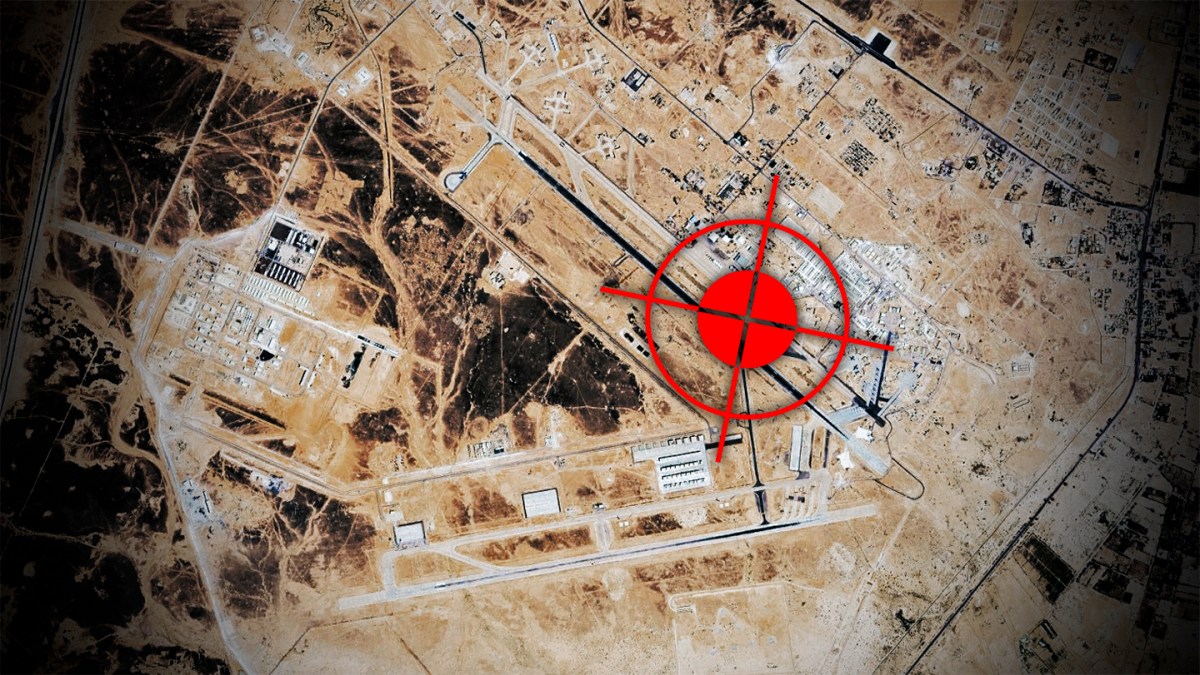
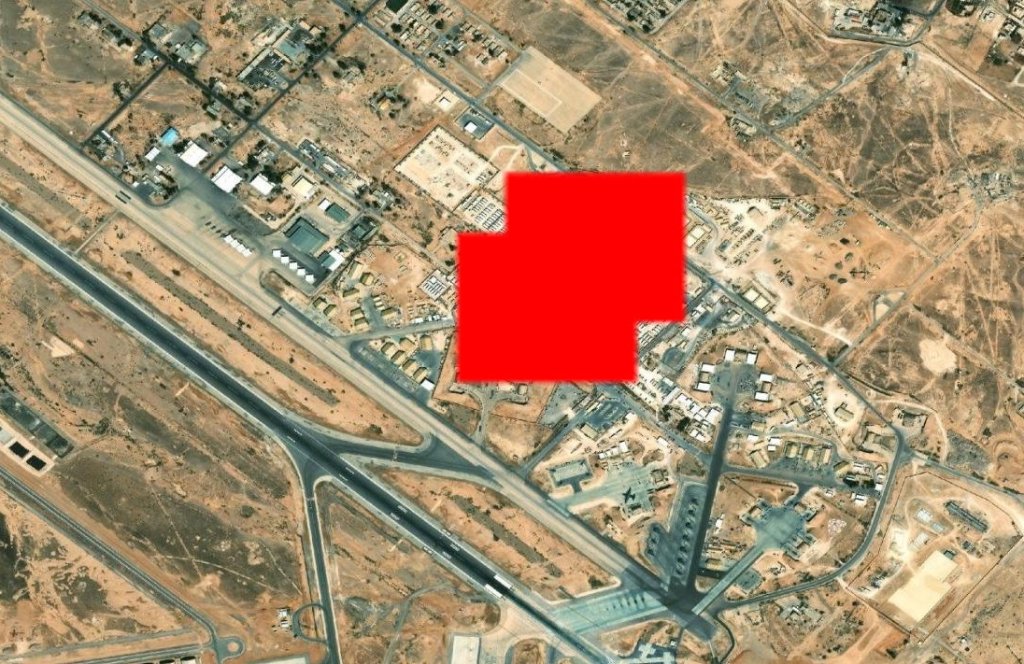
The War Zone report notes that Muwaffaq Salti Air Base hosts the largest contingent of American tactical airpower in the region. CENTCOM did not confirm that this was the site affected in the fatal attack, but the mere possibility matters because it would place a major U.S. air hub within the direct strike envelope of Iranian weapons systems. If a base of that importance was hit, the implications would extend beyond one night’s damage assessment.
Military planners will now be focused on several overlapping issues: whether dispersal plans are sufficient, whether base hardening measures need to be accelerated, and whether current warning and interception timelines are adequate against mixed missile-and-drone salvos. Attacks that combine ballistic missiles with drones can complicate defensive decision-making by forcing commanders to manage different flight profiles, speeds, and interception windows at the same time.
Reports point to a broader week of attacks
The incident may not have been a one-off event. The source text cites a CBS News report saying Iran attacked at least two Jordanian bases during the week, injuring several American service members after one facility was struck. That claim adds context to CENTCOM’s statement by suggesting an ongoing pattern rather than a single escalation. Still, that reporting sits outside CENTCOM’s formal announcement, so the broader scope of the campaign remains less certain than the casualty figures now publicly acknowledged by the U.S. military.
The War Zone article also referenced data from NASA’s Fire Information for Resource Management System showing a fire near the runway and aircraft parking area at Muwaffaq Salti Air Base late Friday night. However, the report explicitly said that observation could not independently verify what happened on the ground, whether equipment was damaged, or how personnel were affected. Social media video cited in the article was similarly presented as unverified.
Those caveats are important. In fast-moving military incidents, satellite heat signatures, social video, and early third-party reporting can offer clues, but they do not establish the full operational picture. What is verified at this stage is narrower: U.S. personnel in Jordan were attacked, two were killed, one is missing, and additional troops were injured during a defensive engagement against Iranian ballistic missiles and drones.
What this changes for Washington and the region
Even before more details emerge, the episode is likely to sharpen pressure on U.S. policymakers. Fatalities among American troops tend to narrow the room for ambiguity. They can trigger demands for retaliation, stronger defensive deployments, or adjustments to the U.S. military footprint. They also heighten scrutiny of whether regional bases are sufficiently protected against increasingly capable missile and drone threats.
For Iran and its adversaries, the event also underscores how quickly a regional contest can move from signaling to direct military loss. Jordan has often been viewed as a comparatively stable node in a volatile theater. An attack that kills U.S. service members there changes the tone of that assumption, even if the longer-term strategic balance remains intact.
In the near term, the most likely next developments are official identification of the fallen after family notification, additional information on the missing service member, and a clearer description of the attack sequence. Damage assessments and any changes to U.S. posture in Jordan will be especially closely watched. Until then, the significance of the incident is already plain: a partner base in Jordan came under Iranian missile and drone attack, and the United States suffered lethal losses while trying to stop it.
Key confirmed details
- CENTCOM said two U.S. service members were killed in action in Jordan on July 17.
- One additional American service member remains missing.
- Four service members were medically evacuated to Jordanian hospitals and later discharged.
- Other personnel assessed for minor injuries returned to duty.
- CENTCOM said the casualties occurred while defending against Iranian ballistic missile and drone attacks.
This article is based on reporting by twz.com. Read the original article.
Originally published on twz.com