A Strike That Changed the Debate
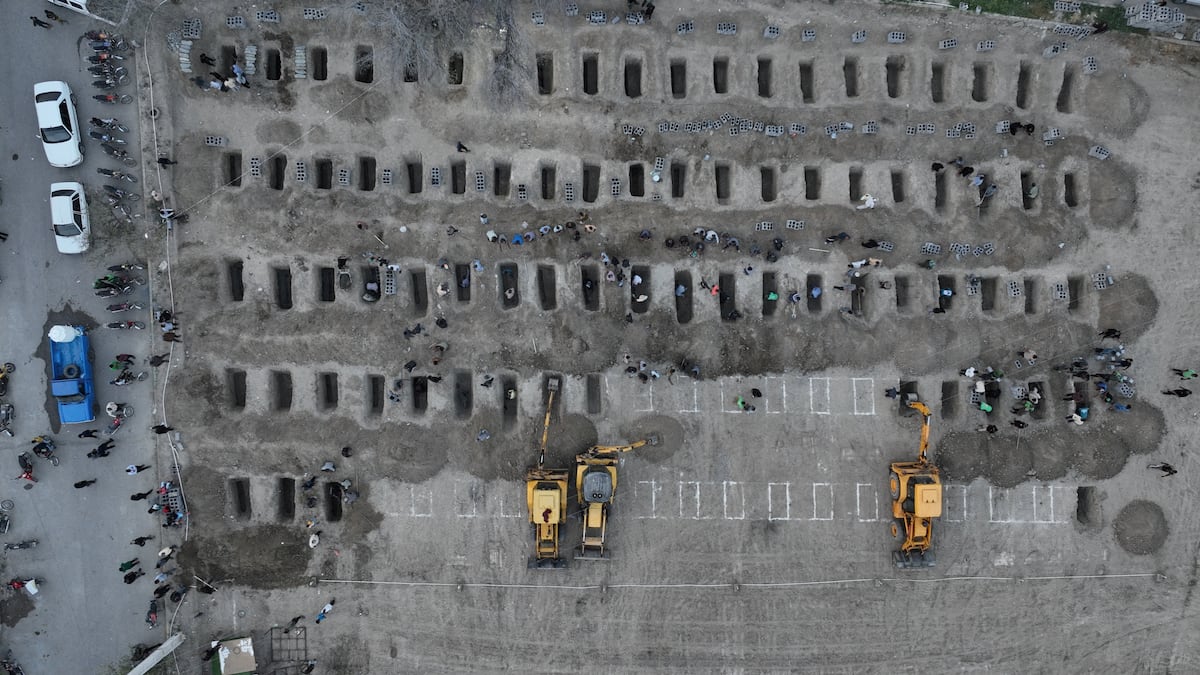
On February 28, 2026, the first day of U.S. military operations against Iran, a Tomahawk cruise missile destroyed Shajareh Tayyebeh elementary school in Minab, in southern Iran's Hormozgan province. The strike killed 168 people, more than 100 of them children under age 12. The school sat fewer than 100 yards from an Islamic Revolutionary Guard Corps naval installation — separated from it by a wall whose construction was documented in satellite imagery dating to 2013–2016. That wall, and the school it enclosed, had not been updated in the intelligence database that generated the target.
The target was generated by Maven Smart System, a Palantir Technologies-built platform operating under a $1.3 billion Pentagon contract. Maven fuses satellite imagery, drone feeds, radar returns, and signals intelligence, then uses an AI layer — built on Anthropic's Claude model — to rank and recommend targets. In the opening 24 hours of operations, the system generated hundreds of coordinates and supported more than 1,000 strikes. It was the largest operational test of AI-assisted targeting in U.S. military history. And it produced the strike on Minab.
What Went Wrong
The official investigation, briefed to Congressional oversight committees last week, traced the failure to stale intelligence rather than a flaw in Maven's AI algorithms. The Defense Intelligence Agency's targeting database had not been updated to reflect the school's construction. When Maven queried that database, it returned the coordinates of the adjacent IRGC installation without any flag indicating a new structure had appeared in the intervening decade. The missile followed those coordinates.
Former targeting officers who have reviewed the findings say the conclusion that "humans — not AI — are to blame" is technically accurate but misses the operational reality. Before Maven, the targeting process for a strike of this sensitivity would have involved multiple layers of human review, collateral damage estimation, and cross-referencing against updated imagery. Maven's architecture compressed that process to meet the volume and speed requirements of the first operational day. A target that would have received hours of human scrutiny under the previous system received minutes under Maven.

Maven's Accuracy Record
The Minab strike has forced public reckoning with performance data that the Pentagon has generally kept out of public documents. Maven's overall targeting accuracy in the Iran campaign has been assessed at approximately 60 percent — meaning roughly two in five targets generated by the system contain errors significant enough to affect the strike outcome, including civilian structure misidentification. By comparison, experienced human analysts working the same target sets achieve approximately 84 percent accuracy under similar time constraints.
In adverse conditions — poor lighting, heavy cloud cover, active countermeasures — Maven's accuracy falls below 30 percent. The system's confidence scores, displayed to operators on targeting terminals, do not adjust accordingly. A 2021 Air Force study of an earlier targeting AI found that the system displayed 90 percent confidence ratings in its outputs while achieving only 25 percent real-world accuracy during field evaluation. Maven's operators have reported similar mismatches between displayed confidence and actual reliability.
The Institutional Infrastructure That Wasn't There
The strike also exposed the degree to which the human oversight structures designed to catch AI errors had been hollowed out before operations began. The Pentagon's Civilian Protection Center of Excellence, tasked with developing doctrine and reviewing procedures for minimizing civilian casualties in AI-assisted operations, had its budget and staff cut by approximately 90 percent in the 18 months before the Iran campaign. CENTCOM's dedicated civilian casualty assessment team — the unit responsible for reviewing strike outcomes and flagging patterns requiring investigation — had been reduced from 10 personnel to a single officer.
Those reductions reflected a broader institutional posture in which deploying Maven at scale was treated as an efficiency gain that reduced the need for parallel human review structures. The assumption was that AI would make the targeting process faster and more accurate simultaneously, reducing rather than increasing the human workload required for responsible operation. The Minab outcome suggests the assumption was wrong.
The Mandated Rollout Continues
Despite the investigation findings, Deputy Secretary of Defense Steve Feinberg has moved forward with formalizing Maven as an official program of record, with a mandate requiring adoption across all military branches by September 2026. The rationale, according to officials briefed on the decision, is that the Iran campaign's overall targeting performance — including the Minab strike — still represents an improvement over what was possible without the system. The pace at which Maven enabled targeting in the operation's first hours is seen as a strategic necessity given the threat environment.
Critics inside and outside the Pentagon argue that the September mandate creates pressure to deploy before the oversight and database currency problems identified in the Minab investigation have been fixed. A Ukrainian drone developer that has worked with semi-autonomous systems in combat conditions said in a public statement following the strike that Minab "exposed a familiar danger of semi-autonomous warfare: the system performs to spec, the spec was wrong, and children are dead."
What Reform Looks Like
Proposals circulating within the Pentagon and among defense policy researchers include mandatory freshness requirements for intelligence database entries used in AI-generated targeting — no entry older than 30 days would be eligible for autonomous recommendation without human review. Others propose that Maven's confidence display be replaced with accuracy-range estimates that reflect known performance degradation under adverse conditions, so operators have a more honest picture of reliability. Restoring the civilian protection and casualty assessment infrastructure that was cut before the campaign is widely cited as a prerequisite for responsible continued operation of the system.
What is not on the reform agenda, according to officials, is suspending Maven pending a comprehensive review. The system is now embedded in operational planning across multiple theaters, and the institutional momentum behind AI-assisted targeting is substantial. The debate is no longer about whether AI will assist in targeting decisions, but about what safeguards must exist before the speed advantages of such systems are allowed to override the deliberation that human review provides.
This article is based on reporting by Defense News. Read the original article.

Originally published on defensenews.com