From Ukrainian Trenches to Arctic Tundra
The first-person-view combat drones that have transformed warfare in Ukraine are now being evaluated for a very different battlefield: the Arctic. Military planners in several NATO nations are exploring how the small, inexpensive, and devastatingly effective FPV drones proven in Ukrainian combat could be adapted for operations in extreme cold environments, where temperatures can plunge below minus 40 degrees and conditions present unique challenges for both operators and equipment.
The interest reflects a broader shift in Arctic defense planning. As climate change opens new maritime routes and exposes previously inaccessible resources in the High North, military competition in the Arctic has intensified. Russia has significantly expanded its Arctic military infrastructure in recent years, while NATO nations including Norway, Finland, Sweden, and Canada have increased their focus on Arctic defense capabilities.
Technical Challenges in Extreme Cold
Adapting FPV drones for Arctic operations presents a formidable set of engineering challenges. The lithium polymer batteries that power most FPV drones lose capacity rapidly in extreme cold, with some formulations losing more than half their energy storage capability at minus 30 degrees Celsius. This dramatically reduces flight time and range, which are already limited in standard-temperature operations.
Battery heating solutions exist but add weight and complexity to platforms where every gram matters. Some manufacturers are developing cold-weather battery chemistries and insulated battery compartments specifically designed for Arctic conditions, but these solutions are still in early stages of testing.
The electronic components face their own cold-weather challenges. Camera sensors can fog or frost over, flight controllers may behave erratically as solder joints contract in extreme cold, and the composite materials used in drone frames can become brittle and prone to fracture. Operators wearing heavy gloves in Arctic conditions also face reduced dexterity, complicating the precise control inputs required for FPV flying.
Terrain and Environmental Factors
The Arctic operational environment differs dramatically from the Ukrainian theater where FPV tactics were developed. In Ukraine, drones typically operate over relatively flat terrain with abundant visual references such as tree lines, buildings, and roads that help operators navigate and identify targets. The Arctic landscape often lacks these features, presenting vast expanses of snow-covered terrain with few distinguishing landmarks.
The magnetic environment near the poles also complicates navigation. Compass-based heading systems become unreliable at high latitudes, and GPS signals can be degraded by ionospheric disturbances common in polar regions. Electronic warfare capabilities, which Russia has demonstrated extensively in the Arctic, further threaten the communication and navigation links that FPV drones depend upon.
Seasonal lighting extremes add another dimension. During the Arctic winter, extended periods of darkness limit the effectiveness of standard optical cameras, potentially requiring infrared or thermal imaging sensors that add cost and weight. During the summer, continuous daylight and low sun angles can create challenging lighting conditions for video transmission.
Tactical Adaptation
Despite these challenges, military analysts believe that the core tactical advantages of FPV drones, their low cost, expendability, and ability to deliver precision effects against high-value targets, translate well to Arctic operations. The vast distances and limited infrastructure of the Arctic make conventional force projection expensive and logistically challenging, while small drones can be transported and deployed by small units operating independently.
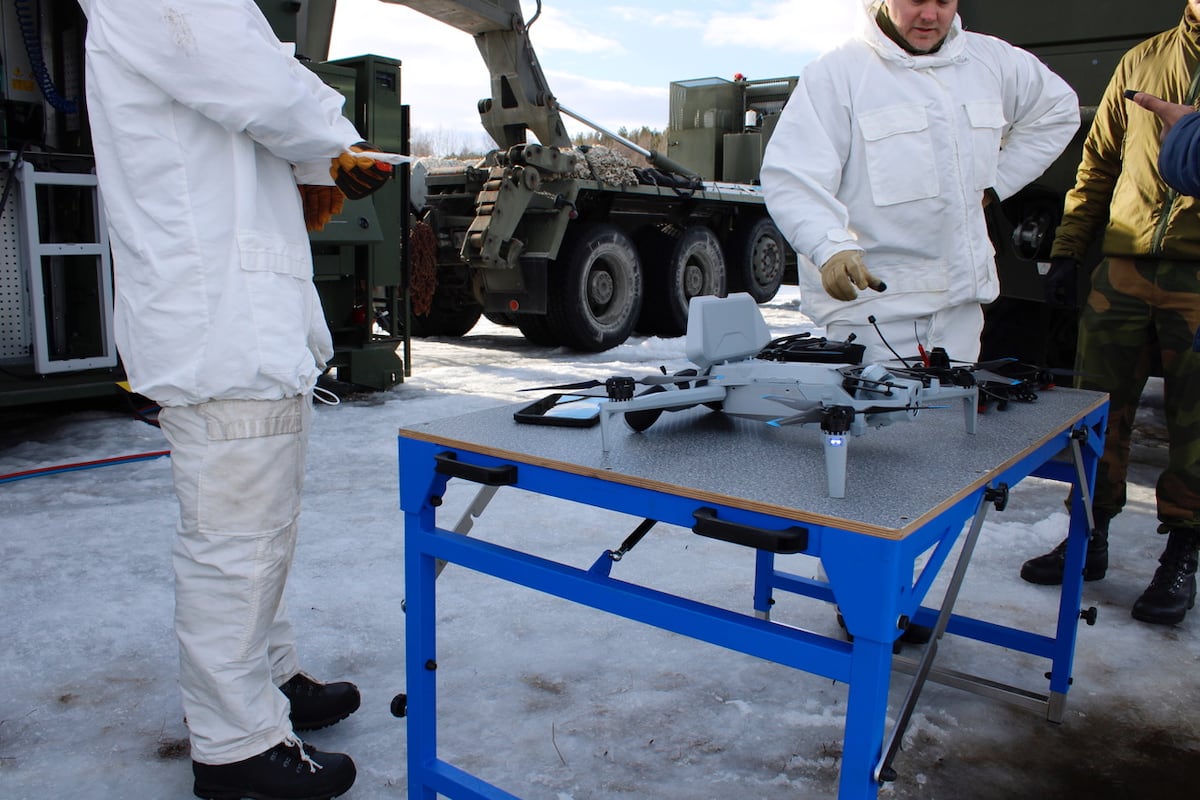
Several Nordic nations are already conducting cold-weather drone trials. Norwegian units have tested modified FPV platforms in winter exercises above the Arctic Circle, experimenting with heated battery enclosures, cold-rated propulsion systems, and operator interface modifications for use with arctic gloves. Finnish troops, with extensive experience in winter warfare, are developing tactics that integrate small drones with traditional ski patrol operations.
Industry Response
The defense industry is responding to the demand with purpose-built Arctic drone platforms. Several manufacturers in Europe and North America have announced cold-weather variants of existing FPV designs, incorporating lessons learned from both the Ukrainian conflict and Nordic military trials. These platforms typically feature improved insulation, cold-start capable motors, and ruggedized electronics rated for extreme temperature ranges.
The development of Arctic-capable FPV drones represents the latest example of how the lessons of the Ukraine conflict are rippling outward to reshape military planning across all environments and theaters.
This article is based on reporting by Defense News. Read the original article.
Originally published on defensenews.com