A viral military tech story meets a reality check
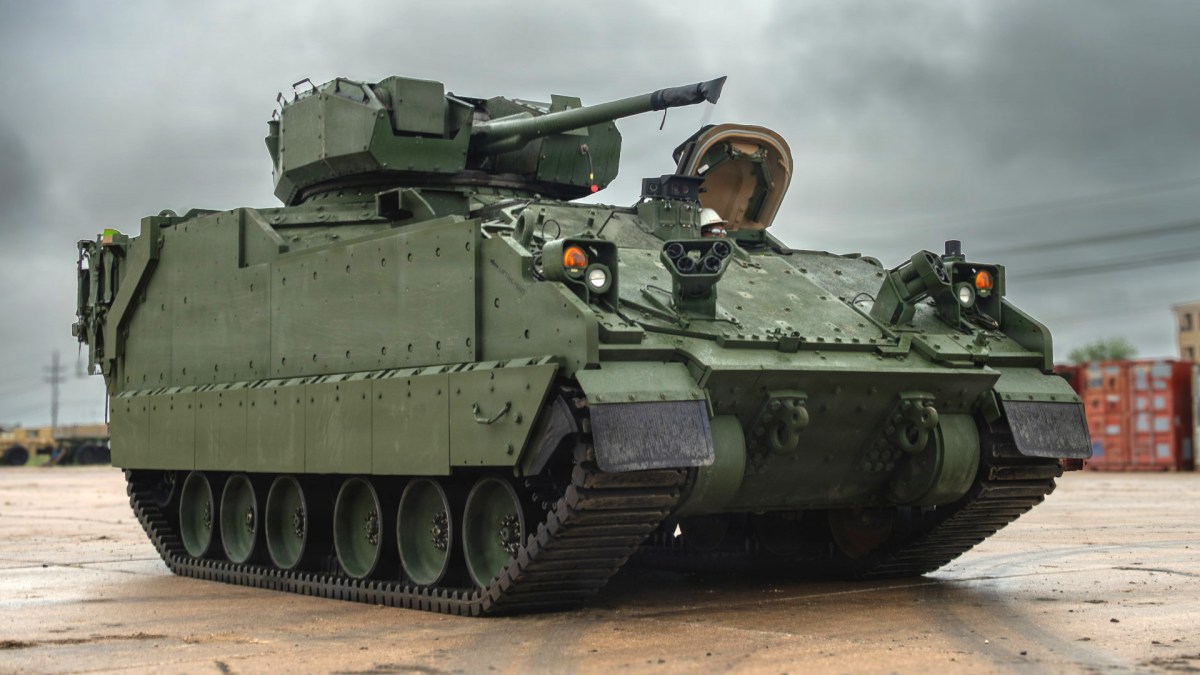
For a moment, it looked like the U.S. Army had begun fielding a new armored vehicle variant with substantially more firepower. Social media posts from the 1st Cavalry Division appeared to announce the arrival of the Army’s first Armored Multi-Purpose Vehicles equipped with turreted 30mm cannons, and outside observers quickly treated that as evidence of a new operational capability entering service.
That is not what happened. According to clarifications cited in the source material, both the Army and BAE Systems said the two AMPV 30 vehicles delivered this week are company-funded prototypes that will be tested under the service’s Transformation In Contact 2.0 initiative. The Army, at least for now, has no plan to acquire this variant as part of its program of record.
Why the distinction matters
In military modernization, the gap between a prototype delivery and a procurement commitment is enormous. A prototype can signal interest, experimentation, or an effort to gather operational feedback. It does not mean the service has settled requirements, funded procurement, or decided where a new vehicle fits in force structure and doctrine.
That distinction is especially important with the AMPV family. The Army chose the Bradley-based AMPV in 2014 to replace the long-serving M113 family in several support roles. The current acquisition plan includes five variants, all turretless: a general-purpose personnel carrier, medical evacuation vehicle, medical treatment vehicle, command-and-control version, and mortar carrier. Those vehicles are designed around transport, support, and battlefield utility rather than direct-fire lethality.
A 30mm turret changes the conversation. It pushes the AMPV concept closer to an armed combat-support platform and raises questions about mission overlap with Bradleys and other vehicles. That kind of shift would not happen quietly or by accident.
What Transformation In Contact is doing here
The Army plans to evaluate the AMPV 30 prototypes as part of Transformation In Contact, an initiative aimed at speeding the testing and potential fielding of new capabilities, along with the tactics and procedures needed to use them effectively. That framework is well suited to prototypes because it lets the service observe how equipment performs in realistic military settings before making larger commitments.
Seen in that light, the two AMPV 30s are less a secret acquisition and more a probe. They give soldiers a chance to handle a heavier-armed support vehicle and give Army leaders a chance to measure whether the concept solves a meaningful problem. That could include survivability, mobile fire support, convoy protection, or adaptation to emerging battlefield threats. But testing a concept is not the same thing as validating a need for a new production fleet.
Why the misunderstanding spread so fast
The confusion says something about the information environment surrounding defense technology. Official unit social media channels can now move faster than formal acquisition communications, and striking images of new hardware often outrun the institutional caveats that would normally accompany procurement news. In this case, language about receiving the Army’s first prototypes sounded, to many readers, like a fielding milestone rather than a test event.
That reaction was understandable. The Army is under constant pressure to modernize against rapidly changing threats, and observers are primed to look for evidence of quicker adoption cycles. A cannon-equipped AMPV also fits a wider narrative of upgunning armored formations and experimenting with more modular vehicle designs. But narratives can fill gaps that official procurement facts have not actually closed.

What to watch next
The most important near-term question is not whether the Army has secretly adopted the AMPV 30. It has not, based on the supplied source. The better question is what the Army learns from testing it. If soldiers and evaluators find the platform useful, the prototype effort could still influence future requirements, design studies, or separate acquisition efforts.
It is also possible the trial goes nowhere. Prototype evaluation is supposed to eliminate weak ideas as well as elevate strong ones. A concept can be tactically interesting yet still fail on cost, complexity, maintenance burden, doctrinal fit, or overlap with other platforms already in service.
Modernization is often messier than the headlines suggest
The AMPV 30 episode is a reminder that defense modernization rarely moves in a straight line from prototype photo to procurement program. Experimentation, messaging, contractor initiative, and official acquisition policy can point in slightly different directions at the same time.
For now, the clearest conclusion is narrow but important: the Army is testing two cannon-armed AMPV prototypes, not fielding a new standard variant. Even so, the test is worth watching. Prototypes often reveal where a service is curious, where industry sees opportunity, and where future doctrine may still be unsettled. Sometimes that matters almost as much as a signed production contract.
This article is based on reporting by twz.com. Read the original article.
Originally published on twz.com