The first Poseidon is entering a second career
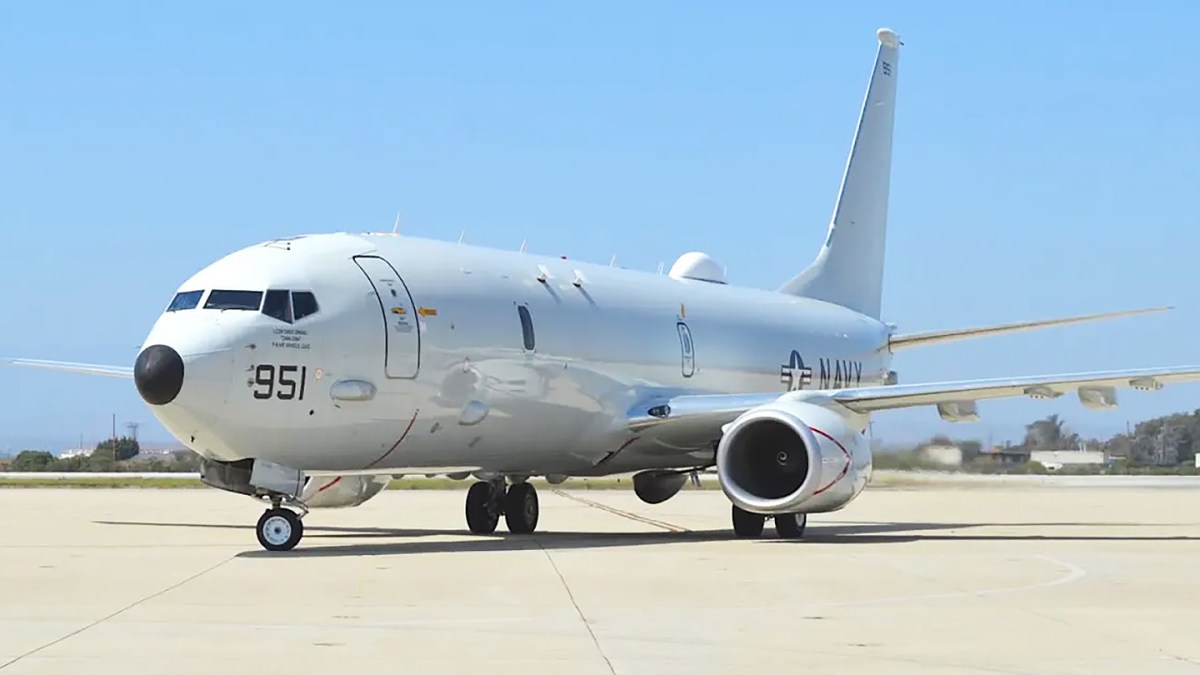
The U.S. Navy’s first P-8A Poseidon has taken on a new assignment that says as much about fleet transition as it does about one aircraft’s longevity. The aircraft, identified as the very first Poseidon ever built and still known as T-1, is now assigned to Air Test and Evaluation Squadron 30, or VX-30, at Point Mugu, California. Its new job is to support missile tests and other range activities in the Pacific, helping the squadron as its remaining P-3 Orion aircraft become harder to sustain.
The move gives the Navy a more modern platform for a mission set that depends on availability, reach, and reliability. It also underlines how little service life remains in the P-3 fleet. According to the source report, only a handful of P-3s are still in Navy service anywhere, and they are becoming increasingly difficult to operate and maintain. In that context, shifting a Poseidon into VX-30 is not just a curiosity about a prototype aircraft. It is part of a broader effort to modernize the squadron that supports test and evaluation work across some of the military’s most important ranges.
Why VX-30 matters
VX-30, known as the Bloodhounds, operates from Naval Air Station Point Mugu, part of Naval Base Ventura County on the southern California coast. The location gives the squadron direct access to the Point Mugu Sea Range, a large offshore test area used by the Navy, other U.S. military branches, and defense contractors for missile tests and other evaluation missions.
Keeping those ranges clear and supporting tests is a specialized job. The squadron’s aircraft do not exist mainly for frontline patrol or combat deployment. They support development, validation, and operational testing, and they can also deploy to other range complexes. The report notes that VX-30 aircraft often operate elsewhere in the Pacific, around Hawaii, and in Atlantic test areas off Florida. That makes the unit an enabling force for a wide range of weapons and systems work.
Because those missions are recurring and geographically dispersed, they put pressure on aircraft readiness. Older airframes can impose real limitations, especially when maintenance becomes more difficult and spare parts scarcer. A platform transition inside VX-30 therefore has operational implications well beyond California.
From program testbed to operational support asset
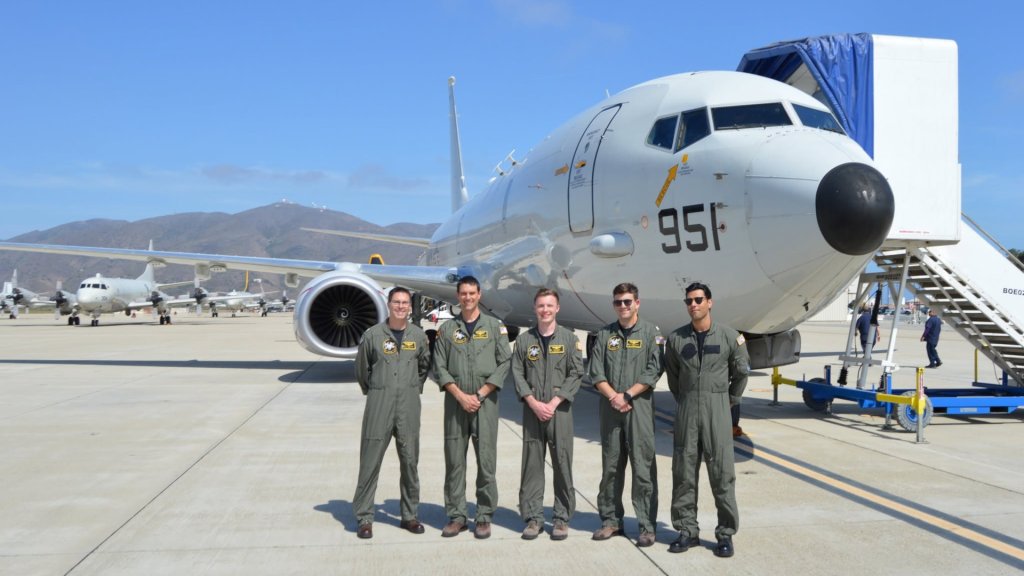
The T-1 aircraft first flew in 2009 and spent years supporting the Poseidon program itself. That history makes its reassignment notable. Test aircraft are often heavily used, highly instrumented, or uniquely configured, but they can also retain value long after their original development role ends. In this case, the Navy appears to be turning the earliest P-8 into a practical tool for ongoing test support missions.
The report also says VX-30 is in line to receive the second test P-8A, still referred to as T-2. Taken together, those moves suggest a deliberate plan rather than a one-off transfer. The squadron was already reported last year to be in line for two P-8As, specifically to support long-range missile and other testing efforts. T-1’s arrival now appears to be the first visible step in that transition.
That matters because the Poseidon is far newer than the Orion and is already established as the Navy’s standard maritime patrol aircraft. Bringing it into VX-30 should reduce some of the sustainment pressure created by the shrinking P-3 inventory while aligning test support with the fleet’s broader aviation architecture.
The slow exit of the P-3 Orion
The P-3 Orion has had a long service life, but the report makes clear that the end stage is now defined by scarcity and maintenance strain. VX-30 has relied on P-3s for test missions, but those aircraft are aging out of practical service. The squadron’s need is not abstract. It has been dealing with the same fleet realities affecting the Navy more broadly: legacy aircraft become more expensive and harder to keep flying as numbers dwindle.
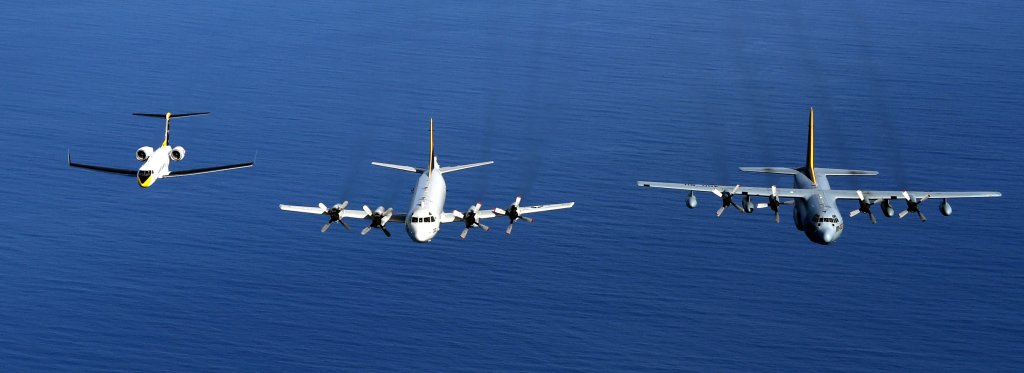
That pressure has already driven other fleet changes within the Bloodhounds. The squadron operates a mix of specialized aircraft, including KC-130T transports and tankers, as well as the one-of-a-kind NC-20G and NC-37B jets. The NC-37B was specifically acquired to replace one of the squadron’s NP-3D Orions, a heavily modified variant nicknamed the “Billboard.” The addition of a P-8 fits that larger modernization pattern.
Seen that way, T-1’s arrival is one piece of a methodical refresh of the squadron’s capabilities. The Navy is not merely replacing old airframes with newer ones in a direct one-for-one swap. It is reshaping a niche support fleet around platforms that are more sustainable and better matched to current mission demands.
What the P-8 brings to the mission
The source text does not detail the aircraft’s exact configuration for VX-30 service, so any claim beyond the reported role would go too far. But the purpose is clear: the P-8A will help support missile-test activity and range operations, and it will help the squadron address the growing limitations of its P-3s.
That alone is significant. Range-support missions require dependable aircraft able to cover large areas and support complex events involving multiple participants. As the Navy and its partners continue frequent testing in the Pacific, an aircraft already familiar within the service and tied to the maritime patrol community offers a more stable foundation than dwindling legacy platforms.
The symbolism is also hard to miss. The first Poseidon ever built is not being retired into obscurity. Instead, it is being folded into the work of enabling future systems, from missile evaluations to broader test-and-assessment campaigns. An aircraft born at the front end of one modernization cycle is now helping sustain another.
A small fleet move with wider meaning
On paper, one aircraft reassignment may look minor. In practice, this one reflects a broader shift in how the Navy keeps specialized support missions viable while old fleets wind down. VX-30’s mission depends on aircraft that can show up, stay available, and operate across dispersed range complexes. The arrival of T-1 addresses that need while also reducing reliance on a platform that is nearing the end of its useful Navy life.
If T-2 follows, the squadron’s transition will become even clearer. For now, the takeaway is simple: the Navy’s oldest Poseidon has become part of the infrastructure behind Pacific weapons testing. That role may be less visible than frontline patrol missions, but it is central to how new systems are validated and fielded. In that sense, T-1’s second career is not a footnote. It is part of the machinery that helps future military capabilities move from concept to operational reality.
This article is based on reporting by twz.com. Read the original article.
Originally published on twz.com