A small mystery in Chinese military aviation may have a practical answer
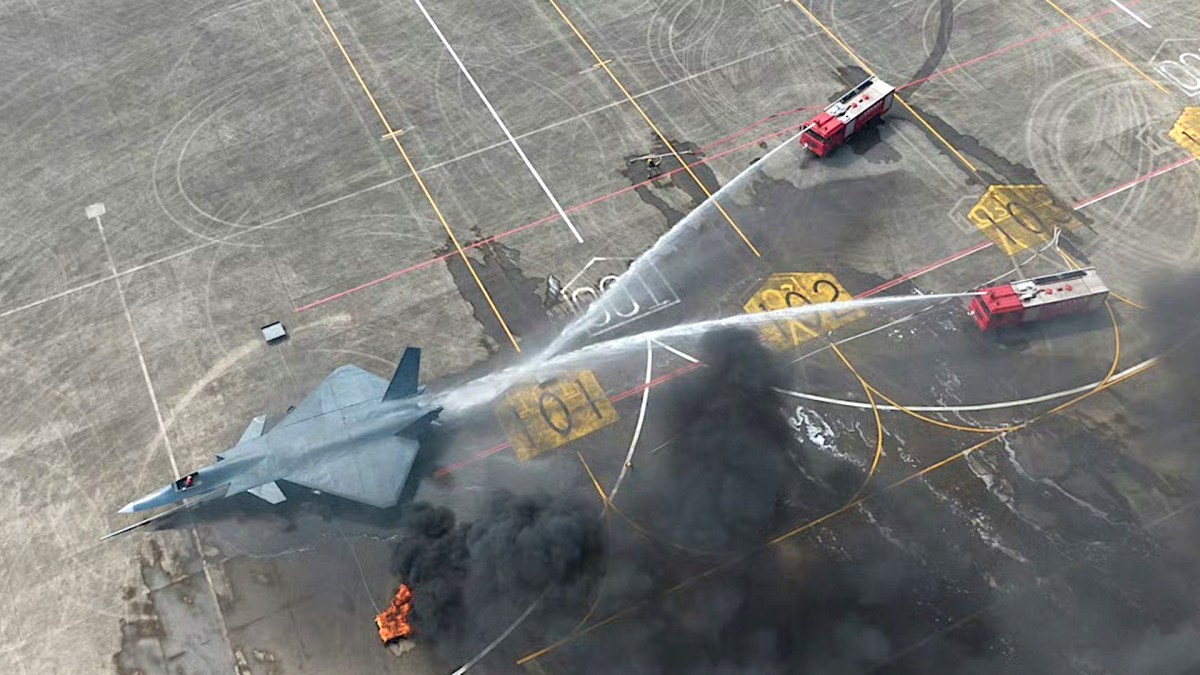
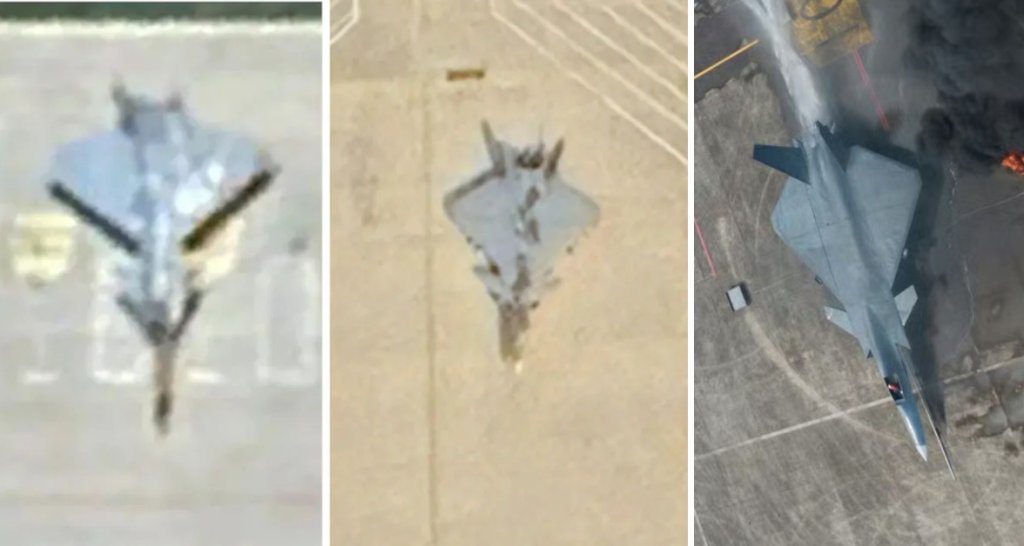
For several years, unusual aircraft-shaped objects seen in satellite imagery at Chinese airfields prompted speculation. They resembled stealth fighters at a distance, especially the J-20, but never fit neatly into any known aircraft program. Now, according to new imagery discussed by The War Zone, at least one of those strange shapes appears to be something far less exotic and in some ways more useful: a mock-up built for airfield firefighting drills.
The update does not resolve every sighting or every variation seen in past images. But it does narrow the field considerably. Instead of treating every fighter-like silhouette on a Chinese apron as evidence of a hidden aviation project, analysts may now have a grounded explanation for some of them. That matters because open-source military analysis often begins with fragments such as these, and the line between meaningful discovery and overinterpretation can be thin.
What changed
The War Zone reports that ground-level images now circulating on social media show an aircraft fire trainer with a broadly stealth-fighter-like outline. The mock-up is described as having a modified diamond-like delta planform, canards, and twin vertical tails. In overall shape, it aligns more closely with an object previously seen at Jining Qufu Airport in 2025 than with the earlier shapes identified at Lintao Air Base in 2022.
That comparison is important. The report does not claim every suspicious outline seen over the past few years has been solved in one stroke. Instead, it makes a narrower and more defensible point: at least one class of these fighter-like objects is consistent with a reusable training aid for emergency response crews. The tarmac markings in the new images reportedly do not match those at the earlier locations, which also suggests the trainer shown in fresh photos is not simply the same object relocated and reidentified.
Why an aircraft fire trainer makes sense
Airfield firefighting trainers are not unusual in themselves. The War Zone notes that such systems are used widely by military and civilian fire departments and can range from repurposed aircraft hulks to purpose-built structures that roughly mimic a target class such as a fighter or airliner. Their job is practical: provide a controllable, reusable object around which crews can rehearse emergency procedures with more realism than a generic training pad would allow.

In that context, a shape that loosely resembles a modern Chinese stealth fighter is not mysterious at all. It reflects the environment in which the crews would operate. If an air base supports advanced tactical aircraft, it is sensible for emergency teams to train on a platform that approximates their size, geometry, and access points. A trainer does not need to be an exact copy to be useful. It needs enough resemblance to practice hose placement, vehicle approach, crew coordination, and response to likely fire locations.
What remains uncertain
The most interesting part of the new explanation is also its limit. The source text says the articles seen at Lintao in 2022 had differently shaped wings and longer, more slender noses than the newly shown fire trainer. That means the Lintao shapes could still be something else. They may be another training aid, a decoy, a mock-up for testing, or a separate object with a different purpose. On the information provided, the case is only partially closed.
This is a familiar pattern in open-source defense analysis. One image suggests a possibility, later images narrow it, and the answer turns out to be both more mundane and more useful than initial speculation implied. At the same time, partial resolution can sharpen the remaining mystery. Once one object is identified as a firefighting trainer, the analytical standard for the rest becomes stricter. Researchers can no longer rely on superficial resemblance alone.
The value of disciplined interpretation
The episode is a good example of why careful comparison matters in military imagery work. Fighter-like shapes naturally attract attention because they hint at prototypes, deception programs, or hidden force-development efforts. China’s rapid aerospace modernization gives that instinct added force. But imagery interpretation benefits from method more than excitement. Location, surrounding infrastructure, markings, proportions, recurrence, and supporting ground-level photos all matter.
The new images described by The War Zone add precisely that kind of supporting context. They connect shape to function. The mock-up is shown in the setting of training activity rather than in an operational posture that would suggest flight testing or concealment. That does not make the original sightings unimportant. It makes them more legible. It also reminds analysts that support systems such as firefighting, maintenance, and emergency preparedness are part of military capability, even if they rarely receive the same attention as aircraft themselves.
Why this story still matters
At first glance, discovering that a mysterious object is a fire trainer may seem like a letdown. In fact, it reveals something useful about Chinese airfield operations. A modern air arm is more than frontline platforms. It depends on training ecosystems, safety procedures, and specialized infrastructure that can sustain high-tempo operations and manage accidents involving advanced airframes. Evidence of purpose-built emergency training aids suggests attention to that less glamorous but essential layer.
It also says something about the information environment around Chinese military activity. Satellite imagery, commercial mapping tools, and social-media photos now interact in ways that can stretch a story across years. A single unexplained object can generate a chain of interpretations until new evidence finally reframes it. That process is now part of how the public understands military modernization, especially in countries where official disclosure is limited.
What to watch next
The strongest takeaway from the source material is not that the mystery is finished, but that one plausible explanation has become much stronger. Future clarity will likely depend on whether additional images emerge from the sites tied to earlier sightings and whether more examples of similar trainers are documented.
For now, the evidence cited by The War Zone supports a measured conclusion:
- At least one J-20-like or J-35-like shape seen in China is consistent with an aircraft firefighting trainer.
- The newly shown trainer seems closer in form to the object spotted at Jining Qufu Airport than to the earlier Lintao shapes.
- Some previously observed objects may still have different identities or functions.
That is a narrower answer than years of speculation promised, but it is a better one. In military analysis, solving part of a mystery with concrete visual evidence is often more valuable than preserving a grander unknown.
This article is based on reporting by twz.com. Read the original article.
Originally published on twz.com