A New X-Plane Takes Shape
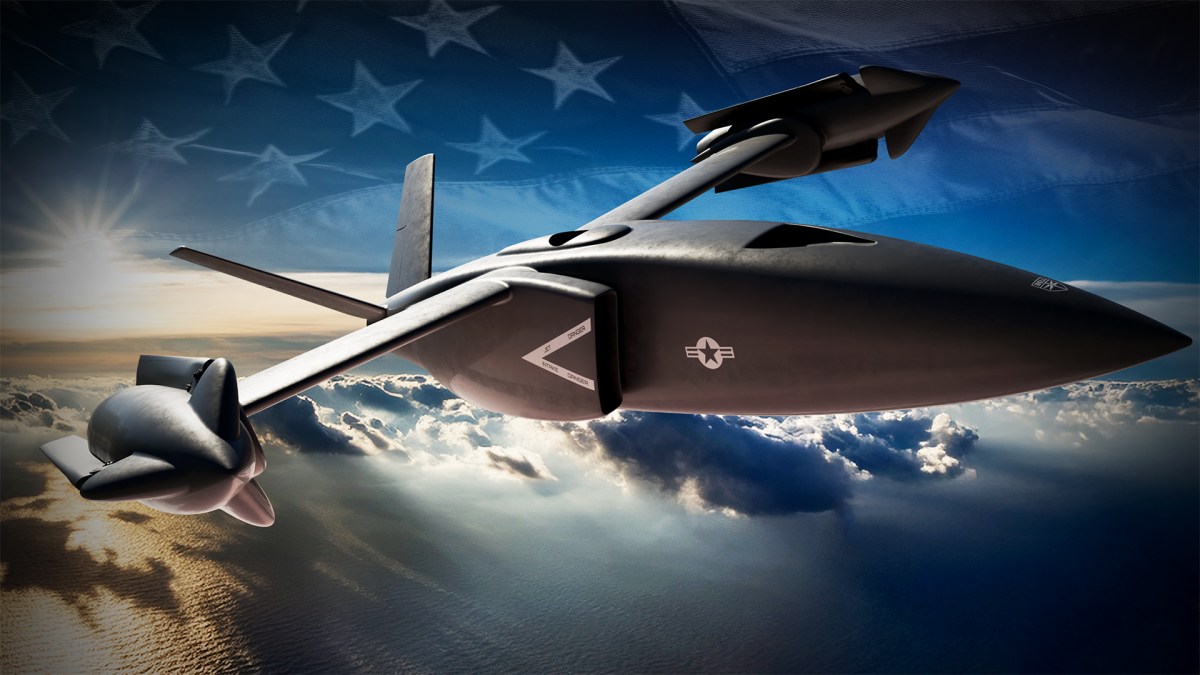
The Defense Advanced Research Projects Agency has designated Bell Textron's fold-away rotor demonstrator aircraft as the X-76, making it the newest addition to the storied lineage of American experimental aircraft that includes the X-1, which first broke the sound barrier, and the X-15 rocket plane. The X-76 is designed to explore technologies that could enable aircraft to take off and land vertically like a helicopter while flying at the speed and efficiency of a fixed-wing airplane.
The aircraft is being developed under DARPA's Speed and Runway Independent Technologies program, known as SPRINT. The program seeks to overcome one of aviation's most persistent engineering challenges: combining the vertical takeoff and landing capability of rotary-wing aircraft with the high-speed, long-range performance of conventional airplanes. Current helicopters sacrifice speed for VTOL capability, while fixed-wing aircraft sacrifice runway independence for performance.
How the Fold-Away Rotor Works
The X-76's central innovation is a rotor system that deploys for vertical takeoff and landing but folds away during forward flight, reducing the drag that limits conventional helicopter speeds. In VTOL mode, the rotors provide the lift needed to take off and land without a runway. Once airborne and transitioning to forward flight, the rotors retract and lock into a streamlined configuration along the aircraft's fuselage, allowing it to fly as a conventional fixed-wing aircraft using separate propulsion.
This approach differs from tiltrotor aircraft like the V-22 Osprey, which rotate their entire engine nacelles from vertical to horizontal orientation. The V-22 design has proven operationally capable but imposes weight and complexity penalties that limit its speed and efficiency. The fold-away concept aims to achieve a cleaner aerodynamic configuration in forward flight by completely removing the rotor from the airstream.
The engineering challenges are substantial. The transition between rotor-borne and wing-borne flight must be smooth and controllable, the folding mechanism must be reliable under the vibration and loading conditions of flight, and the aircraft must remain stable during the brief period when it is transferring lift from the rotor to the wing.
Performance Goals
DARPA has set ambitious performance targets for the SPRINT program. The X-76 is expected to demonstrate speeds significantly exceeding those of conventional helicopters, which are typically limited to about 180 knots by retreating blade stall — an aerodynamic phenomenon that occurs when the blade moving backward relative to the aircraft's direction of travel loses lift at high speeds.
By eliminating the rotor from the flight equation during cruise, the X-76 could potentially achieve speeds of 400 knots or more while retaining the ability to operate from unprepared sites, ship decks, and other confined areas where runway access is not available. This combination would be transformative for military operations, where the tension between speed and access has shaped aircraft design decisions for decades.
Crewed and Uncrewed Applications
The X-76 is being designed with both crewed and uncrewed configurations in mind. The initial demonstrator will be uncrewed, allowing DARPA to explore the flight envelope without risking a pilot during the high-risk phase of technology maturation. If the fold-away rotor concept proves viable, it could be applied to a range of military platforms including troop transports, reconnaissance aircraft, logistics vehicles, and strike platforms.
The uncrewed variant is particularly interesting in the context of the military's growing emphasis on autonomous and semi-autonomous aircraft. A fast, runway-independent uncrewed platform could perform missions in contested environments where both airfield access and pilot risk are concerns — such as delivering supplies to forward positions, conducting intelligence gathering in denied airspace, or serving as a loyal wingman to crewed fighters.

Timeline and Competition
DARPA plans for the X-76 to fly in 2028, giving Bell's engineering team approximately two years to move from the current design phase through manufacturing and ground testing to first flight. This timeline is aggressive but consistent with DARPA's approach of pushing rapid prototyping to validate or invalidate new concepts before committing to full-scale development programs.
Bell is competing with other designs under the SPRINT program. Aurora Flight Sciences, a Boeing subsidiary, has proposed an alternative approach using a different VTOL-to-cruise transition mechanism. The competition ensures that DARPA can evaluate multiple technical solutions and select the most promising for further development.
Historical Context
The quest for a practical high-speed VTOL aircraft stretches back to the 1950s, when experimental designs like the Convair XFY Pogo and Ryan X-13 Vertijet demonstrated vertical takeoff but proved impractical for operational use. The V-22 Osprey, which entered service in 2007 after decades of troubled development, remains the most successful high-speed VTOL aircraft to date, but its speed and efficiency fall short of what the fold-away rotor concept promises. The X-76 represents the latest attempt to solve this enduring challenge, armed with modern materials, flight control systems, and computational design tools that were unavailable to earlier generations of engineers.
This article is based on reporting by twz.com. Read the original article.
Originally published on twz.com