F-47 moves into engineering and manufacturing development
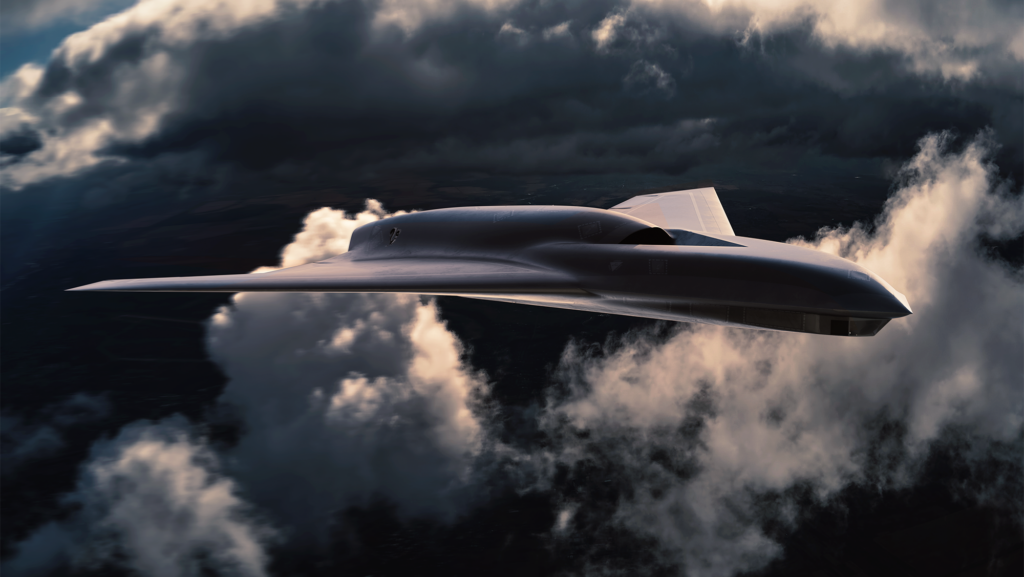
The U.S. Air Force’s F-47 program has entered engineering and manufacturing development and is already producing test aircraft, according to remarks reported by Defense News. The service also says the aircraft remains on schedule for a first flight in 2028, marking one of the clearest public program updates since the fighter was formally selected under the Next Generation Air Dominance effort.
Gen. Dale White, the Air Force’s director of Critical Major Weapon Systems, said the program entered this phase with what he described as “unprecedented maturity.” He made the remarks during a keynote address at Life Cycle Industry Days in Dayton, Ohio, an event hosted by the Air Force Life Cycle Management Center.
For a sixth-generation fighter effort that has often been discussed in broad terms, the update is notable because it points to concrete progress: the program is no longer only in conceptual or source-selection territory. It is now in the phase where the platform’s components are being matured, integrated, and tested, and where a small number of flight-test aircraft will be built for evaluation.
What this phase includes
According to the report, the engineering and manufacturing development phase covers maturing, integrating, and testing all parts of the F-47. It also includes priced options for low-rate initial production. White did not specify how many test aircraft are being produced, but the report says a small number will be built for evaluation.
That matters because engineering and manufacturing development is where program risk is supposed to be reduced through actual system integration. For a next-generation combat aircraft, that means more than proving a single airframe can fly. It means validating how design choices, software, subsystems, and mission architecture come together before a production ramp begins.
The Air Force is framing this step as evidence that the program is moving forward on a real acquisition timeline rather than remaining an open-ended technology effort.
A 2028 first-flight target
The service’s current target is for the first Boeing F-47 to fly in 2028. White also said the aircraft will fly during the current presidential administration. That timeline aligns the program with a relatively near-term demonstration milestone, which is significant for a platform intended to replace the F-22 Raptor.
The Air Force plans to buy at least 185 F-47s, matching the size of the F-22 fleet it intends to replace, according to the report. That planned quantity offers one of the clearest available signals about the scale of the intended force structure, even if total procurement figures could still evolve over time.
The combination of a set fleet objective, an active development phase, and an announced first-flight target gives the F-47 a more defined shape in public than many advanced combat aircraft programs receive at this stage.
How the Air Force describes the aircraft’s role
The report says the F-47 is part of the Air Force’s Next Generation Air Dominance, or NGAD, family of systems. That family includes the fighter itself and Collaborative Combat Aircraft intended to support air superiority missions. In that framework, the F-47 is not being developed as a standalone replacement aircraft in the traditional sense. It is part of a broader operational system designed to work with uncrewed elements.
White described the effort as “extreme teaming” with industry partners. The report also says the aircraft’s modular design is intended to accommodate emerging technology and integrate long-range strike capabilities to counter threats in contested environments.
Those details matter because they show the Air Force is presenting the F-47 as adaptable and networked from the outset. Modularity and system-level teaming are central to how the program is being sold strategically, not just technically.
From announcement to funded program
In March 2025, President Donald Trump announced that the Air Force would proceed with development of sixth-generation Boeing F-47s under the NGAD program. The goal, as described in the report, is to replace the F-22 Raptor with a platform built for future air-superiority demands.
The current funding profile underscores that the program is being resourced as a major acquisition effort. The report says the F-47 program received $3.45 billion in fiscal year 2026 funding and more than $5 billion in the fiscal 2027 budget request.
Those figures do not by themselves guarantee schedule stability, but they do indicate that the aircraft is moving with substantial budgetary backing. For observers of U.S. military aviation, that combination of funding, formal phase progression, and a named flight date is a stronger signal than rhetoric alone.
Why this update matters
The F-47 remains a highly controlled program in public terms, and the report offers limited technical specifics beyond schedule, phase, and acquisition posture. Even so, the latest update is meaningful because it narrows the gap between announcement and visible execution. The Air Force is saying test aircraft are being produced now, not simply planned, and that the first flight is expected in 2028.
That also gives the defense industry a clearer marker for what comes next. If the current phase proceeds as planned, the coming years will be about proving integration, validating performance, and preparing for eventual low-rate initial production. Because the program is embedded in a broader family-of-systems concept that includes Collaborative Combat Aircraft, its progress will likely shape how the Air Force balances crewed and uncrewed air-superiority capabilities.
The program’s stated scale also reinforces its strategic importance. An intended buy of at least 185 aircraft means the F-47 is not a niche demonstrator. It is being positioned as the core successor to the F-22 fleet.
What is confirmed in the latest report
- The F-47 program has entered engineering and manufacturing development.
- The phase includes production of a small number of test aircraft for evaluation.
- The first Boeing F-47 is on track to fly in 2028.
- The Air Force plans to buy at least 185 aircraft to replace the F-22 fleet.
- The program received $3.45 billion in fiscal 2026 funding and more than $5 billion was requested for fiscal 2027.
For now, the most important takeaway is straightforward: the Air Force is publicly tying the F-47 to tangible manufacturing and schedule milestones. In a defense program category where ambition often outruns disclosed progress, that alone makes this update consequential.
This article is based on reporting by Defense News. Read the original article.
Originally published on defensenews.com