A Specialist Art Form Loses One of Its Masters

The automotive world has lost Jiro Yamada, a Japanese illustrator celebrated for intricate cutaway drawings of cars and other machines. According to the supplied source text from The Drive, Yamada died last August at the age of 65, though the news only became widely known this week. His death closes a distinctive career that turned technical illustration into something more than documentation.

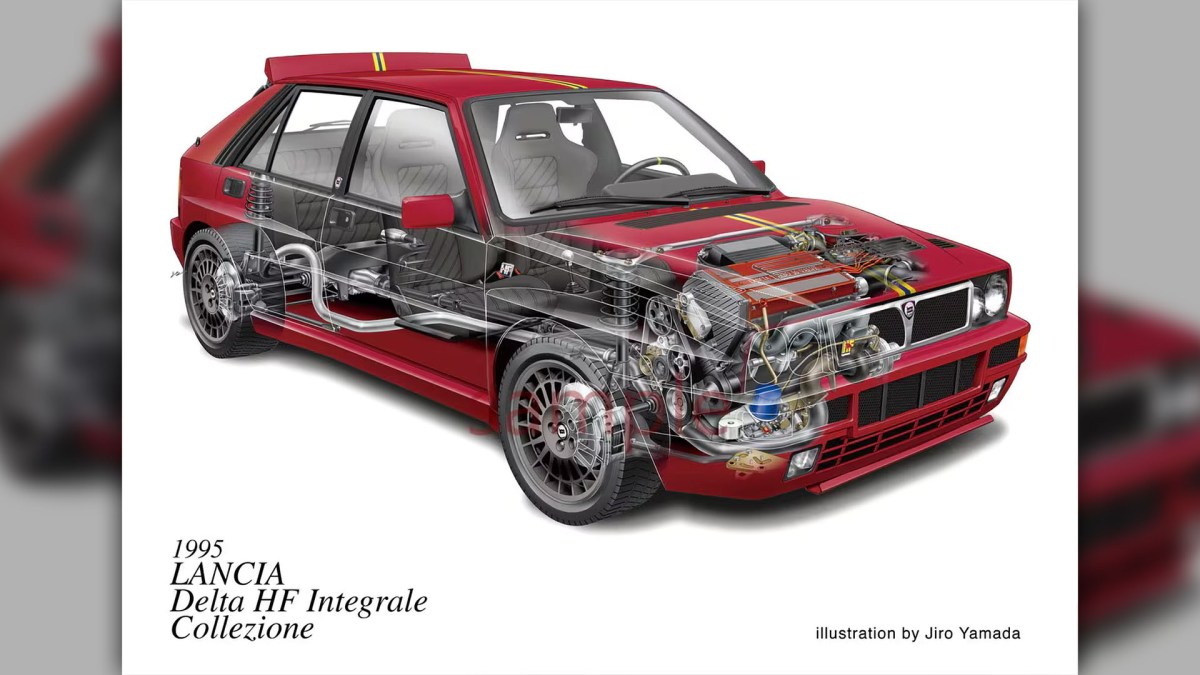
Yamada's work occupied a narrow but demanding discipline. Cutaway illustrations have to explain how a machine is built and how it works, while also preserving proportion, clarity, and visual drama. The source text describes his renderings as the product of extensive research, planning, and precision. That description fits a craft that has always sat between engineering communication and art.

A Career Built on Mechanical Detail

Yamada began illustrating professionally in 1979. His subjects ranged from race cars and road cars to helicopters and rocket engines. He also produced work for automakers, enthusiast media, promotional materials, technical documents, and private clients. That range matters because it shows how broadly his skill translated: he was not only making beautiful images, but also solving practical communication problems for people who needed to show what lay beneath the surface of complex machines.

The source notes that Yamada is credited in the official guidebook for the first Gran Turismo, published in 1998. That point places him not just in print culture but in a wider automotive imagination shaped by games, enthusiast publishing, and manufacturer storytelling.

Why Cutaways Matter

Before 3D rendering became ubiquitous, cutaway artists provided one of the best ways to understand a vehicle as a system. A good cutaway can show structure, packaging, airflow, mechanical relationships, and the hidden logic of design in a single view. Even today, when digital visualization tools are everywhere, handcrafted or carefully composed technical art carries a different kind of authority. It does not simply simulate; it interprets.

The Drive's source text captures that distinction well by noting that there is no single method for answering the brief of faithfully showing what lies underneath a car's body. That flexibility is part of why cutaways remain art rather than mere diagram. Two illustrators can depict the same vehicle and reveal different emphases, rhythms, and visual truths.

From Hand Work to Digital Production

According to the source, Yamada transitioned to digital production in 2000, following a path taken by many of his peers. That shift mirrors a larger change across technical and commercial art. Digital tools brought greater consistency and efficiency, but they did not remove the need for the underlying discipline. A cutaway still depends on understanding the subject, deciding what to reveal, and arranging overwhelming complexity into a readable image.

The article also references Yamada's own site, which organizes his automotive work by make and model and includes an explanation of how one of his Porsche 906 illustrations was built. That kind of documentation is valuable in itself because it preserves process knowledge from a highly specialized field that fewer people practice at a comparable level.

Machines as Rationality and Beauty

The source attributes to Yamada a succinct statement of artistic purpose: he saw cutaways as a way of expressing both the rationality and the beauty of machines at the same time. That idea helps explain why his work resonated so strongly. Automotive enthusiasts do not only care about performance figures or styling. They also care about packaging, linkages, engines, ducts, and the hidden coherence of a machine that has been engineered well.

Yamada's drawings made that hidden coherence visible. They allowed viewers to appreciate vehicles not only as objects to drive or admire from the outside, but as layered systems with an internal architecture worth studying on its own terms.

A Lasting Legacy

Days before his death, Yamada said he had entrusted the Cinquecento Museum in Nagoya to maintain and sell reproductions of his work. That decision suggests an effort to preserve the accessibility of his archive. For a specialist whose medium sits at the intersection of art, engineering, and enthusiast culture, preservation matters. These images are not disposable artifacts of marketing. They are records of how machines were understood, explained, and celebrated.

Yamada's death is a loss for automotive illustration, but it also serves as a reminder of how much cultural value can live in a niche technical craft. He helped people see inside machines, and in doing so showed why the inside mattered.

This article is based on reporting by The Drive. Read the original article.

Originally published on thedrive.com