New modeling points to elevated earthquake risk in Southern California
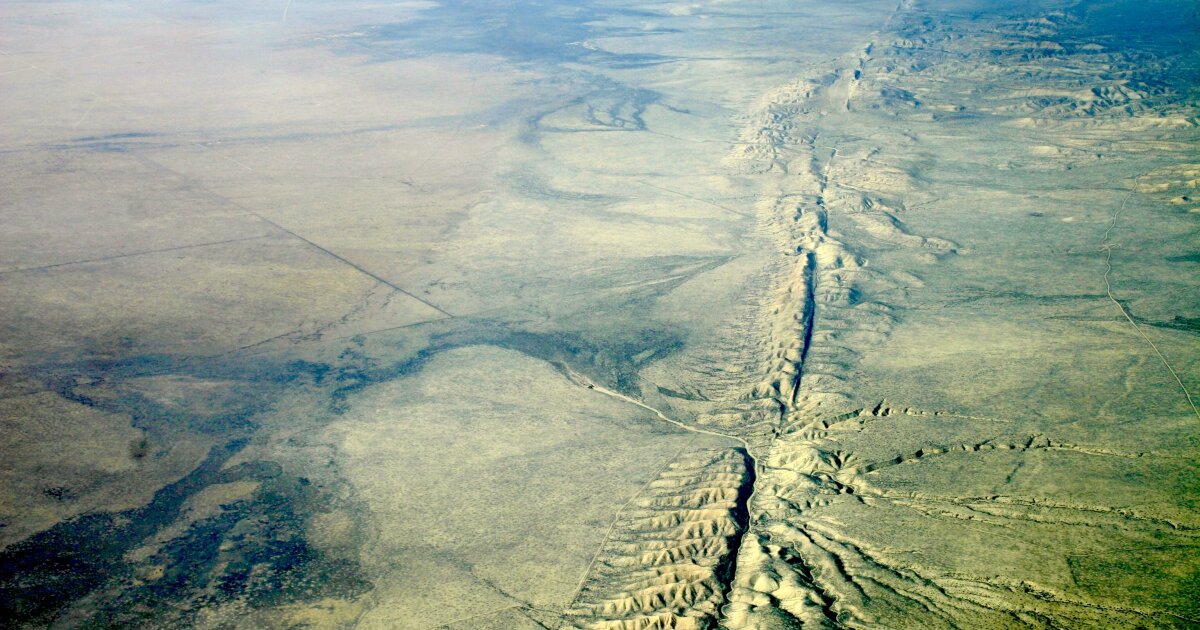
A new scientific assessment of two of California’s most consequential fault systems suggests the region is carrying an unusually high level of seismic stress. Reporting summarized by New Atlas says researchers at the University of Hawaiʻi at Mānoa used physics-based modeling and 1,000 years of earthquake data to examine the San Andreas Fault, the San Jacinto Fault, and the area where they interact near Cajon Pass. Their conclusion is stark: stress levels across multiple fault segments are now at or above the highest values seen in the past millennium.
The study does not claim that a major earthquake is imminent on a specific date. Earthquake science does not work that way. But it does present a picture of a fault network that, by the researchers’ analysis, is carrying an exceptional load after more than 160 years since the last major rupture in the region examined in the report.
For a state where earthquake preparedness is an ongoing public issue, that matters. The significance of the study lies less in a headline about a single fault and more in the interaction between fault systems that may, under the wrong conditions, rupture in connected ways.
A closer look at the fault interaction problem
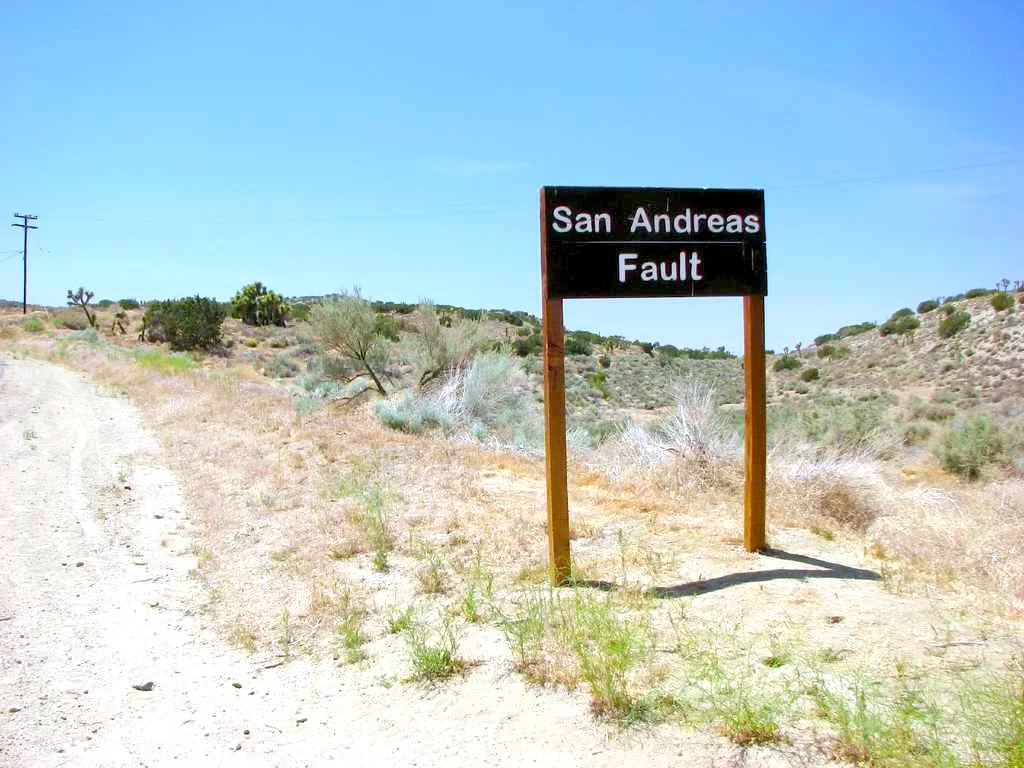
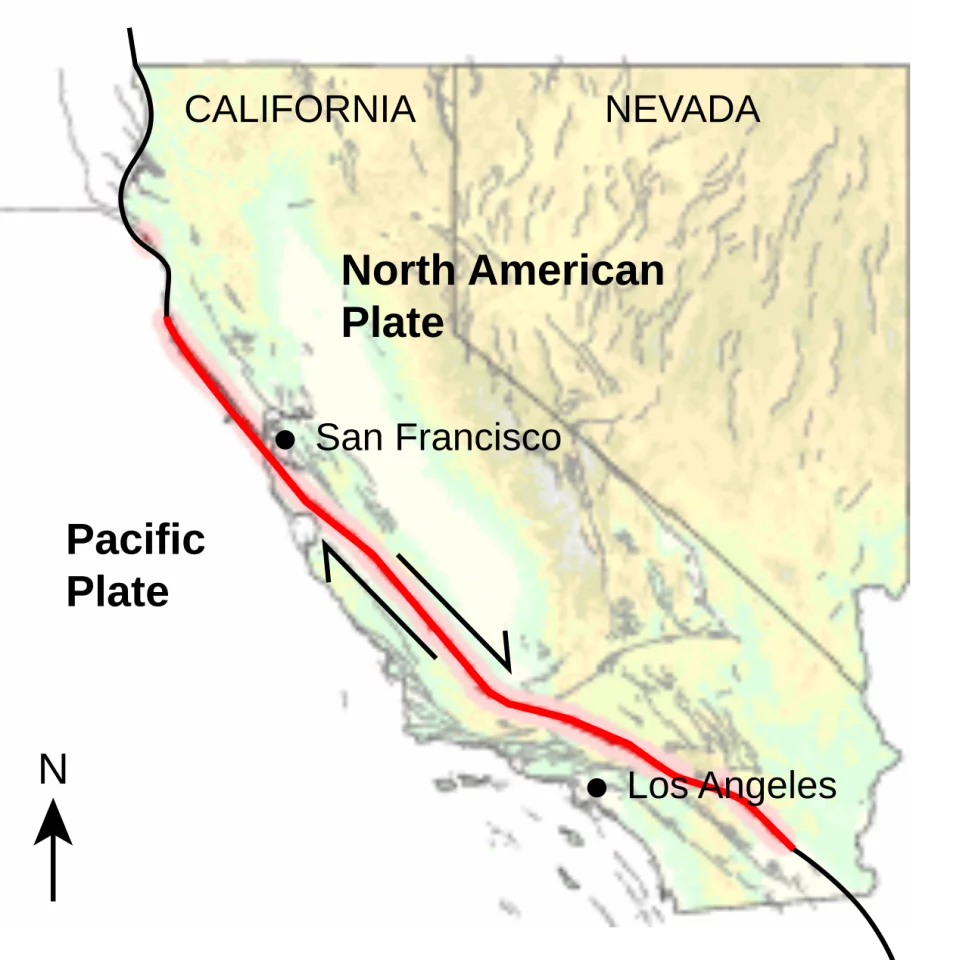
The San Andreas Fault is the dominant tectonic boundary in California, stretching roughly 750 miles where the Pacific and North American plates meet. The San Jacinto Fault, while smaller, is an active and significant part of the same broader seismic landscape. What makes the new analysis notable is its emphasis on how stress is distributed across both systems at once, rather than treating them as isolated features.
According to the report, the researchers found that the juncture at Cajon Pass may function as an “earthquake gate.” In some circumstances, that gate may block a rupture from jumping between the San Andreas and San Jacinto systems. In others, it may allow stress release to propagate across both, producing a larger through-going event.
That idea reframes the hazard. The concern is not only that one fault may rupture, but that the relationship between the two systems could enable a broader event if their stress states are sufficiently aligned. Lead author Liliane Burkhard, identified in the report as a research affiliate in the Hawaiʻi Institute of Geophysics and Planetology, said the region may be capable of a large through-going rupture involving both fault systems.
In practical terms, the “gate” concept suggests that earthquake behavior in the region may depend on more than simple accumulated pressure along a single line. It may also depend on whether the stresses on adjacent systems are balanced in a way that allows a rupture to continue instead of stopping.
Why Cajon Pass stands out
Cajon Pass is important in the study because it appears to act as a conditional boundary. Burkhard said the conditions that determine whether the gate opens or stays closed seem to be related to how closely the stress levels on the two fault systems are aligned at the time of rupture. If one fault is much more stressed than the other, the pass may work more like a pressure break. If both are elevated and similarly loaded, the risk picture becomes more concerning.
That balance is what makes the current findings so significant. The researchers say stress is historically high across the region, and the two systems are now in the kind of critically loaded state that could support a more extensive rupture pathway. The report quotes the team as saying, “The system is in a critically loaded state.”
Even without assigning a timeline, that assessment is consequential. In seismic hazard analysis, changes in stress distribution and fault coupling can alter how scientists and planners think about worst-case scenarios. A region facing the possibility of linked ruptures has a different risk profile than one where major faults are likely to break independently.
What 1,000 years of data adds
The study’s use of a millennium of earthquake data strengthens its framing by placing current conditions in long historical context. Rather than focusing only on recent instrument records or modern seismic events, the modeling looked across a much longer span to estimate where today’s stress levels sit relative to the past.
That is how the researchers arrived at one of the study’s most attention-grabbing conclusions: present stress levels are at or above the highest values seen in the last 1,000 years. The implication is not just that the faults are active, which is already well understood, but that their current configuration may be exceptional within the range of modeled historical behavior.
That kind of long-view comparison matters because earthquake cycles can unfold over centuries. Public attention, by contrast, tends to move in much shorter bursts. A study rooted in deep-time fault behavior can therefore reveal accumulating risk that is not obvious from recent memory alone.

What the findings do and do not say
The findings should not be read as a direct forecast of when a major earthquake will strike California. The supplied report does not offer a date, probability window, or operational warning. Instead, it describes a system whose mechanical conditions now appear highly loaded and potentially capable of a larger connected rupture.
That distinction is essential. High stress does not automatically translate to immediate failure, and seismic systems can remain loaded for long periods. At the same time, the absence of precise prediction does not reduce the importance of the warning. In hazard science, identifying elevated structural risk is often the most actionable information available.
The research also underscores a broader trend in earth science: increasingly sophisticated modeling is shifting attention from single-fault narratives toward network behavior, interaction zones, and compound rupture scenarios. That does not make earthquakes easier to predict, but it can make risk maps more realistic.
Why the study matters now
The immediate value of the work is that it offers a sharper framework for understanding one of the most studied seismic regions in the United States. It suggests that Southern California’s hazard may be shaped not just by the San Andreas Fault in isolation, but by the combined loading and interaction of multiple systems across a shared region.
For infrastructure planners, emergency managers, and residents, the lesson is less about panic than about preparation. A critically stressed system is a reminder that seismic resilience cannot be treated as a background issue. For researchers, the study highlights the importance of junctions like Cajon Pass, where the behavior of one fault may influence whether another becomes part of the same event.
If the modeling holds up under broader scientific scrutiny, it may become part of a more nuanced conversation about West Coast earthquake risk: not simply whether a major rupture will happen someday, but how multiple fault systems could behave together when the region is carrying stress at historically extreme levels.
This article is based on reporting by refractor.io. Read the original article.

Originally published on refractor.io