A Tiny Computer With an Expansive Ambition
Most portable devices are designed around a closed formula: fixed hardware, fixed user interface, fixed priorities. Pocketbyte takes the opposite approach. The in-development device, covered by New Atlas, is being built as a small, modular portable computer that can shift roles depending on what its owner wants it to do. In one setup it can act as a music player. In another it can become a retro gaming handheld, a note-taking machine, or a controller for electronics projects.
That flexibility is the entire point. Pocketbyte began as a breadboard-based DIY project and is now evolving into a more coherent portable platform with its own small community-driven ecosystem. Instead of trying to outcompete smartphones on general-purpose convenience, it targets a different desire in the hardware world: the appeal of a device that is understandable, hackable, and intentionally limited in ways that invite experimentation.
The result is not just another novelty gadget. It is part of a broader current in personal technology, where makers and independent developers are looking for alternatives to the all-purpose phone and the locked-down software environment that comes with it.
Hardware Built for Reconfiguration
Pocketbyte is built around Espressif’s ESP32-S3 processor and includes 8 MB of PSRAM, a microSD slot supporting up to 32 GB of storage, a 1,500 mAh battery, and a 2.8-inch IPS LCD that is described as readable in sunlight. Audio output comes through a mono speaker and a 3.5 mm headphone jack. Physically, the device is compact, at roughly 75 by 55 millimeters, or about the footprint of a credit card.
Those specifications place it in an interesting middle ground. It is not trying to be a full laptop substitute or a flagship handheld console. Instead, it offers just enough processing power, storage expansion, battery capacity, and interface flexibility to support lightweight, purpose-built applications. For hobbyists, that balance matters. Underpowered devices can feel restrictive, but overbuilt ones often become expensive, opaque, and harder to adapt.
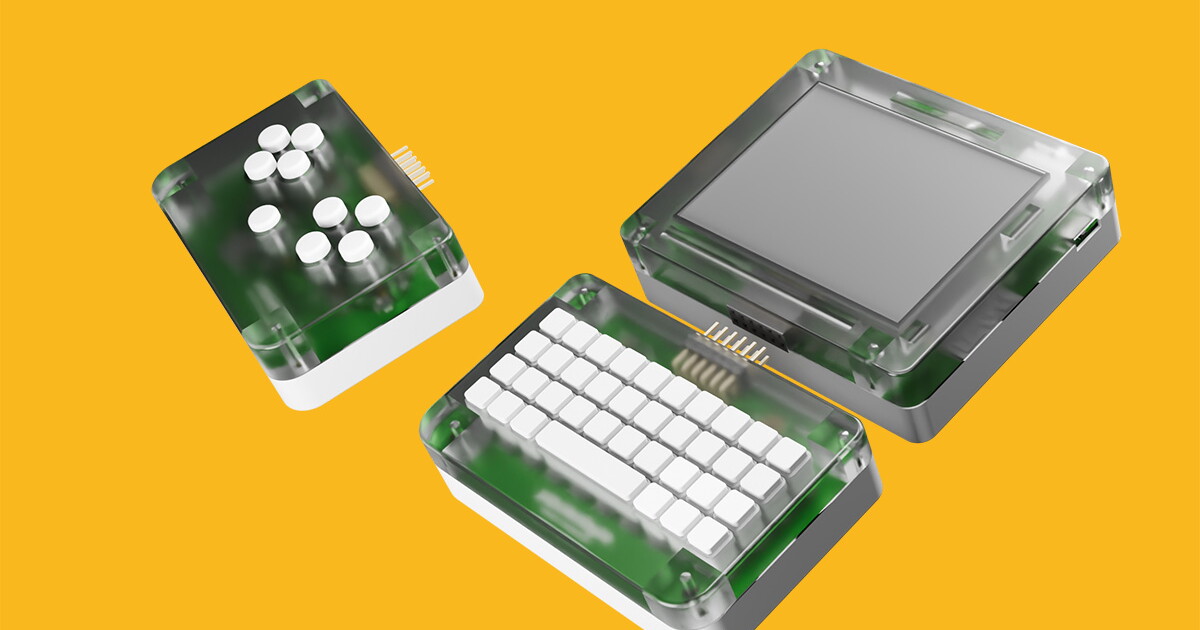
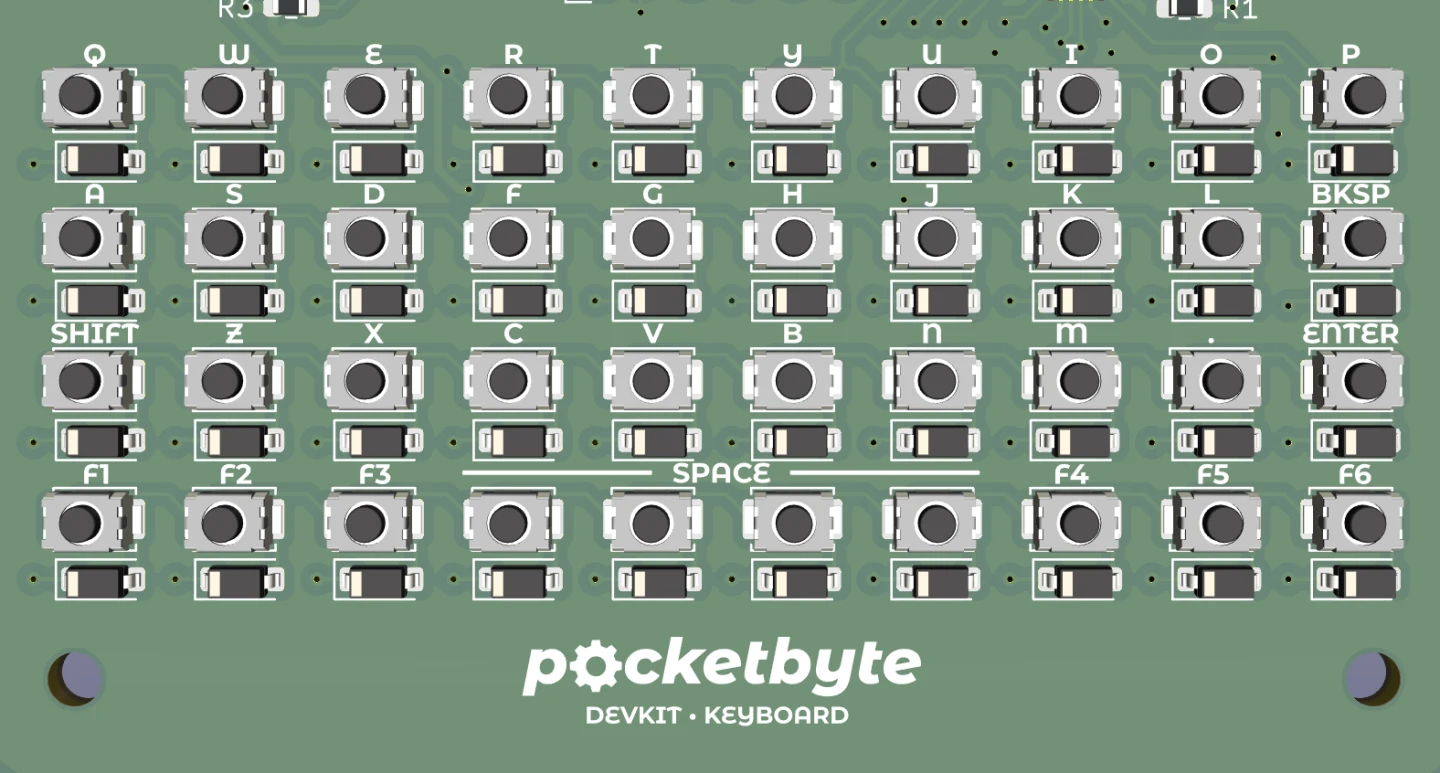
The most distinctive hardware feature is the modular pin connector at the bottom of the device. That connector is intended to let users attach different physical accessories depending on the task. A gamepad can turn it into a compact gaming system. A BlackBerry-style keyboard, which is reportedly in development, would turn it into a pocket writing and note-taking tool. A breadboard attachment could extend it outward into electronics control and prototyping.
This is a practical kind of modularity. Rather than promising a universal device that does everything at once, Pocketbyte is built around swapping capabilities in and out. That keeps the base device simple while still expanding what it can become.

Software That Matches the Maker Ethos
The hardware story would be incomplete without the software stack, and here Pocketbyte is clearly aimed at the open developer community. It runs on an open-source platform based on FreeRTOS and can also run Arduino. Users can download community-built apps over Wi-Fi through an app store or write their own software in C or C++.
That approach lowers the barrier to entry without closing off deeper customization. Beginners can install what others have built, while more advanced users can create specialized tools for their own workflows. A simulator adds another useful layer by allowing software to be tested on a desktop before it is sent to the device. For independent developers and tinkerers, that is an important quality-of-life feature because it shortens iteration time and makes experimentation less cumbersome.
The significance here is not just that Pocketbyte is programmable. Many hobbyist devices are. What stands out is that the programming model, app distribution, and accessory strategy are all aligned around the same idea: users should be able to shape the device rather than merely consume what the manufacturer predefined.
Why Devices Like This Matter
Pocketbyte arrives at a moment when many technology users are reconsidering the costs of general-purpose computing. Smartphones are unmatched in capability, but they also bring constant alerts, algorithmic feeds, and a dense stack of platform control. A small-purpose computer can feel attractive precisely because it does less, and because its limits are chosen rather than imposed by a giant ecosystem.
That is part of the emotional logic behind the project. New Atlas notes the appeal of carrying a device that could provide music playback and keyboard-based note taking without the constant demands of a phone. That framing helps explain why compact open devices continue to attract interest even when mainstream gadgets remain more powerful. They support a different relationship to computing: one centered on focus, ownership, and modular control.
For makers, there is another attraction. A platform like Pocketbyte can serve as both product and development environment. It is a usable object on its own, but also a base for writing software, attaching hardware, and building niche tools that larger companies would never prioritize. That gives it value as a learning platform and as a blank canvas for independent hardware culture.

Early Promise, Real Constraints
The project is still in development, and that status matters. Pocketbyte is reportedly being developed solo by a teenager in Canada, and only a small number of developer-kit preorders were expected to open. That makes it a compelling story of independent innovation, but it also places natural limits on scale, support, and near-term maturity.
Early hardware platforms often face a predictable set of challenges: manufacturing consistency, software stability, accessory availability, documentation quality, and the difficulty of growing a community beyond a technically confident core. Pocketbyte’s concept is strong, but its long-term impact will depend on whether the surrounding ecosystem becomes durable enough to support sustained use.
Even so, projects like this can matter well before they become mass-market products. They demonstrate where enthusiast demand is moving and what kinds of tools people still want despite the dominance of mainstream consumer electronics. Pocketbyte suggests there is room for devices that are more tactile, more understandable, and more adaptable than the sealed slabs most people carry today.
If it succeeds, it will not be because it replaces the smartphone. It will be because it offers something the smartphone no longer does: a small computer that feels like it belongs to its owner, and that can be remade to fit the task at hand.
This article is based on reporting by New Atlas. Read the original article.
Originally published on newatlas.com