Archer unveils a commercial counterpart to its autonomous military platform
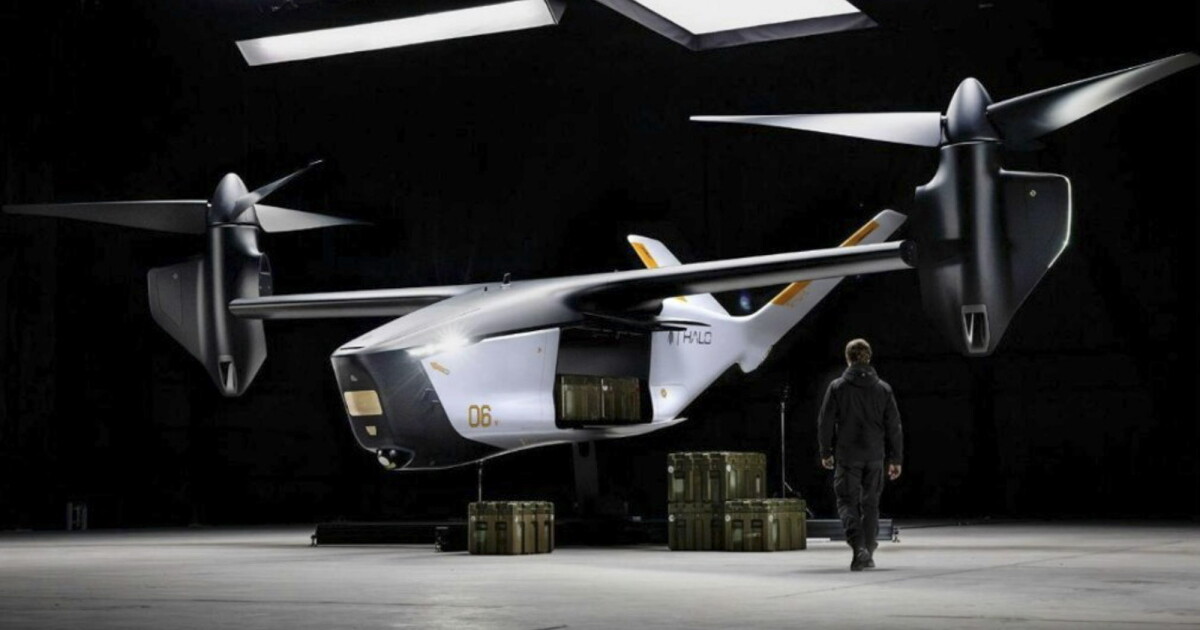
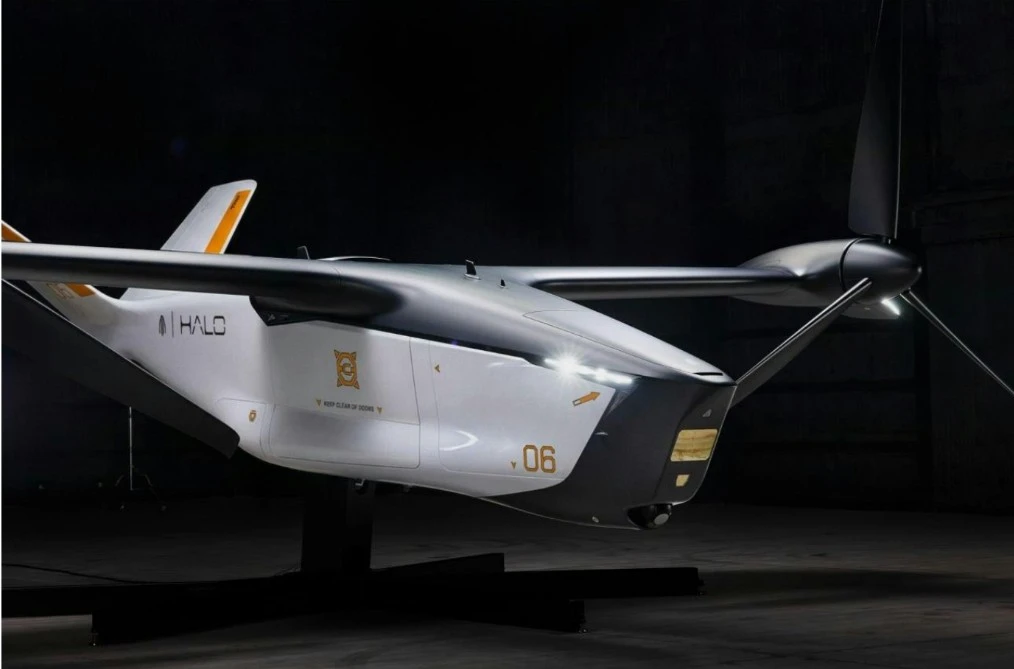
Archer Aviation has introduced Halo, an autonomous vertical takeoff and landing aircraft designed for civilian operations, in a move that highlights how the company is trying to bridge defense engineering and commercial logistics with a shared core platform. Announced at Farnborough, Halo is presented as the commercial twin of Thunder, Archer’s autonomous attack aircraft built as a “Loyal Wingman” for combat helicopters.
The pairing matters because it shows a dual-use strategy in unusually explicit form. Rather than treating military and civilian programs as entirely separate efforts, Archer and partner Anduril are positioning the two aircraft as parallel variants built around the same underlying airframe and system architecture. In Halo’s case, that means a vehicle intended for offshore energy support, heavy freight, maritime operations, and emergency medical cargo transport, but derived from a platform that was also designed with defense missions in mind.
According to the source material, Halo shares Thunder’s core airframe and systems while omitting weaponry. That commonality is central to Archer’s pitch. It suggests the company believes the economics and engineering of autonomy improve when the same platform can be adapted across multiple markets instead of being built from scratch for each one.
Shared hardware, different missions
On paper, Halo closely mirrors the military variant’s performance profile. The aircraft is described as a Group 5 autonomous hybrid-powered tiltrotor with a top speed of 278 knots, a range of 800 nautical miles, and an operating ceiling above 18,000 feet. It uses a series hybrid-electric propulsion system in which a fuel-powered generator supplies electric motors. It also uses dual optimum tiltrotors with variable RPM intended to improve efficiency and maneuverability.
Those specifications put Halo in a category well beyond small delivery drones. Archer is presenting it as a long-range, runway-independent aircraft that can operate in demanding environments while carrying out missions where removing human crew can reduce operational risk. That is especially relevant for offshore, maritime, and emergency scenarios, where distance, weather, and exposure can make crewed operations more complex and expensive.
The company also emphasizes modularity. A modular design can matter commercially because operators in sectors such as energy, freight, and medical logistics rarely need a one-size-fits-all aircraft. A platform that can be configured for different payloads or task types may be easier to integrate into specialized workflows than a single-purpose system.
A dual-use model built around manufacturing scale
One of the more consequential points in Archer’s announcement is not only that Halo and Thunder are related, but how the work between Archer and Anduril is divided. Archer designed the airframe, battery architecture, hybrid-electric powertrain, and rotor dynamics, while Anduril integrated AI flight software, defense systems, and command-and-control infrastructure through its Lattice platform.
That division of labor offers a clearer view of the business model than the aircraft reveal alone. Archer appears to be focusing on the physical platform and the industrial problem of scaling production, while Anduril brings autonomy, mission software, and defense-oriented systems integration. In practice, that means the same aircraft family can be adapted to civilian or military uses by changing mission systems more than the core vehicle itself.
The source also notes that deciding whether the civilian or military aircraft came first is partly a matter of perspective. Defense requirements were a major focus, but building Thunder affordably at scale depended on commercial manufacturing foundations. That is an important framing. It implies Archer is not merely repurposing a defense design for a secondary commercial market. Instead, it is arguing that the aircraft family was shaped from the start by the economics of broader production.
That claim is significant because autonomous aircraft programs often struggle when advanced mission demands collide with manufacturing cost. Archer is effectively arguing that commercial supply chains and mass-production thinking are not an afterthought but a prerequisite for making either variant viable.
Why commercial operators may care
Halo’s target use cases point to parts of the market where autonomy could have a clearer value proposition than in passenger aviation. Offshore energy supply, maritime logistics, emergency medical cargo, and heavy freight all involve missions where endurance, access, and safety can matter more than passenger comfort or dense urban route frequency.
In those sectors, an uncrewed aircraft can be attractive for reasons that are straightforward rather than futuristic. Hazardous environments are expensive to service with human crews. Remote operations often require flexibility that fixed infrastructure does not provide. And time-sensitive cargo can benefit from aircraft that are not dependent on runways.
Archer also points to low-noise rotor design, container transportability, and runway independence as military-driven features that can benefit civilian operators. That helps explain why the company frames Halo and Thunder as two expressions of the same engineering logic rather than separate product stories. If a design choice improves survivability or deployability in defense settings, it may also improve efficiency or logistics in commercial ones.
The practical result is a broader thesis about aerospace convergence: autonomy, hybrid propulsion, and modular systems are making it easier for one aircraft architecture to serve multiple sectors. Halo is less important as a single reveal than as evidence that manufacturers increasingly want platforms that can move between government and commercial demand without wholesale redesign.
What the announcement does and does not establish
The announcement does not, by itself, prove that large-scale autonomous commercial VTOL operations are imminent. What it does show is that Archer wants to define the market around a heavier-duty, long-range, uncrewed aircraft category that sits somewhere between drone logistics and conventional aviation support. It is also a signal that defense-adjacent aerospace companies see commercial logistics as a meaningful outlet for the same autonomy stack and vehicle architecture.
That matters for industry watchers because platform strategy can shape the economics of new aviation categories before deployment scales up. If companies can spread development and production costs across both defense and commercial demand, they may have a better chance of sustaining programs that would otherwise be difficult to justify on one market alone.
For now, Halo’s introduction is best read as a marker of intent. Archer and Anduril are trying to demonstrate that shared design, shared manufacturing, and differentiated mission systems can create a new class of autonomous aircraft with applications on both sides of the civil-military line. Whether that model proves durable will depend on execution, regulation, and customer adoption. But the company’s direction is clear: the future it is pitching is not one aircraft for one job, but one core aircraft built to move between many of them.
This article is based on reporting by New Atlas. Read the original article.
Originally published on newatlas.com