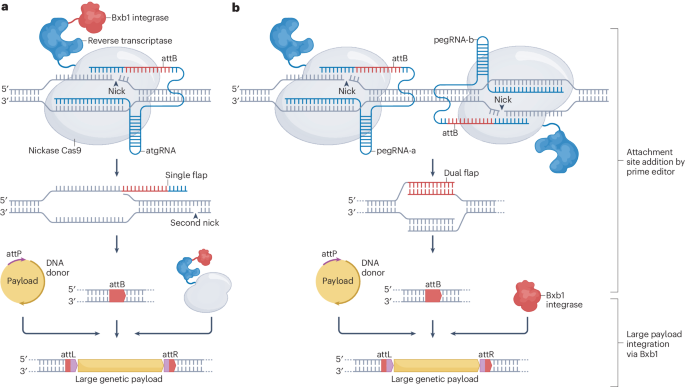
Genome editing may have gained a new reach. According to a research highlight published online in Nature Medicine on 28 September 2026, a technique known as prime assembly expands the capabilities of prime editing, allowing larger genome rearrangements. The report frames the development as an extension of an editing approach that has, until now, been associated primarily with short, local changes to the genetic code.
A Brief Summary, and the Caveats That Come With It
The available description of the work is deliberately compact. Nature Medicine's highlight states that prime assembly broadens what prime editing can accomplish and points specifically to larger genome rearrangements as the new territory. It does not, in the summary text provided, spell out the efficiency of the approach, the cell types or organisms in which it was demonstrated, the delivery methods used, the specific rearrangements tested, or how the technique performs against existing tools for large-scale genome engineering.
Those gaps are worth naming at the outset, because in genome editing the distance between a proof of concept and a broadly useful laboratory or clinical tool is generally measured in years rather than months. A technique can work elegantly in one cell line and still face substantial obstacles in primary cells, in tissues, or in a patient. For now, the claim on the table is a capability claim: that prime assembly extends prime editing toward rearrangements larger than the small edits the method has typically handled.

The Size Problem in Precision Editing
Prime editing has been widely described as a "search and replace" form of genome editing. Rather than cutting both strands of DNA and relying on the cell's repair machinery to stitch the break back together, it writes new genetic information directly into a targeted site, using a guide RNA and a reverse transcriptase to synthesise the desired sequence at the target locus. That design has been credited with avoiding the double-strand breaks that can produce unwanted insertions, deletions, and rearrangements at the cut site.
The trade-off has been scale. Prime editing has generally been applied to substitutions and to relatively short insertions and deletions — precise, letter-level corrections rather than wholesale restructuring of a genomic region. Anything larger has tended to fall to other classes of tools, many of which reintroduce the break-and-repair dynamics that prime editing was designed to sidestep. The result has been a split toolkit: one set of methods for precision at small scale, another for the large structural changes that some diseases demand.
Why Rearrangements Matter
Large-scale genome changes are not an exotic corner of genetics. Structural variants — deletions, duplications, inversions, and translocations that span far more than a single base — are recognised contributors to a wide range of inherited conditions and to cancer genomes. Some of these events remove or duplicate entire stretches of a gene, or move a regulatory element away from the sequence it controls, producing effects that no single-letter correction could address.
The appeal of a technique that can perform larger rearrangements without a double-strand break is therefore straightforward, at least in principle:
- It could allow researchers to build and test structural variants deliberately, instead of waiting for them to arise spontaneously.
- It could offer a route to reversing or compensating for pathogenic rearrangements rather than only editing around them.
- It could reduce reliance on nuclease-based approaches that cut DNA, with their attendant risk of collateral damage at the target locus.
- It could expand the range of model systems in which large genomic restructuring is practical to study.
Each of those possibilities depends on performance characteristics that the current summary does not describe.
What "Larger Rearrangements" Might Encompass
The phrase itself invites interpretation. "Larger genome rearrangements" could refer to deletions or inversions of substantial sequence blocks, to duplications, to the repositioning of segments within a chromosome, or to combinations of these events. It could also refer to the assembly of a long stretch of new sequence at a defined location — the word "assembly" in the technique's name hints at construction rather than simple excision or substitution.
Without the underlying detail, the most defensible reading is the one the summary supports: prime assembly extends the capabilities of prime editing beyond its established size range, with genome rearrangements as the target class. Anything more specific would be inference rather than reportage.
The Questions That Follow Every Editing Advance
Genome editing announcements tend to be judged against a familiar set of criteria, and there is no reason to think this one will be different. The questions likely to shape how prime assembly is received include:
- Efficiency: what proportion of target cells acquire the intended rearrangement, and does that rate hold across cell types?
- Precision: how often does the technique produce unintended edits, including the very rearrangements it is designed to control?
- Delivery: can the necessary components reach the relevant cells in a tissue, or are current demonstrations limited to systems that are easy to manipulate in culture?
- Persistence: once a large rearrangement is written, does it remain stable as cells divide?
- Validation: has the approach been reproduced independently, and in models that resemble human disease?
These are not objections to the reported finding. They are the standard hurdles that determine whether a capability becomes a method.
Where This Sits in the Editing Trajectory
The broader arc of genome editing has bent toward writing rather than cutting. Base editors moved the field from breaking DNA to changing individual letters. Prime editing extended that logic to small insertions and deletions written directly into the genome. Prime assembly, as described, pushes the same philosophy further still — toward changes measured in larger units of sequence.
If the trend holds, the practical significance will depend less on the elegance of the mechanism than on how well it performs in the messy conditions of real cells. Large rearrangements are harder to verify, harder to deliver, and harder to reverse than point edits. A technique that makes them routine would be a genuine shift in what laboratory and clinical editing can attempt.
The Bottom Line
Nature Medicine reports that prime assembly expands the capabilities of prime editing, allowing larger genome rearrangements — a meaningful extension of a precision editing system that has been bounded by the size of the changes it can make. The summary available does not quantify efficiency, specificity, delivery, or the specific rearrangements demonstrated. Until those details are published in full, the development is best understood as a new capability to watch: one that could matter considerably for structural variants, and one whose usefulness will be settled by the usual measures of reproducibility and performance.
This article is based on reporting by Nature Medicine. Read the original article.
Originally published on nature.com