Translational medicine occupies an unusual position in the research world. It is the discipline charged with carrying discoveries out of the laboratory and into clinics, and it is therefore judged by a standard that basic science is rarely held to: not whether a finding is elegant, but whether it changes what happens to a patient. A new editorial in Nature Medicine argues that this ecosystem is now undergoing monumental change, and that those changes are exposing both new obstacles and a clear need for new tools to move from innovation to impact.
The framing matters because the field's central problem has never really been a shortage of ideas. The bottleneck sits in the space between a promising result and a dependable intervention — a space crowded with validation studies, regulatory expectations, manufacturing realities, evidence standards and reimbursement decisions. The editorial's central claim is that as the ecosystem around that space shifts, the old assumptions about how to cross it are becoming unreliable.
What Translational Medicine Is Meant to Do
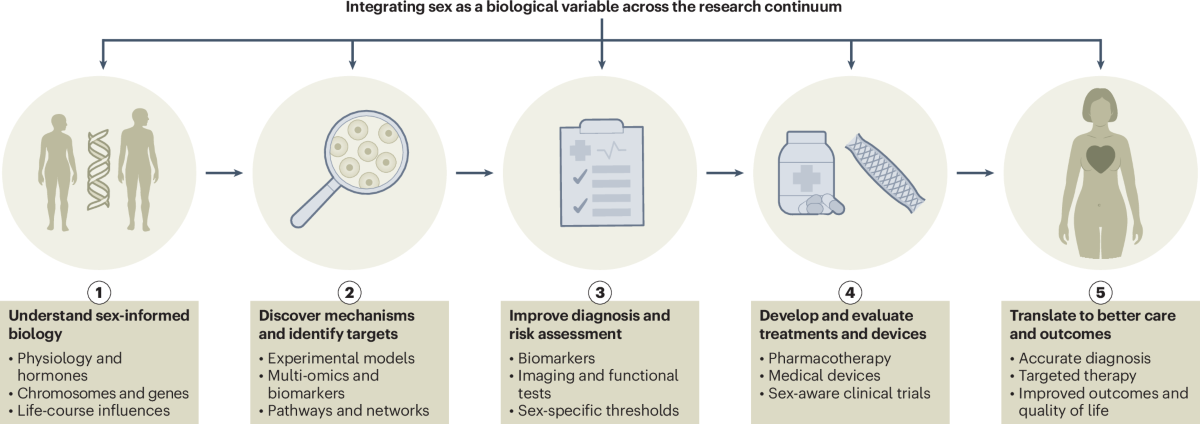
At its core, translational work is a chain of conversions. A biological insight becomes a candidate intervention; a candidate becomes a tested product; a tested product becomes an approved therapy; an approved therapy becomes something a health system can actually deliver at scale. Each link has its own culture, its own incentives and its own definition of success.
That structure explains why the field has always been described in terms of gaps. Researchers talk about the valley of death between discovery and development, and about the later gap between regulatory approval and routine clinical use. The editorial's argument is not that these gaps are new. It is that the terrain around them has changed enough that teams need to rethink how they navigate it.
Why the Ecosystem Is Changing Now
The editorial points to change across the ecosystem as a whole rather than to any single breakthrough or setback. That is an important distinction, because it means the challenge is systemic. When many parts of a system move at once, the interfaces between them tend to break first.
More Discoveries, More Handoffs
As the volume and diversity of biomedical research grows, the number of handoffs between disciplines increases. A finding may originate in one specialty, be validated with tools from another, be developed with input from engineering or data science, and then be assessed by clinicians, regulators and payers who each ask different questions. Every handoff is a place where momentum can be lost, and where context that mattered at the bench may not survive the transfer.
New Tools for a New Set of Problems
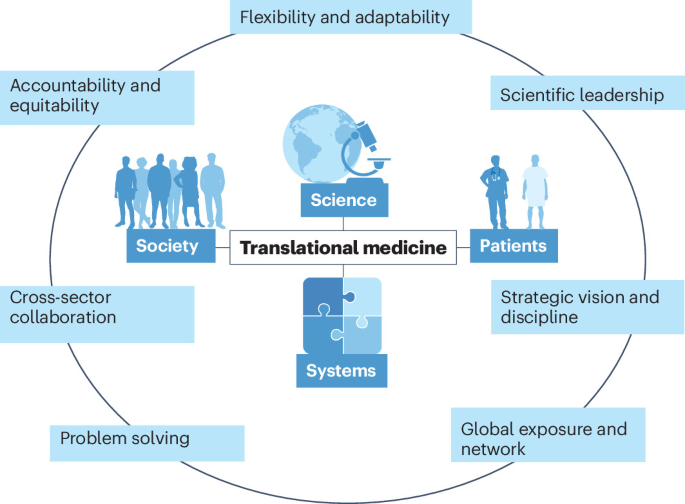
The editorial's title is explicit that new tools are required. That word can be read broadly. Tools in translational medicine are not only laboratory instruments. They include the methods used to design studies, the frameworks used to judge evidence, the data infrastructure that makes results comparable across sites, and the collaborative models that let academic, clinical, industry and public partners work from a shared plan rather than in sequence.
The Gap Between Innovation and Impact
The distance between a promising innovation and measurable impact is rarely a single obstacle. It is usually a cluster of frictions that compound:
- Evidence generated in one setting that does not transfer cleanly to another population or care context.
- Regulatory and ethical expectations that evolve while a programme is already underway.
- Manufacturing, supply and cost considerations that arrive late in development rather than shaping it from the start.
- Adoption barriers at the point of care, where clinicians must weigh new options against familiar ones.
- Incentive structures that reward the publication of findings more reliably than the delivery of them.
None of these are novel complaints, but the editorial suggests they are becoming harder to manage in isolation. Treating them as separate administrative hurdles produces fragmented solutions. Treating them as one continuous problem — the problem of impact — invites different design choices much earlier in the process.

What Bridging the Gap Requires
If the goal is impact rather than activity, several implications follow. First, translation should be planned rather than hoped for: teams need a credible route from candidate to clinic before they commit years of effort. Second, the people who will eventually use or pay for an intervention should be involved while the design can still change. Third, measurement should reflect what matters to patients and health systems, not only what is convenient to count in a trial.
The editorial also implies a cultural shift. Translational work is often described as applied, as though it were a lesser cousin of discovery. In practice it demands a distinct and demanding set of skills: the ability to hold scientific rigour and operational realism together, and to accept that a perfectly designed study which no one can implement has not succeeded.
A Question of Measurement
Impact is difficult to define, and that difficulty is part of the problem. A publication, a patent, a licensing deal and a change in clinical practice are all outputs, but they are not equivalent. When the metrics used to evaluate translational programmes reward the earlier, easier milestones, the later and harder ones receive less attention.
Recognising this is not a call to abandon traditional measures. It is a reminder that the final link in the chain — actual benefit delivered to patients and health systems — is the one that justifies the rest. Building feedback from that end of the process back toward the beginning is one of the more practical ways to make the ecosystem more coherent.

The Road Ahead
The editorial's message is ultimately about alignment. Monumental change creates opportunity as well as friction, and fields that adapt their tools and their habits tend to convert that change into progress. Translational medicine now has more capability at its disposal than at any point in its history, alongside a more complex environment in which to apply it.
The question the field faces is not whether innovation will continue. It will. The question is whether the structures surrounding that innovation — funding, regulation, evidence generation, delivery and evaluation — will be rebuilt with the end goal in view, or left to lag behind the science they are meant to serve.
The Bottom Line
Nature Medicine's editorial treats the gap between innovation and impact as the defining challenge of translational medicine's next phase. The ecosystem has changed substantially, and the tools used to operate within it must change too. Progress will depend less on any single discovery than on whether the many handoffs between discovery, development and delivery can be made to work as one system — designed from the outset to produce outcomes that patients and health systems can feel.
This article is based on reporting by Nature Medicine. Read the original article.
Originally published on nature.com