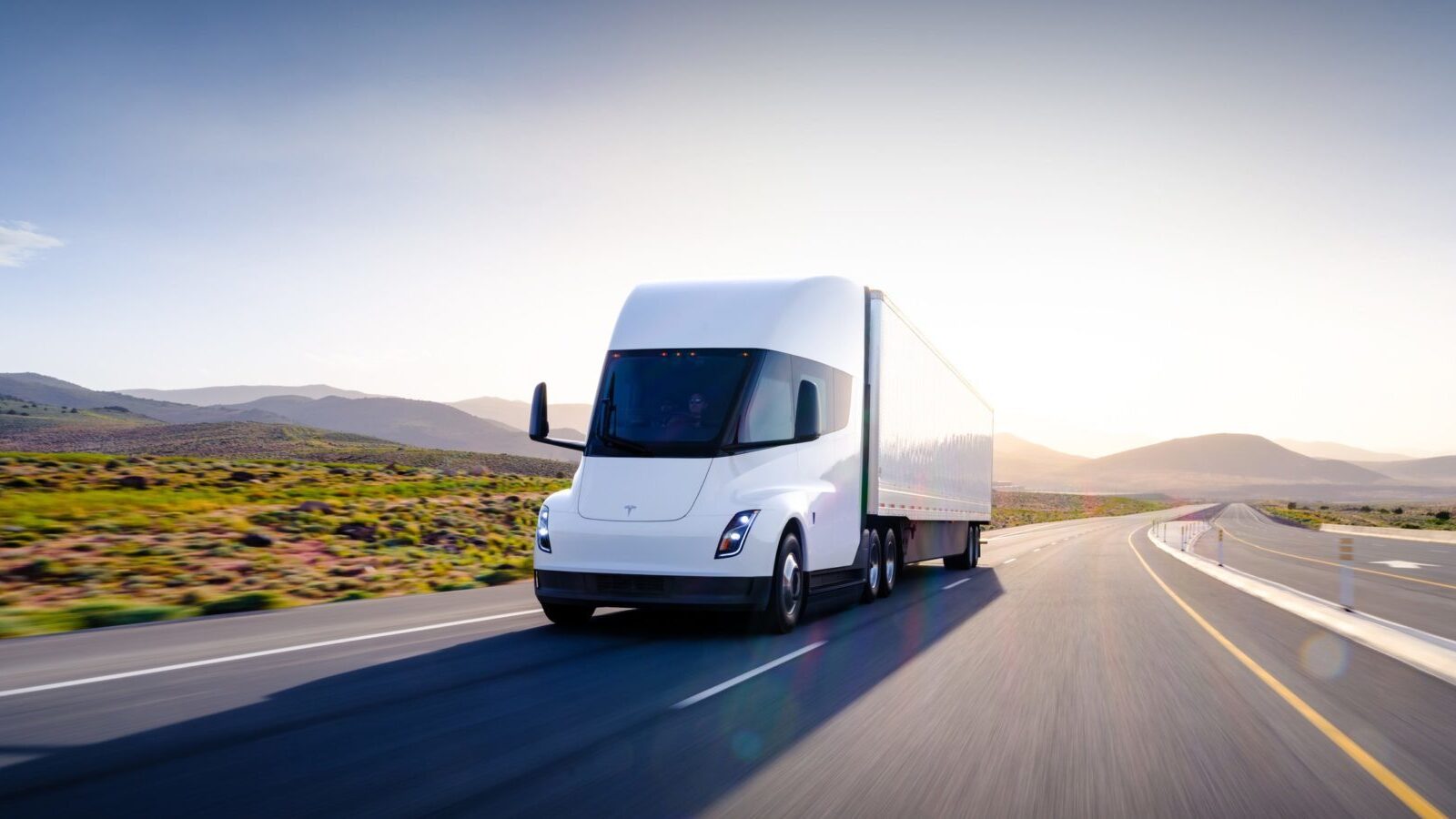
For years, the Tesla Semi seemed like a concept that would never quite arrive. Unveiled with bold promises and impressive specifications, it spent the better part of a decade moving through development, pilot deployments, and public demonstrations. Now, with high-volume production underway and a landmark order on the books, the electric truck is beginning to look like a real commercial force. This week also brought word that the Semi will be heading to Europe, adding another layer to its global expansion.
A Long Road to the Assembly Line
The Semi’s journey has been anything but smooth. When Tesla first showed the truck, it was presented with the kind of specificity that suggested launch was imminent. That didn’t happen. Instead, the program endured years of waiting, shifting timelines, and a stream of pilot projects. The first pilot production units only began rolling out near the end of 2022, roughly five years after the vehicle’s original unveiling.
The man once in charge of the Semi program, former Tesla president Jerome Guillen, was interviewed by CleanTechnica in 2019 at Tesla’s Fremont offices. At that point the project was still deep in development. Guillen eventually moved on, reportedly weary of the delays. But the Semi itself pressed forward, and by the end of April 2026, Tesla had shifted the truck into high-volume manufacturing at Gigafactory 1 in Nevada. That marked a major turning point, moving the Semi from a lengthy pilot phase to a product that could be produced in significant numbers.
A Record Order from Einride
The scale of the Semi’s commercial arrival became clearer this past week with news of Tesla’s largest order to date: 500 trucks from Einride. Einride is a Swedish company, but the vehicles are destined for the United States. They will be deployed across California, New Jersey, Texas, Illinois, and Georgia, and will support the operations of customers including Amazon. Deliveries are scheduled to begin in September.
The order is notable not just for its size, but for what it signals about the maturity of electric freight. Einride’s CEO, Roozbeh Charli, framed the deployment as proof that the company can execute at the scale its customers demand. He also credited the partnership with Tesla for helping bring next-generation Semis into active operations quickly and at scale. In his words, the collaboration is a testament to how quickly the technology is moving from promise to daily operations.
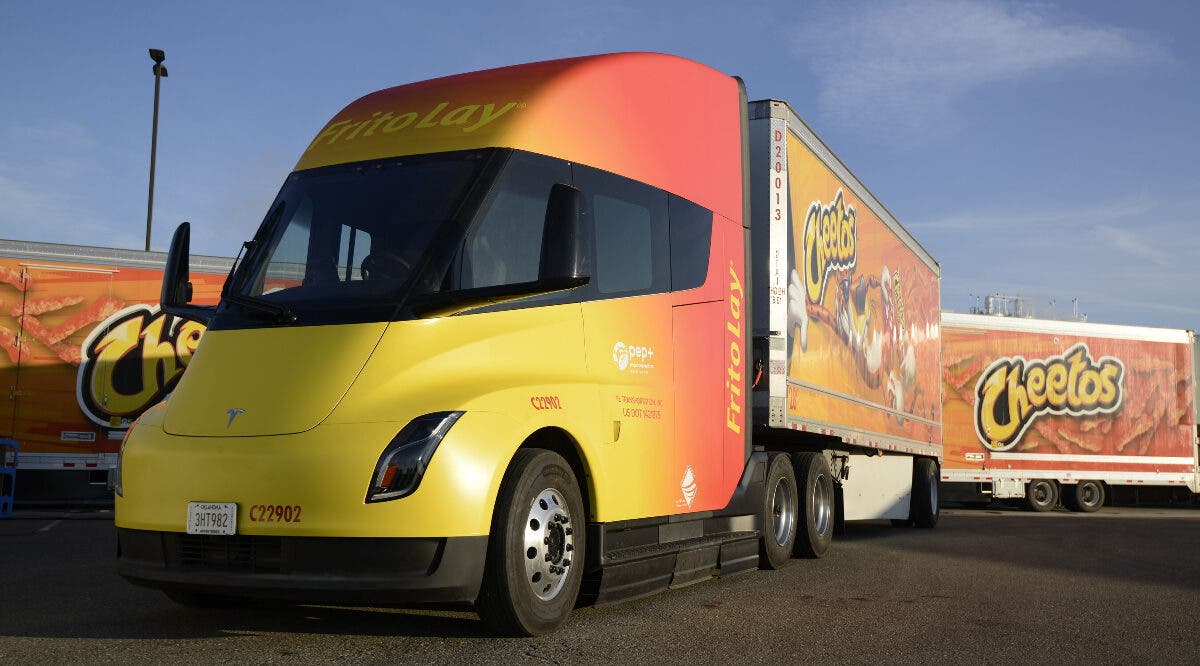
Tesla, for its part, pointed to the economic case for electric heavy trucks. The company has long argued that EV trucks offer lower costs per mile thanks to fuel savings, reduced maintenance, and better uptime relative to diesel vehicles. Those savings are expected to become more pronounced the more a truck is used, which makes high-mileage freight routes a natural fit for the technology.
European Arrival and IAA Transportation
The same week that brought the Einride order also brought confirmation that the Tesla Semi is heading to Europe. Exactly which configurations will be offered in European markets, and at what price, remains unclear. Tesla has said those details will be released at the IAA Transportation conference in Hannover, Germany, which runs from September 15 through September 20.
IAA Transportation is one of the biggest commercial vehicle events in the world, so a formal European debut there makes sense. The announcement suggests that Tesla is planning to sell the Semi in Europe, not just showcase it. The timing also aligns with the start of high-volume production, indicating that Tesla may have enough manufacturing capacity to supply more than one continent.

Pricing, Range, and Battery Options
In the United States, the Semi is currently offered in two configurations. The Standard Range version starts at roughly $260,000 and provides around 325 miles of driving range on a single charge. It uses a 548 kWh battery pack. The Long Range version starts at approximately $290,000 and delivers an estimated 500 miles of range, drawing on an 822 kWh battery pack. Those figures give fleet operators a clear sense of what they can expect for their investment, especially those running regional and long-haul routes.
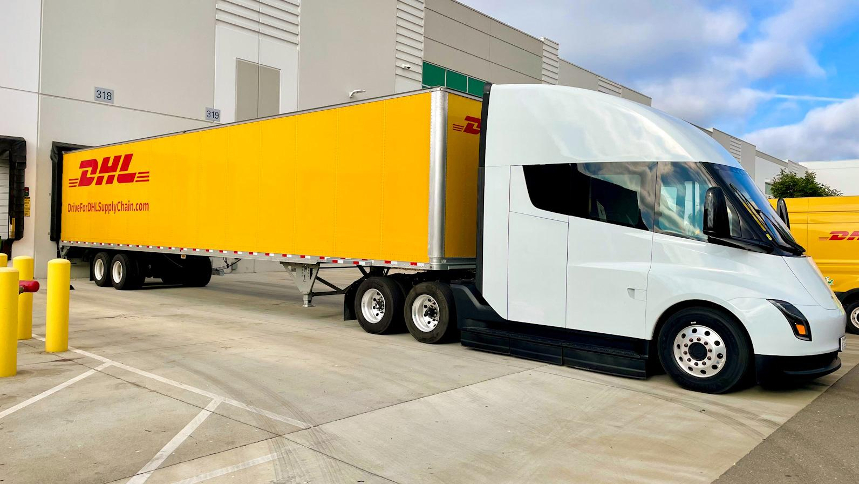
The pricing places the Semi in a premium segment, but fleet economics may work in its favor. With lower fuel and maintenance costs, the total cost of ownership can potentially offset the higher upfront price, particularly for trucks that cover high daily mileage. Tesla’s statements on the subject emphasize that fuel savings, reduced maintenance needs, and better uptime combine to produce a lower cost per mile compared with diesel trucks.
Scaling Up Electric Freight
The Semi’s recent progress is a sign that the electric truck market is entering a new phase. For years, the discussion around electric heavy trucks was focused on potential. Now, with high-volume manufacturing underway and large fleet orders being placed, the focus is shifting to execution. The Einride order alone represents a substantial addition to Tesla’s production backlog, and the European expansion hints at further growth on the horizon.
There are still questions about charging infrastructure, grid capacity, and long-haul charging networks, but those were not addressed in the announcement. Based on what Tesla and Einride have shared, the immediate focus is on getting the trucks into active service and demonstrating that they can handle the demands of commercial freight. The reference to Amazon as one of the companies supported by the Einride fleet is a good example of how the trucks will be put to work in real-world logistics settings.
For now, the Tesla Semi is no longer just a prototype or a pilot project. It has entered the phase where it can be ordered in the hundreds, deployed across multiple states, and prepared for international markets. The announcement at IAA Transportation will likely clarify how Tesla plans to approach Europe, and the deliveries to Einride will provide an early test of how quickly the company can scale production and support a large fleet.
The electric freight revolution has been a long time coming, but the pieces are finally starting to fall into place.
This article is based on reporting by CleanTechnica. Read the original article.
Originally published on cleantechnica.com