Spain is pushing community energy from pilot status toward national infrastructure
Spain has added 20 new self-consumption and participatory energy community projects, bringing the national total to 262, according to pv magazine’s reporting on the latest resolution from the Ministry for the Ecological Transition and the Demographic Challenge, known as MITECO. The expansion is backed by €108.4 million in funding from the European Union-supported Recovery, Transformation and Resilience Plan.
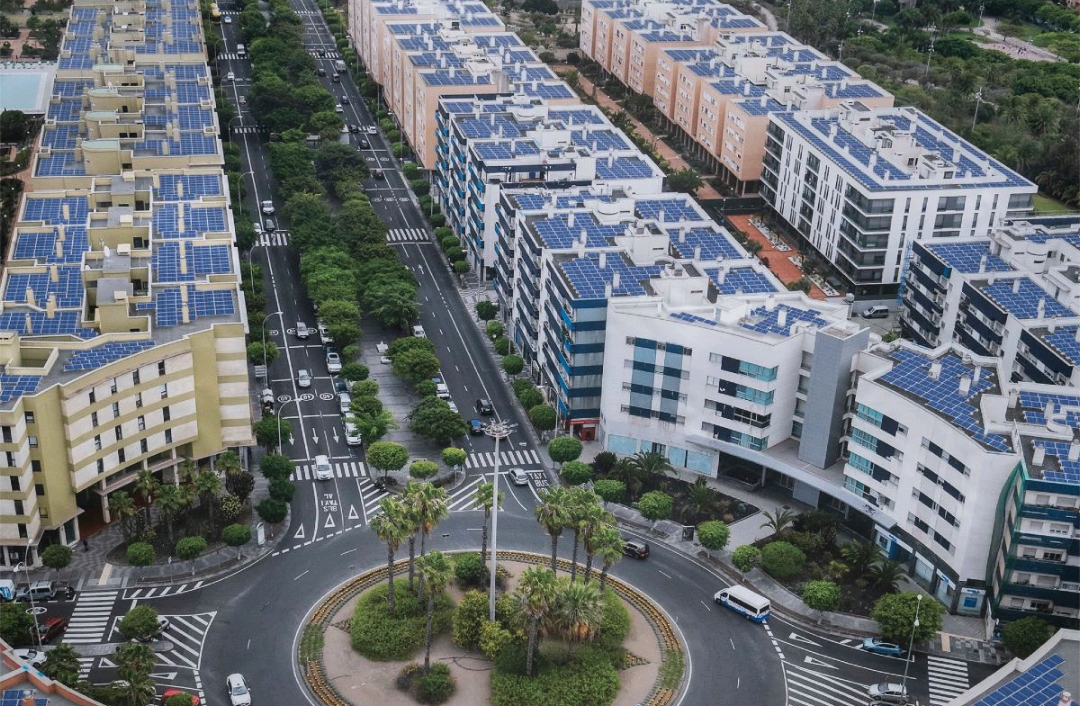
That scale matters. Energy communities are often discussed as local experiments in shared ownership, neighborhood solar, or citizen-led decarbonization. Spain’s latest figures suggest the model is moving beyond demonstration status. The projects already deployed across the country combine solar generation, storage, energy-efficiency measures, and mobility solutions, and collectively account for 175.3 MW of photovoltaic capacity while involving more than 111,000 citizens.
The result is one of the clearest examples in Europe of how community energy can be used not just as a social policy tool, but as an operational piece of the broader electricity transition.
What the latest round changes
The immediate change is numerical but also institutional. With 20 more projects incorporated into the program, Spain is widening the footprint of a framework designed to support both pilot efforts and early-stage community deployments. MITECO has also opened a public consultation ahead of future funding calls, indicating that the program is still evolving rather than simply distributing money under a fixed template.
That combination of expansion and consultation is important. Community energy systems often run into practical barriers around legal structure, grid access, project development expertise, and the uneven ability of local groups to organize finance. A growing national program can reduce those barriers, but only if it keeps adapting as real projects encounter real constraints.
Spain’s current totals also show that participation is broad, though not evenly distributed across regions. That unevenness may become one of the next major tests for the model. A program can look successful in aggregate while still concentrating benefits in places with stronger municipal capacity, more active cooperatives, or better starting conditions for solar deployment.
Why energy communities matter beyond symbolism
Community energy is attractive politically because it blends climate action with local control. But its value goes beyond symbolism. Shared projects can lower the threshold for households, small businesses, and civic institutions to participate in clean energy, especially when individual rooftop ownership is impractical or unaffordable. They can also knit together several functions at once: generation, storage, efficiency upgrades, and mobility planning.
Spain’s reported mix of technologies reflects that broader role. These are not only solar panels on community buildings. They are increasingly multi-part local systems. That matters because the next phase of the energy transition is not just about adding more clean generation. It is about coordinating demand, improving resilience, and making distributed assets useful inside the grid rather than peripheral to it.
In that sense, energy communities can help bridge a persistent gap in energy policy. National decarbonization targets are often set from the top down, but public acceptance and day-to-day participation happen from the bottom up. Projects that visibly involve residents can make the transition feel less abstract and more economically tangible.
The European context behind Spain’s move
The financing structure also shows how strongly European energy policy is shaping national choices. The program is supported by NextGenerationEU-linked recovery funding, connecting local energy deployment to the bloc’s post-crisis investment agenda. That makes Spain’s progress relevant beyond its borders. Other European countries are trying to determine whether community energy should remain a niche complement to utility-scale renewables or become a standard part of decarbonization strategy.
Spain’s numbers give advocates a stronger case for the latter. More than 262 projects and over 111,000 participants suggest a replicable model, not merely an aspirational one. At the same time, the reported 175.3 MW of solar capacity shows the current limits: these projects are meaningful, but they do not replace the need for larger-scale generation, transmission upgrades, and storage investment.
Instead, they sit in a productive middle ground. Community energy can expand social buy-in, spread economic participation, and reduce some pressure on centralized systems, while still relying on national frameworks and grid coordination.
What to watch next
The next questions are less about whether the concept works and more about how far it can scale. Future funding rounds will help determine whether Spain can move from a portfolio of successful projects to a durable nationwide market segment. The regional imbalance noted in the reporting will matter, as will the quality of project execution once public funding becomes less novel and results are judged more on performance than ambition.
There is also a governance question. Community energy succeeds when citizens can participate meaningfully, but large programs can drift toward procedural complexity that favors professional developers or well-resourced intermediaries. If that happens, the community label can remain while local control weakens in practice.
For now, Spain’s latest expansion is a substantive step. It shows a European government using recovery-era funding not only to subsidize clean capacity, but to distribute the benefits of the energy transition through local ownership and participation. Whether that becomes a defining feature of Spain’s energy system will depend on execution, regional reach, and the ability to turn 262 projects into a lasting part of the country’s energy architecture.
This article is based on reporting by PV Magazine. Read the original article.
Originally published on pv-magazine.com