Renault Turns a Rally Icon Into an Electric Showpiece
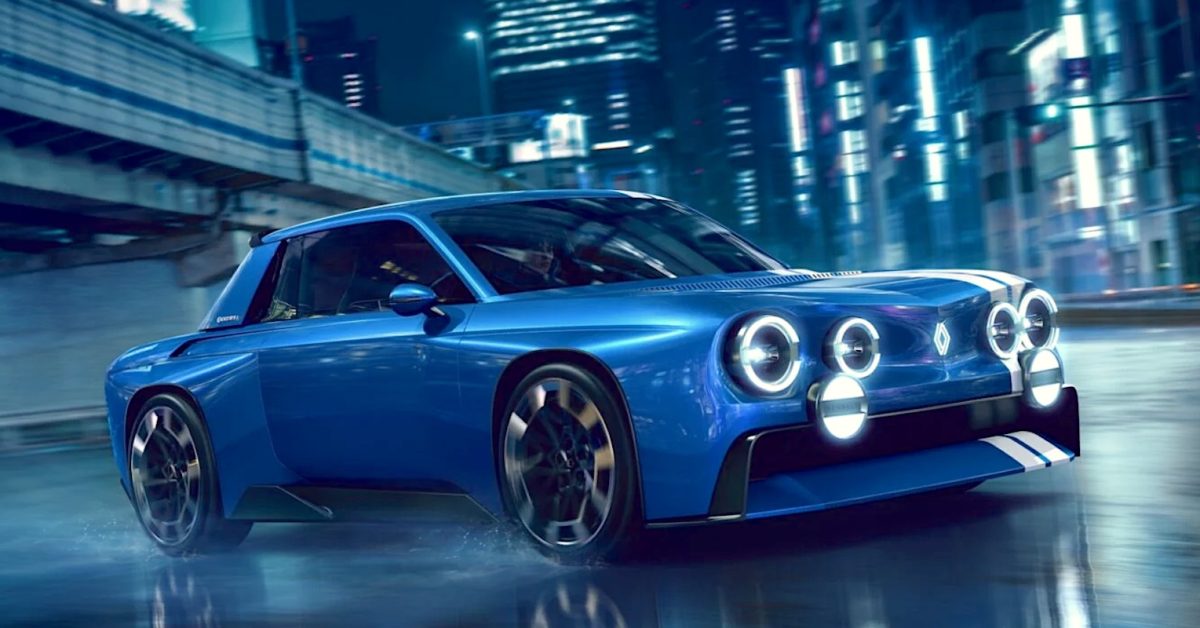
Renault has built a reputation in recent years for resurrecting its own heritage with battery-electric drivetrains, and its newest project pushes that formula from city cars into full rally territory. The French automaker has revealed an all-new Renault Gordini 8 — a reborn take on the Renault 8 Gordini — configured as a 270-horsepower electric rally machine and presented as a "retromobile," a label that signals vintage proportions and styling wrapped around modern electric hardware.
The reveal lands at a moment when retro-flavored EVs have become one of Renault's most effective attention-getting tools. The company has spent several years dropping jaws with all-electric reimaginings of its past models, and this latest effort suggests the people behind those projects have no intention of letting the momentum fade. Where earlier efforts leaned on nostalgia for everyday driving, the Gordini 8 directs that same energy at competition heritage.
Why 270 Horsepower Matters in a Retro Package
Output figures on their own rarely tell the full story, but 270 hp carries real weight in this context. Modern performance EVs routinely post far larger numbers, yet they do so while hauling two and a half tonnes of battery, structure, and cabin technology. A retro-inspired rally build implies a different set of priorities: compact dimensions, mechanical simplicity, and a power-to-weight balance that rewards throttle response rather than straight-line drag racing.
Electric drivetrains are naturally suited to that brief. Instant torque delivery from a standstill, a low center of gravity from floor-mounted batteries, and the absence of gearing losses all translate into the kind of punchy, exploitable performance that rally driving demands. A 270 hp electric motor in a small, lightweight chassis can feel considerably quicker than the same figure would in a conventional SUV.
Just as importantly, the number sits in a sweet spot for enthusiast credibility. It is big enough to be taken seriously as a performance machine, but modest enough to signal that the Gordini 8 is about balance and control rather than brute force.

The Retromobile Formula, Refined
"Retromobile" is not a marketing term Renault invented on a whim. It describes a specific approach: take a recognizable silhouette from the brand's past, keep the proportions and design cues that made it memorable, and swap the original powertrain for a modern electric one. The result is a vehicle that reads as heritage from twenty meters away and as contemporary technology up close.
That formula has clear advantages for an automaker navigating the transition to electric mobility:
- Emotional pull. Heritage designs carry built-in affection that brand-new nameplates have to earn over years.
- Design differentiation. Retro proportions — short overhangs, upright glass, simple surfaces — stand out in a market of increasingly similar aerodynamic crossovers.
- Technical credibility. Pairing a familiar shape with an electric drivetrain frames electrification as an upgrade rather than a compromise.
- Enthusiast relevance. Performance variants give the strategy a halo effect that economy-focused models cannot provide on their own.
The Gordini 8 checks every box on that list, and it adds a rally-specific edge that no mainstream retro EV has yet claimed.
Gordini: A Badge Built for Competition
The Gordini name carries decades of racing association in France. It began as a tuning and racing operation that became closely tied to Renault, and the badge later became shorthand for factory-sanctioned performance variants. The Renault 8 Gordini, in particular, is remembered as one of the great affordable competition cars of its era — a small sedan made formidable through careful preparation rather than enormous displacement.
That history is precisely what makes the choice of the 8 Gordini as a starting point so pointed. Renault is not simply reaching for the most famous shape in its catalogue. It is reaching for a car whose reputation was built on handling, lightness, and driver involvement — qualities that translate naturally into an electric rally build.
The "Gordini" designation gives the project a performance identity that a plain retro redo would lack, while the rally framing sets expectations around suspension, brakes, and chassis tuning rather than range or charging speed.
What Renault Is Signaling With the Reveal
Read as a strategic statement, the Gordini 8 says as much about Renault's ambitions as it does about a single car. An automaker that is willing to spend design and engineering resources on a rally-themed electric retromobile is signalling confidence in three things at once:
- That electric powertrains can carry a performance story, not just an efficiency one.
- That heritage design still has commercial and editorial value in an EV market.
- That the company sees motorsport adjacency as a way to keep enthusiasts engaged during the transition away from combustion.
It also reinforces a broader pattern in the industry, where legacy manufacturers are using their archives as a competitive advantage against newer electric-only brands that have no back catalogue to draw on. Renault, with one of the deepest performance histories in Europe, is unusually well positioned to exploit that asymmetry.
The Questions Still Hanging Over the Project
Enthusiasts are already asking the obvious follow-ups, and Renault has not answered all of them. Whether the Gordini 8 remains a one-off design study, becomes a limited-run special, or evolves into something closer to a production-adjacent performance model is the central unknown. Details around battery capacity, range, charging capability, chassis specification, and pricing have not been part of the headline announcement.
There is also the perennial question of how a rally-bred electric car would be used. Purpose-built competition EVs exist, but they occupy a narrow niche, and rallying at the top level demands energy density and rapid charging infrastructure that remain challenging in remote stages. A road-going interpretation, by contrast, would sit more comfortably alongside Renault's existing electric lineup as a halo model.
Why This One Is Worth Watching
Plenty of automakers have shown retro electric concepts. Fewer have committed to the idea repeatedly, and fewer still have pushed it into the emotional territory of rally and motorsport. The Renault 8 Gordini reborn as a 270 hp electric retromobile sits at that intersection: familiar enough to trigger instant recognition, modern enough to demonstrate real engineering capability, and performance-focused enough to appeal to drivers who care about more than efficiency ratings.
For Renault, the payoff is twofold. The project keeps the brand's retro-electric narrative in the news cycle, and it stakes a claim in the performance conversation at a time when electrification has flattened many traditional distinctions between cars. If the company follows through with more detail on how the Gordini 8 drives, what powers it, and whether customers will ever be able to buy something like it, this reveal could mark the beginning of a genuinely new chapter rather than a one-off piece of showmanship.
This article is based on reporting by Electrek. Read the original article.
Originally published on electrek.co