California’s power mix is shifting faster than its gas fleet
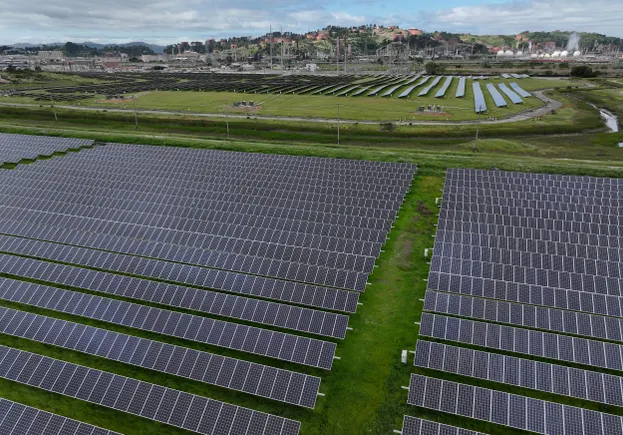
California’s electricity system crossed a notable threshold in early 2026. According to the U.S. Energy Information Administration, utility-scale solar generation in the California Independent System Operator footprint exceeded natural gas generation over the first five months of the year. That change did not happen because gas plants disappeared. It happened because solar output surged, battery capacity expanded rapidly, and imports from neighboring systems climbed at the same time.
The headline number is stark. From January through May, utility-scale solar generation in CAISO increased 21% compared with the same period in 2024, while natural gas generation fell 60%, the EIA said. On a daily basis, utility-scale solar generated more electricity than natural gas on 82% of days during the first five months of 2026. In 2024 and 2025, that figure had been just 21%.
The shift is significant because it shows a grid in transition from a system where solar once contributed mainly around midday to one where it can overtake a long-dominant thermal source across most days. It is also a reminder that generation mix changes are being driven not by a single technology, but by the interaction of new capacity, storage, transmission, and regional trading.
Capacity additions are changing the operating balance
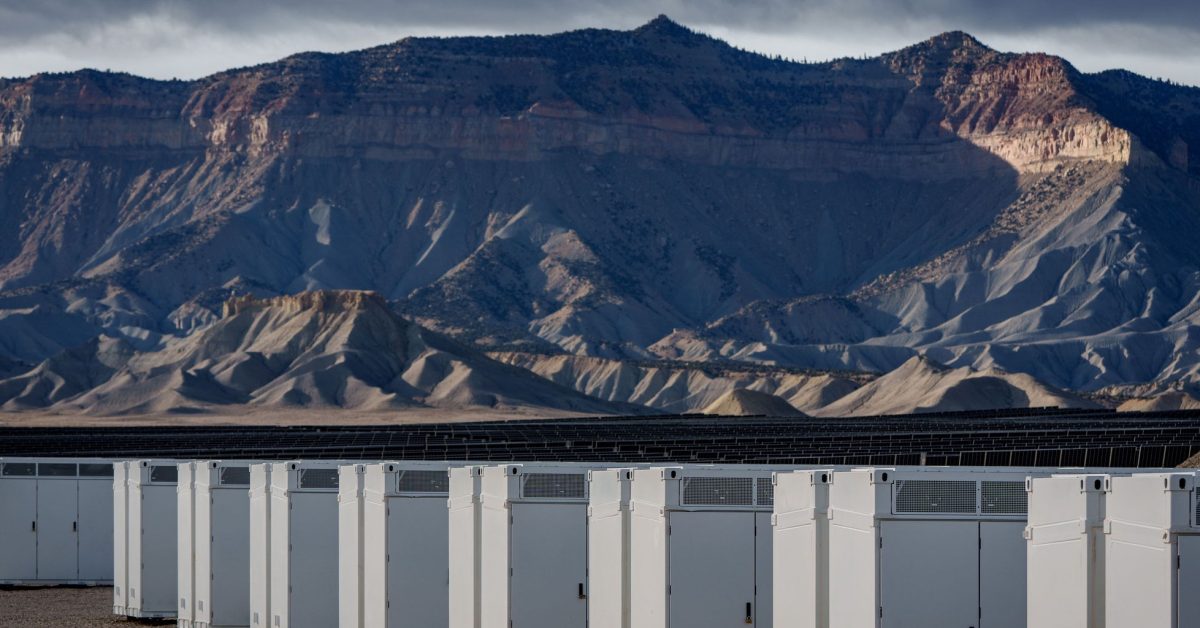
Between April 2024 and April 2026, utility-scale solar capacity in CAISO grew 19% to 25 gigawatts, according to the EIA. Battery storage capacity grew even faster, rising 79% to 16 gigawatts. Over the same period, natural gas capacity stayed nearly unchanged at 29 gigawatts. Total net capacity across the system increased by 14%, or 11 gigawatts.
Those figures help explain why generation patterns can change quickly even without a major reduction in gas capacity. Gas remains a large installed resource on the system, but additional solar and batteries alter when that gas is needed and how often it runs. Batteries do not create electricity on their own, but they can shift solar energy into hours when demand remains high and solar output falls, reducing the need for gas-fired generation that would otherwise fill those gaps.
The EIA’s numbers point to a market that is not simply adding renewables at the margins. It is starting to reshape the operating role of conventional plants. A 60% drop in gas generation alongside flat gas capacity suggests that utilization, not just nameplate resources, is now where the story is unfolding.
That distinction matters for energy policy and market design. Capacity tells regulators what can run. Generation tells them what actually is running. In California this year, the answer has increasingly favored solar, supported by storage and imports.
Imports are a major part of the picture
The transition is not only a California in-state story. The EIA said that even with growing output from solar and batteries and a 7% increase in demand, CAISO recorded a 19% decrease in net generation because electricity imports from nearby systems doubled. That means part of the state’s reduced gas burn is being enabled by access to outside power that is available at competitive prices.
According to the agency, the increase in imports was driven by relatively inexpensive electricity generation coming online and becoming available for delivery into CAISO. A substantial portion of that imported energy came from renewable sources. Hydroelectric imports from the Pacific Northwest rose as drought conditions there eased. At the same time, CAISO began importing electricity from the new SunZia wind project in New Mexico starting in April.
That detail is essential because it complicates simplistic narratives about local substitution. California is not only replacing gas with homegrown solar. It is increasingly participating in a wider western grid where new wind, improved hydro conditions, and transmission connections influence what power is cheapest and most available at a given hour.
Regional integration can reduce emissions and costs, but it also means California’s operational profile depends more on infrastructure and conditions beyond its borders. The same interdependence that helps suppress gas generation during favorable periods could matter differently during drought, heat waves, or transmission constraints.
SunZia’s arrival is already showing up in the numbers
One of the clearest examples of that growing regional effect is SunZia. The 3.65-gigawatt project is described by the EIA as the largest wind farm in the United States. It began delivering electricity in a testing phase in April and is scheduled to begin commercial operations this month. The agency said most of the project’s power will be exported to Arizona and Southern California.
Initial deliveries are already visible in CAISO’s generation mix. On May 15, 2026, the grid operator reported 7,122 megawatts of hourly wind generation, 20% above the previous annual record of 5,922 megawatts set in 2024, according to the EIA. While one record does not define a long-term trend by itself, it shows how quickly a large remote renewable project can alter supply patterns once transmission pathways are available.
That record also hints at the next phase of the western grid transition. For years, California’s renewable story has been dominated by solar. But imported wind can complement solar production by arriving at different hours and under different weather conditions, especially when paired with storage. That diversity can reduce reliance on gas more effectively than solar alone.

What the milestone does and does not mean
The early-2026 data mark an important operational milestone, but not the end of California’s gas era. Natural gas capacity remains substantial, and the EIA’s figures do not suggest that gas has become irrelevant. Instead, they show that gas is being pushed further into a balancing and reliability role as renewable and storage resources gain share.
That has practical implications for grid planners. A system with high solar penetration, large batteries, and rising imports may use gas less often, but it still needs firm capacity for difficult hours and unusual conditions. At the same time, every reduction in gas generation changes emissions, fuel consumption, and plant economics, which can feed back into investment decisions and market rules.
What stands out most in the current numbers is the speed of change. In just two years, California moved from solar beating gas on about one-fifth of days to doing so on more than four-fifths of days in the first five months of the year. Capacity additions, stronger transmission-linked imports, and improved access to outside renewable power have combined to produce a measurable shift in how the grid is actually running.
For the rest of the country, California remains a test case. Its experience shows that rapid solar and storage growth can materially cut gas generation, but also that regional power trading and imported clean electricity may be just as important as in-state buildout. The grid of the future may be cleaner not only because it is more renewable, but because it is more connected.
This article is based on reporting by Utility Dive. Read the original article.
Originally published on utilitydive.com