Xcel Sees Data Centers Driving a Bigger Grid Buildout
Xcel Energy says it is on track for 3% retail sales growth in 2026, but the more consequential signal from its latest earnings call is how strongly data center demand is reshaping the company’s capital plans. Executives told analysts that Xcel has a 2026 to 2030 base capital investment plan of about $60 billion and a further $10 billion in projects it can already see coming into view, including transmission and generation tied to large new loads.
That makes the company one of the clearest examples yet of how the data center boom is migrating from a technology-sector growth story into a utility infrastructure story. What was once discussed mainly in terms of AI chips, cloud spending, and server construction is now showing up in transmission miles, gas generation additions, storage deployments, and rate-case negotiations. For utilities, the issue is no longer whether data centers will alter planning assumptions, but how quickly those assumptions need to be revised.
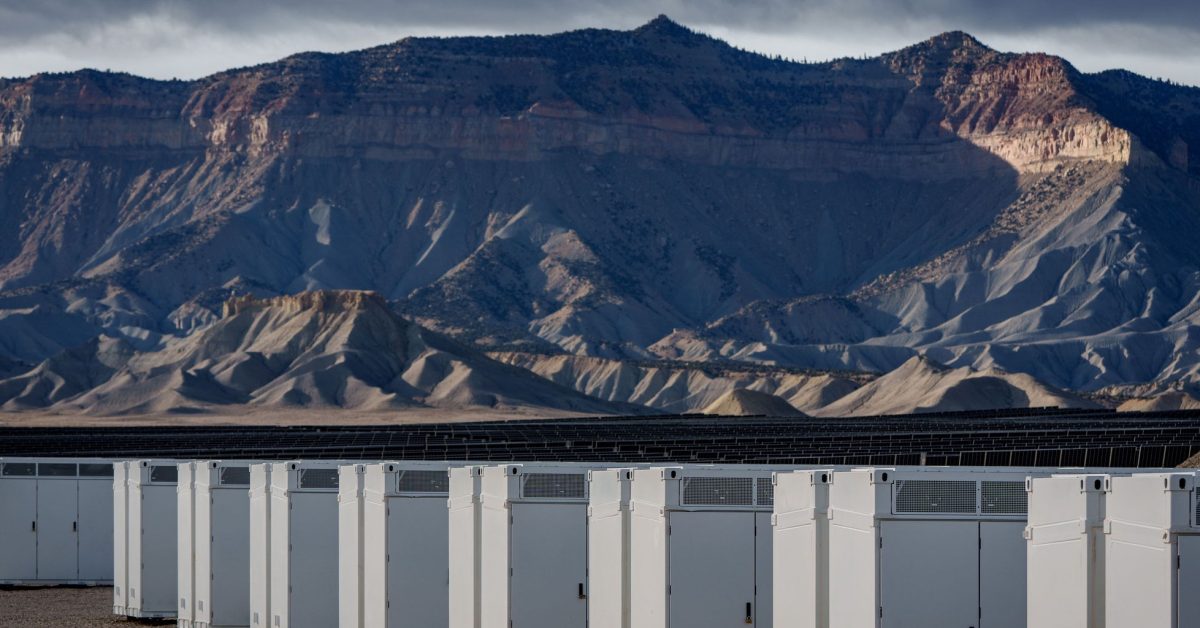
Xcel’s current base plan includes 11.4 gigawatts of renewable generation, 3.4 gigawatts of gas generation, 2.2 gigawatts of energy storage, roughly 1,700 miles of new transmission lines, and $5 billion for wildfire mitigation. On top of that, company officials said the “line of sight” category includes generation needed to support about 3 gigawatts of incremental data center demand added to the target plan, with that load expected to ramp through the mid-2030s.
Why the Utility View Matters
For years, conversations about data center expansion often treated power as a background input rather than a central constraint. That is changing. A utility that serves multiple fast-growing states has to translate speculative demand into actual wires, substations, interconnection timelines, generation resources, and regulatory approvals. Xcel’s presentation suggests that process is already well underway.
The company said it has about 2 gigawatts of data centers already contracted or under construction, expects to have 4 gigawatts under contract by the end of 2027, and sees a total pipeline exceeding 20 gigawatts. Even if not every project in that larger pipeline is built, the scale alone is enough to influence planning. Utilities cannot wait until every server hall is fully committed before starting long-lead infrastructure work, especially when transmission projects and new generation can take years to complete.
Chief Executive Officer Bob Frenzel told analysts the company remains confident in its data center forecast, citing the depth of the customer pipeline, Xcel’s ability to execute large infrastructure projects, and the geographic diversity of its service territories. That geographic footprint spans Minnesota, Colorado, Wisconsin, Michigan, North Dakota, South Dakota, New Mexico, and Texas, giving the company exposure to multiple regions where large-load customers may seek land, energy access, and grid connections.
What the Spending Mix Signals
The composition of Xcel’s spending plan is as revealing as the headline dollar figures. The company is not framing growth around one technology alone. Instead, it is pairing renewable additions with gas generation, storage, transmission, and wildfire mitigation. That mix suggests utilities expect large-load growth to require both clean-energy buildout and firm capacity that can support reliability as demand rises.
The inclusion of 11.4 gigawatts of renewables is notable because it shows data center growth is not automatically translating into a one-dimensional fossil buildout. At the same time, the planned 3.4 gigawatts of gas generation indicates that reliability requirements still matter, especially for power-hungry customers that want dependable service at scale. Storage and transmission fill in the rest of the picture, enabling more flexible use of power across time and geography.
In practical terms, that means the AI and cloud economy is beginning to affect the physical architecture of the grid. Utilities are being pushed to think in longer horizons and broader portfolios. Transmission becomes more valuable because it moves power from where it is generated to where demand clusters emerge. Storage becomes more valuable because it helps balance volatility. Firm generation becomes more valuable because some loads cannot easily tolerate interruptions.
Regulators and Customers Will Shape the Outcome
None of this spending exists outside regulation. Xcel said it has reached what Chief Financial Officer Brian Van Abel called productive settlements or outcomes in six active rate cases, and its Colorado electric rate settlement proposal includes an approximately $225 million base increase, with a Public Utilities Commission decision expected in the third quarter. Those details matter because capital plans do not become earnings or infrastructure simply because utilities announce them. They have to pass through state-level review and cost-recovery frameworks.
That is where the data center narrative becomes more politically and economically complex. Utilities want to invest ahead of demand, large customers want certainty and speed, and regulators have to weigh growth against affordability for existing ratepayers. If new loads absorb enough of the added system costs, data center expansion can strengthen the case for investment. If costs spread more broadly, the balance becomes harder.
Xcel’s call did not resolve those long-term debates, but it did show how far the conversation has advanced. The company is no longer speaking about data centers as a distant possibility. It is quantifying contracted load, linking specific gigawatt needs to its target plan, and framing future transmission and generation as part of a visible project pipeline.
A Broader Industry Signal
The most important takeaway is not just that one utility expects retail sales growth this year. It is that electricity demand from digital infrastructure is becoming concrete enough to redirect multiyear utility planning. Xcel’s numbers add weight to a broader industry shift in which data centers are emerging as a major driver of grid expansion, not only in power-hub states but across a wider regional footprint.
If that trend holds, the next phase of the AI economy will depend as much on regulated infrastructure execution as on model improvements or hardware roadmaps. Utilities will need to build faster, regulators will face tougher allocation decisions, and energy portfolios will have to accommodate both growth and reliability. Xcel’s latest outlook shows that process is already underway.
This article is based on reporting by Utility Dive. Read the original article.
Originally published on utilitydive.com