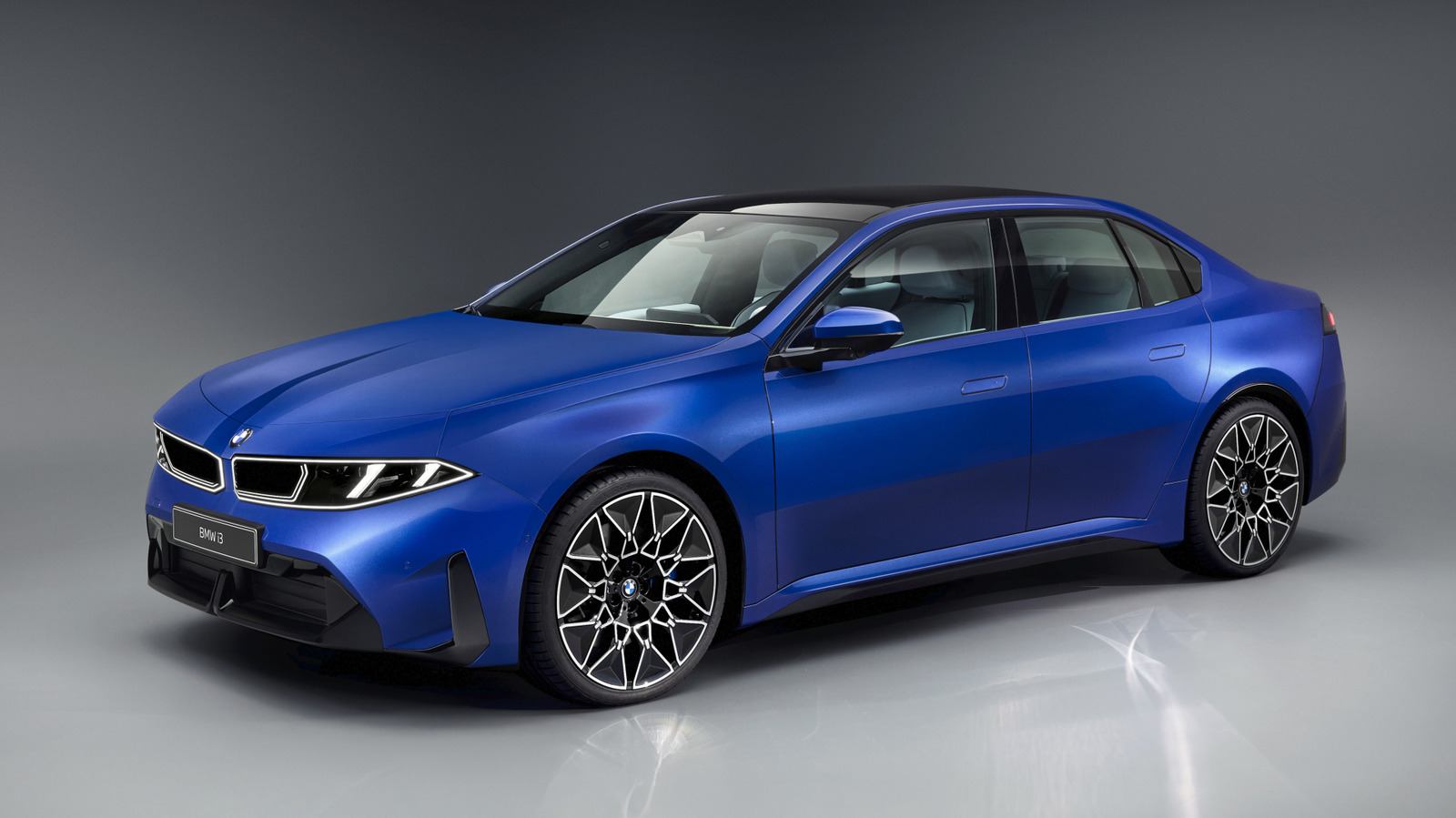
The 3 Series Goes Electric on Its Own Platform
BMW has used the 3 Series nameplate to define the sports sedan category for five decades. The 2027 BMW i3 brings the 3 Series into a new era as a fully electric car built on the Neue Klasse platform — BMW's first ground-up EV architecture. The reveal marks one of the most anticipated moments in BMW's electric transition and signals the company is ready to stop adapting combustion platforms and embrace a purpose-built EV foundation.
The Neue Klasse platform is designed from the outset around large cylindrical battery cells, flat floor packaging, and electrical architecture that supports both current and next-generation charging speeds. Applied to the 3 Series sedan's footprint, it delivers a car that BMW says will achieve approximately 440 miles of range on the European WLTP test cycle — a figure that would place it at or near the top of the premium sedan segment.
Design: Back to Proportions
BMW's current design vocabulary has been polarizing, particularly the oversized kidney grille that drew widespread criticism when it debuted. The 2027 i3 Neue Klasse represents a recalibration. Without a combustion engine to accommodate, the hood can be longer and lower, and the front fascia can be designed entirely around aerodynamic efficiency and visual coherence rather than grille size dictated by cooling requirements.
The proportions that result — a long hood, a compact greenhouse, and a slightly fastback rear roofline — echo the classic E30 and E46 3 Series generations that earned the model its enthusiast reputation. BMW has been explicit that this design direction is intentional, describing the Neue Klasse aesthetic as a return to the proportional values that defined the 3 Series in its most celebrated form.
Platform Advantages
The Neue Klasse platform's 800-volt electrical architecture enables charging speeds that make long-distance driving substantially more manageable than earlier BMW EVs. Paired with 440 miles of range, even aggressive driving should rarely require more than one charging stop on a long journey, and the charging stop itself should be brief — BMW has quoted peak DC charging rates consistent with adding 100 miles of range in under 15 minutes under optimal conditions.
The platform also supports over-the-air software updates for powertrain, suspension, and driver assistance systems, a capability that BMW's earlier EV adaptations delivered inconsistently. Neue Klasse vehicles will receive performance and feature updates throughout their lifecycle, closing a gap with Tesla and other software-first EV competitors.
The Combustion 3 Series Continues
BMW has confirmed that the Neue Klasse i3 will be joined by gasoline- and hybrid-powered 3 Series variants that share the new car's exterior design language but ride on BMW's existing CLAR platform for internal combustion vehicles. This dual-platform approach reflects the reality that demand for electric and combustion vehicles is unevenly distributed by market, with European and Chinese buyers adopting EVs faster than customers in the US and other markets where infrastructure and incentive structures remain less developed.
The visual convergence between the electric i3 and its combustion siblings is deliberately chosen — BMW wants the family resemblance to be unmistakable while the powertrain choice remains flexible by market and customer preference. Production of both variants will occur in BMW's Munich plant, retooled to accommodate parallel Neue Klasse and CLAR platform production.
Competitive Positioning
The 2027 i3 enters a more competitive premium electric sedan market than existed when BMW began planning the Neue Klasse. Mercedes-Benz's EQE, the Polestar 2, the Lucid Air, and an increasingly capable Tesla Model 3 have established a crowded field. BMW's answer is a credibility play: delivering the 3 Series nameplate with all of its heritage associations and driving dynamics reputation as an electric car built on a platform engineered specifically for the purpose. Whether that is sufficient to recapture customers who have already migrated to competitors will determine the commercial success of what is arguably BMW's most important electric vehicle yet.
This article is based on reporting by Jalopnik. Read the original article.
Originally published on jalopnik.com