From concept to operating roadways
Smart highways have been discussed for years as a futuristic layer on top of ordinary road networks. The latest candidate material suggests that the idea is now far enough along to be described less as speculation and more as deployed infrastructure. According to the supplied source text, smart-highway systems have already appeared in China, South Korea, Singapore, the United Kingdom, the Netherlands, and the United States, including deployments in Indiana, Connecticut, Georgia, Utah, and Ohio.
The core enabler identified in the source is Vehicle-to-Everything, or V2X. In simple terms, it is a connectivity framework that allows roadside infrastructure and back-end traffic systems to communicate with vehicles, while vehicles send information back into the network. That two-way exchange is what turns a highway from a passive strip of pavement into an actively managed system.
What the system actually does
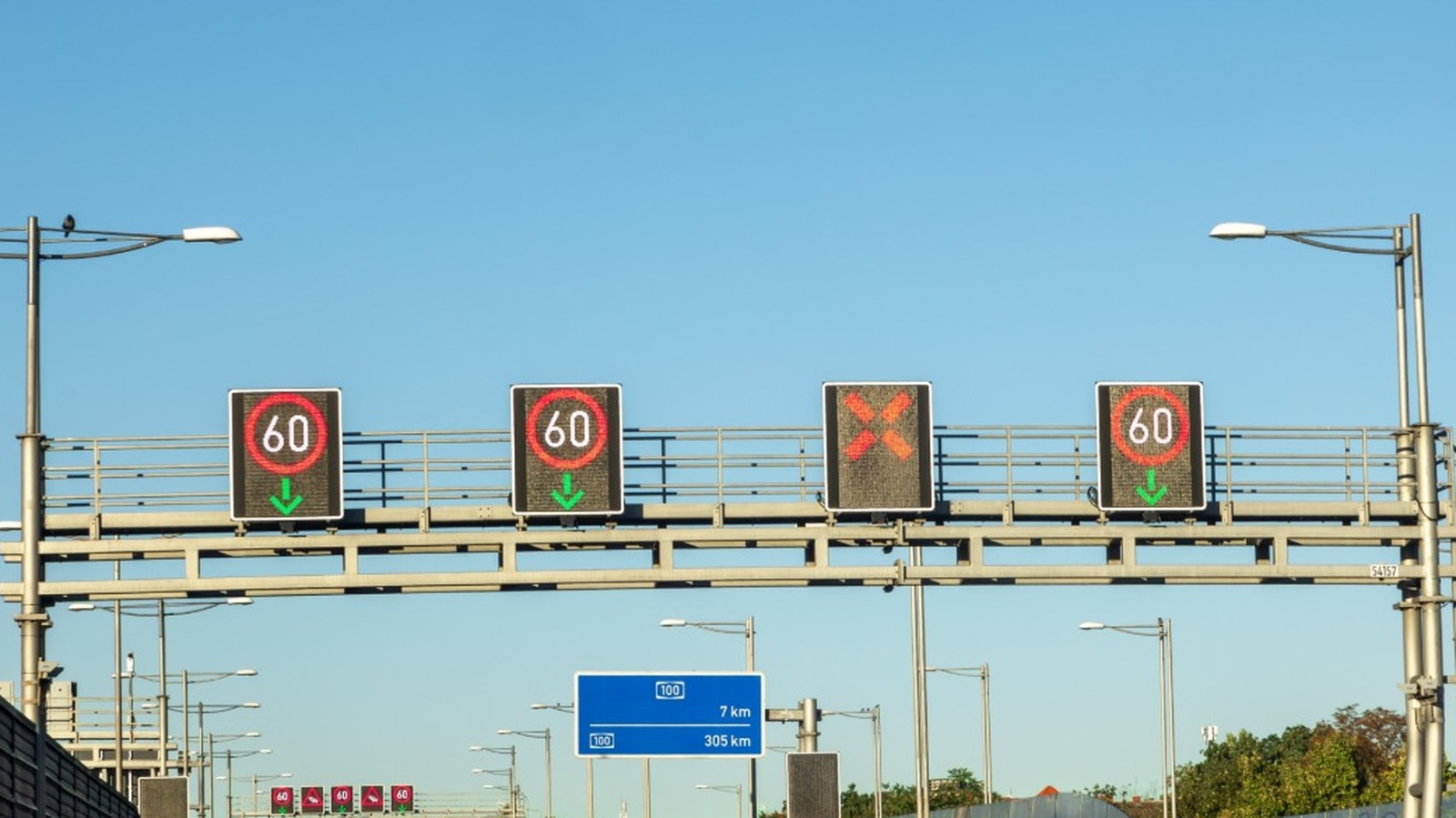
The source text describes several practical uses already associated with smart-highway deployments. Local road operators can change speed limits or open and close lanes based on traffic conditions. In the United Kingdom, some smart roads can temporarily open the hard shoulder as a traffic lane to reduce congestion. The same communications layer can also be used to push hazard warnings, construction notices, and severe-weather alerts to drivers.
That matters because transportation systems have long struggled with a timing problem: by the time a driver sees the backup, blockage, or incident, the opportunity to avoid it has often passed. A connected corridor changes that. Instead of relying only on signage, visual awareness, or satellite navigation updates, the road itself becomes a source of operating information.
The candidate text also notes that Stellantis has used V2X in vehicles for emergency-vehicle detection. That is an especially concrete example of the broader idea. The value of connected highways does not depend only on traffic throughput. It also rests on whether the system can identify and communicate urgent conditions early enough to improve safety outcomes.

How V2X works in the U.S.
In the U.S. description provided, V2X uses 5G-linked communications and specifically the 5.895-5.925 GHz safety band. Roadside devices such as signal controllers and detectors relay road and traffic conditions into back-office systems. Vehicles then connect through an onboard unit, either factory installed or added later as aftermarket hardware.
That architecture is important because it shows smart highways are not a single product. They are an ecosystem built from sensors, wireless communications, back-end control software, and the vehicle hardware needed to receive and transmit data. The source text also says artificial intelligence and machine learning are part of that ecosystem, used to analyze traffic flow, road conditions, and road use so that systems can make predictive decisions.
Even in this early form, that begins to shift the role of transportation infrastructure. Highways are no longer just fixed-capacity assets that governments maintain. They become dynamic systems that can adapt lane use, traffic guidance, and warnings based on live conditions.
Why the timing matters
The candidate points to market expectations as one sign of momentum. It says Research and Markets projects the smart-highway market will approach $100 billion by 2030. Forecasts alone do not guarantee adoption, but they do indicate that governments, suppliers, and automakers increasingly see connected infrastructure as a category worth building around.
There is a straightforward reason for that. Roads are under pressure from several directions at once: congestion, safety, freight demand, climate-related weather disruptions, and the rise of increasingly assisted driving systems. A highway that can communicate with vehicles offers a way to squeeze more performance and awareness out of existing corridors without physically rebuilding every mile.
The smart-highway proposition also fits neatly with the industry’s broader software shift. Vehicles already contain more sensors, connectivity, and onboard processing than they did a decade ago. Infrastructure is now beginning to evolve in the same direction.
The remaining challenge
The opportunity is clear, but so is the complexity. A smart highway only works when roadside systems, communications standards, and vehicle hardware can operate together reliably. A patchwork of local implementations could limit the value if drivers move between regions with different rules, equipment, or capabilities.
Still, the supplied source material shows the concept has crossed an important line. This is no longer a purely conceptual discussion about what roads might someday become. V2X-backed systems are already enabling variable speed controls, lane management, hazard communication, and emergency-vehicle awareness in multiple countries.
That makes the real transportation story less about a futuristic highway and more about a changing definition of infrastructure itself. Roads are beginning to sense, compute, and communicate. Once that shift starts at scale, the highway stops being just a route and starts behaving like a network.
This article is based on reporting by Jalopnik. Read the original article.
Originally published on jalopnik.com