Crash-test results show vehicle size is only part of the safety picture
Large pickup trucks are often assumed to be inherently safer because of their mass and imposing dimensions. In a collision between two vehicles, a heavier vehicle can indeed have an advantage. But recent Insurance Institute for Highway Safety results cited in a Jalopnik report show that size alone does not guarantee stronger crash-test performance.
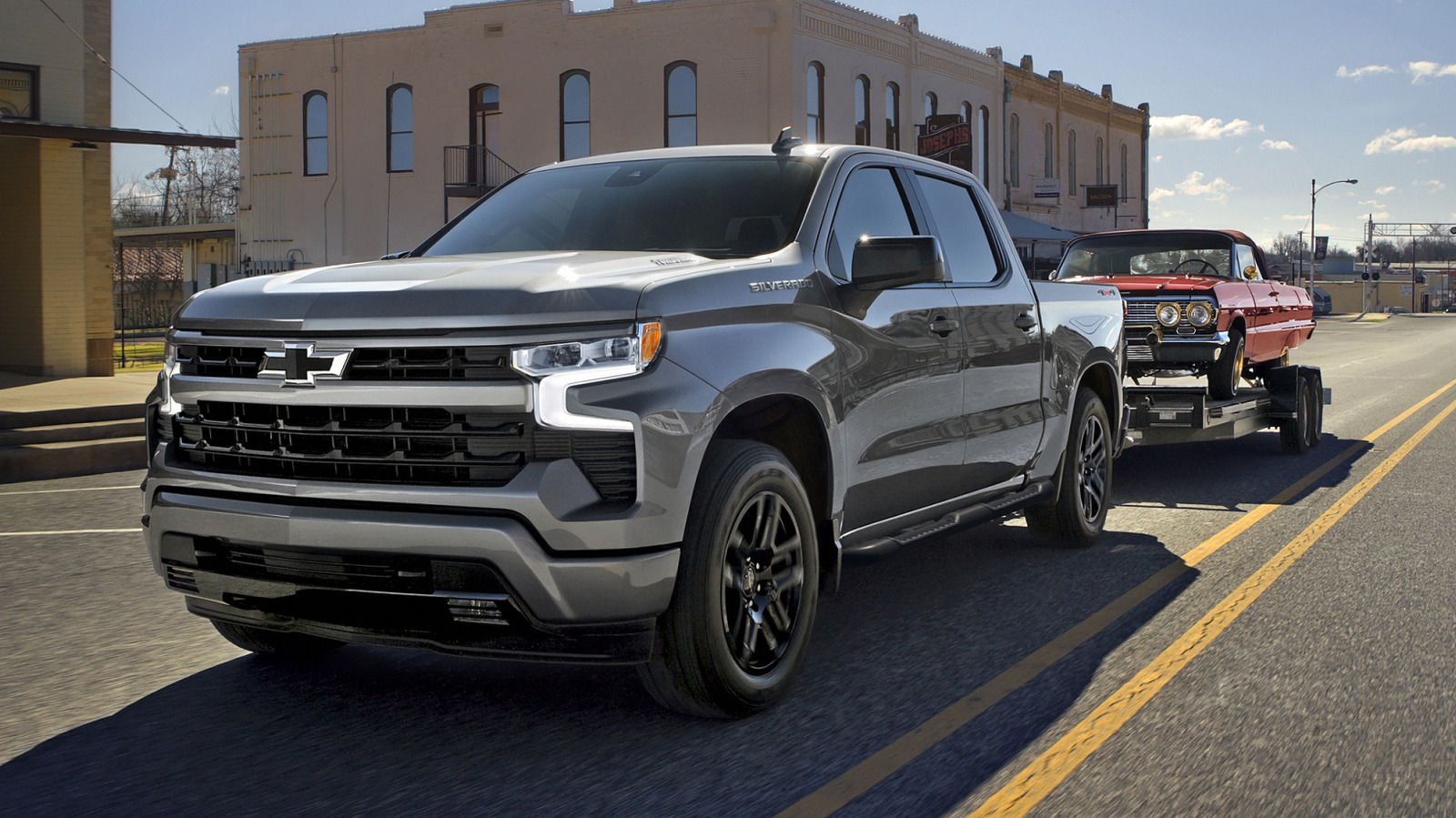
The comparison centers on the 2026 Chevrolet Silverado 1500 crew cab and the 2026 Mazda3 sedan. The Silverado is dramatically larger and heavier, but the Mazda received stronger results in several IIHS evaluations and earned an IIHS Top Safety Pick+ award. The Silverado did not appear on the institute’s 2026 Top Safety Pick lists.
The contrast is a reminder that safety ratings reflect more than vehicle mass. Crashworthiness, rear-seat protection, restraint performance, lighting and the design of specific vehicle structures can all affect the outcome of an evaluation.
Where the Silverado fell short
According to the report, the 2026 Silverado 1500 crew cab received an overall Poor rating in IIHS’s updated moderate overlap front test. The result was driven largely by Marginal ratings for the rear-seat dummy’s head and neck, chest and restraints.
The truck also received a Marginal rating in the passenger-side small overlap test and an Acceptable result in the updated side test. Neither of its two headlight configurations scored better than Poor. Those results kept the Silverado from the IIHS Top Safety Pick lists for the model year.
The results do not mean the Silverado offers no protection or that its size is irrelevant in every crash. Rather, they illustrate that a large vehicle can still have weaknesses in particular standardized tests. The updated moderate overlap test places specific emphasis on the protection of occupants in the rear seat, an area where the Silverado’s reported ratings were especially weak.
The Mazda3 earned stronger ratings despite its smaller footprint
The Mazda3 sedan weighs 3,111 pounds, according to the report. The Silverado weighs about 4,950 pounds. The truck is listed at 231.9 inches long, 81.2 inches wide and 75.5 inches tall, compared with the Mazda sedan’s 183.5-inch length, 70.7-inch width and 56.9-inch height.
Those measurements make the size difference clear. Yet both the Mazda3 sedan and hatchback earned IIHS Top Safety Pick+ recognition, while the Silverado did not. The Mazda3 sedan received Good ratings in all three IIHS crash tests discussed in the report.
The largest difference came in the updated moderate overlap front test. The Mazda’s Good overall score contrasted with the Silverado’s Poor result, and the Mazda’s rear dummy received no score worse than Acceptable. The Mazda also received Good ratings where the Silverado received Marginal in the passenger-side small overlap test and Acceptable in the updated side test.
Why weight cannot be treated as a complete safety rating
Mass can influence what happens when vehicles strike one another. But IIHS evaluations examine how a vehicle protects occupants in controlled scenarios, not merely whether it is bigger than another model. A larger body does not automatically ensure that energy is managed well, that restraints protect every seating position or that headlights provide strong visibility.
That is why a direct comparison of curb weight can be misleading for buyers. A truck may offer towing ability, cargo room, ground clearance and a commanding driving position. None of those qualities automatically translates into high scores across modern crash tests.
The Silverado’s result in the updated moderate overlap front test is particularly relevant because it highlights rear-seat protection. Vehicles have historically been designed around the needs of front-seat occupants, but modern evaluations increasingly assess whether people seated behind the driver and front passenger receive comparable protection.
Pickup safety remains uneven
The report notes that only two full-size pickups made the IIHS 2026 safety lists: the Tesla Cybertruck, which earned Top Safety Pick+, and the Toyota Tundra, which earned Top Safety Pick. That context suggests that the segment’s performance is not uniform and that buyers should examine ratings for the exact vehicle, configuration and equipment they are considering.
Headlights are another important point. The Silverado’s two available headlight setups each received Poor ratings, according to the report. Crash avoidance and visibility are not captured by body size, and a vehicle’s safety case depends on more than how it performs once a collision has already begun.
What shoppers should take from the comparison
The Mazda3-versus-Silverado comparison is not a declaration that every small car is safer than every pickup. Nor does it erase the physical advantage that greater mass can provide in some two-vehicle crashes. It does show that shoppers should avoid treating vehicle size as a shortcut for evaluating safety.
IIHS ratings offer a more granular way to compare vehicles. Looking at moderate overlap, small overlap, side-impact, headlight and award results can reveal strengths and weaknesses that are obscured by a vehicle’s dimensions or market category.
For buyers who need a full-size pickup, the relevant lesson is to consult the ratings for the precise truck under consideration. For buyers comparing vehicle types more broadly, the test results show that a compact sedan can outperform a far larger truck in several important safety evaluations. Design and testing performance matter at least as much as visual scale.
This article is based on reporting by Jalopnik. Read the original article.
Originally published on jalopnik.com